
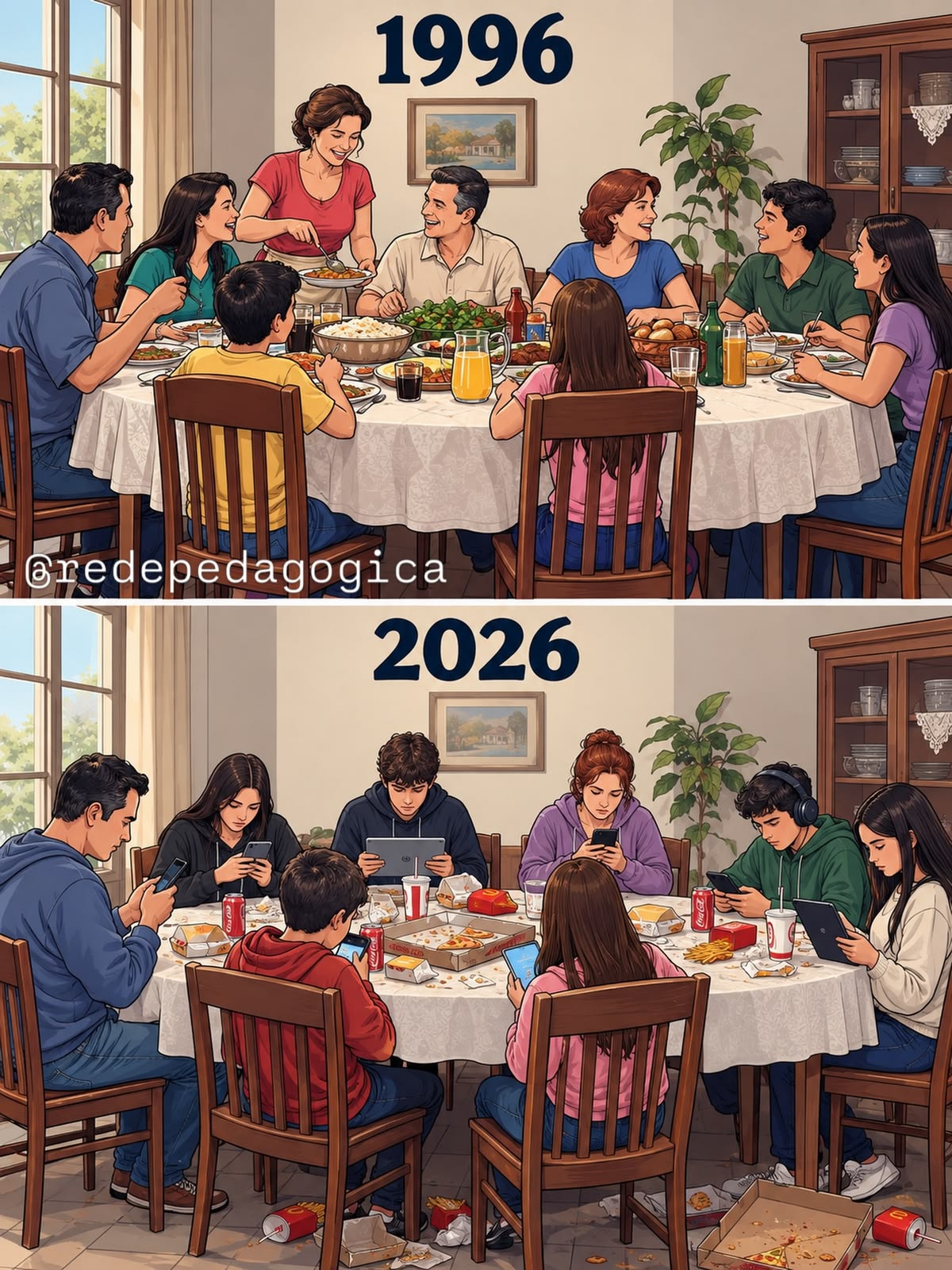
The dinner table has traditionally been viewed as the heart of the home—a sanctuary where family members gather at the end of a long day to share a meal, converse, and connect. However, the rapid advancement of digital technology, smartphones, and social media over the past three decades has dramatically transformed how families interact during shared meals.
Comparing a family gathering from 1996 with one in 2026 highlights a profound cultural shift from face-to-face conversation to digital isolation. In this comprehensive article, we explore the history of family communication, the psychological impact of screens at the dinner table, the benefits of unplugged meals, and practical strategies to foster genuine human connection in a hyper-connected world.
The Digital Transformation of Daily Life: 1996 Versus Today
To understand modern family dynamics, it is helpful to look back at how technological landscapes have evolved over the last thirty years.
The Era of Unplugged Presence (1996)
In the mid-1990s, personal computers were becoming more common in households, but smartphones, mobile internet, and social media did not exist. Mealtime conversations were uninterrupted by notifications, text messages, or glowing screens. Families relied entirely on verbal storytelling, eye contact, and shared physical presence to bond during dinner.
The Era of Constant Connectivity (2026)
Today, smartphones, tablets, and wearable devices are integrated into nearly every aspect of daily life. While technology offers incredible benefits for productivity and global communication, its intrusion into intimate spaces like the dining room has altered interpersonal dynamics. As depicted in many modern illustrations, families can sit together physically while being mentally worlds apart, absorbed in individual screens.
The Psychological Impact of Screen Time on Family Bonding
The constant presence of mobile devices during family meals carries significant psychological and emotional consequences, particularly for children and teenagers.
“Phubbing” and Reduced Empathy
“Phubbing”—the act of snubbing someone in favor of a mobile phone—sends a subconscious message that digital content is more important than the person sitting across from you. Studies show that even the mere presence of a smartphone on a dining table can reduce the depth of conversation and lower feelings of interpersonal empathy.
Disrupted Family Communication and Emotional Support
Mealtimes are crucial opportunities for parents to guide children, check in on emotional well-being, and build trusting relationships. When screens dominate the table, these teachable moments and casual conversations vanish, potentially leading to feelings of isolation and weakened family bonds.
Financial, Business, and Productivity Impacts of Digital Overuse
Beyond personal relationships, excessive screen time and digital distraction have broader economic and productivity implications for modern households and businesses.
Workplace Productivity and Focus
The habits formed at home often translate into professional environments. Constant notification-checking fragments attention spans, lowers deep-work productivity, and increases stress levels. Mastering digital discipline benefits both personal relationships and career advancement.
Smart Budgeting for Tech and Entertainment
Managing modern household expenses involves balancing investments in digital devices, high-speed internet, and streaming services with offline family activities. Allocating financial resources toward shared outdoor experiences, board games, travel, and hobbies helps create a well-rounded lifestyle.
Practical Tips to Create Unplugged Family Meals
Reclaiming the dinner table from screens does not require drastic measures, but it does require consistent boundaries and intentional habits. Implement these practical steps to foster better connection:
Establish a Phone-Free Zone: Set up a charging station basket by the front door or in the kitchen where all family members must place their phones before sitting down to eat.
Lead by Example: Parents and caregivers must model healthy tech habits by keeping their own phones out of sight during meals.
Engage in Meaningful Conversation: Use conversation-starter questions—such as asking each person about the best part of their day—to make dinner interactive and engaging.
Involve Everyone in Meal Preparation: Cooking together creates a collaborative environment that naturally transitions into lively conversation around the table.
Schedule Digital-Free Days: Designate specific evenings each week where devices are turned off entirely after 6:00 PM to encourage family game nights or reading.
Fascinating Facts About Technology and Communication History
The First Smartphone: The IBM Simon, widely considered the world’s first smartphone, was released in 1994, featuring a touchscreen and basic email capabilities long before modern app ecosystems existed.
The Evolution of Social Media: The modern social media era began in the early 2000s, fundamentally altering global communication patterns and daily attention spans.
The Power of Eye Contact: Neurological studies indicate that direct eye contact releases oxytocin and synchronizes brain wave patterns between speakers, creating a depth of connection that digital messaging cannot replicate.
Conclusion
The evolution from the unplugged family dinners of the past to the screen-dominated meals of today reflects a broader cultural challenge in the digital age. While technology connects us globally, it can inadvertently isolate us from the people sitting right beside us. By setting healthy boundaries, embracing phone-free mealtimes, and prioritizing face-to-face conversation, families can restore the dinner table as a warm, welcoming space for genuine connection and shared joy.
Frequently Asked Questions (FAQ)
1. How does smartphone use during meals affect children and teens?
Constant screen use during family meals can hinder social skill development, lower academic focus, reduce emotional bonding, and increase feelings of isolation or anxiety among youth.
2. What is the best way to implement a “no phones at the table” rule?
Introduce the rule collaboratively as a family challenge, set up a central charging basket for all devices before eating, and ensure parents follow the rule strictly to set a positive example.
3. Can technology ever be used positively during a family dinner?
While occasional use for looking up a recipe or sharing a family photo can be harmless, keeping devices completely out of sight during meals is recommended to maximize conversational engagement.
4. Why are face-to-face conversations important for mental health?
In-person interactions allow us to read micro-expressions, interpret vocal tones, and experience authentic empathy, which helps reduce stress and strengthens long-term emotional well-being.
