
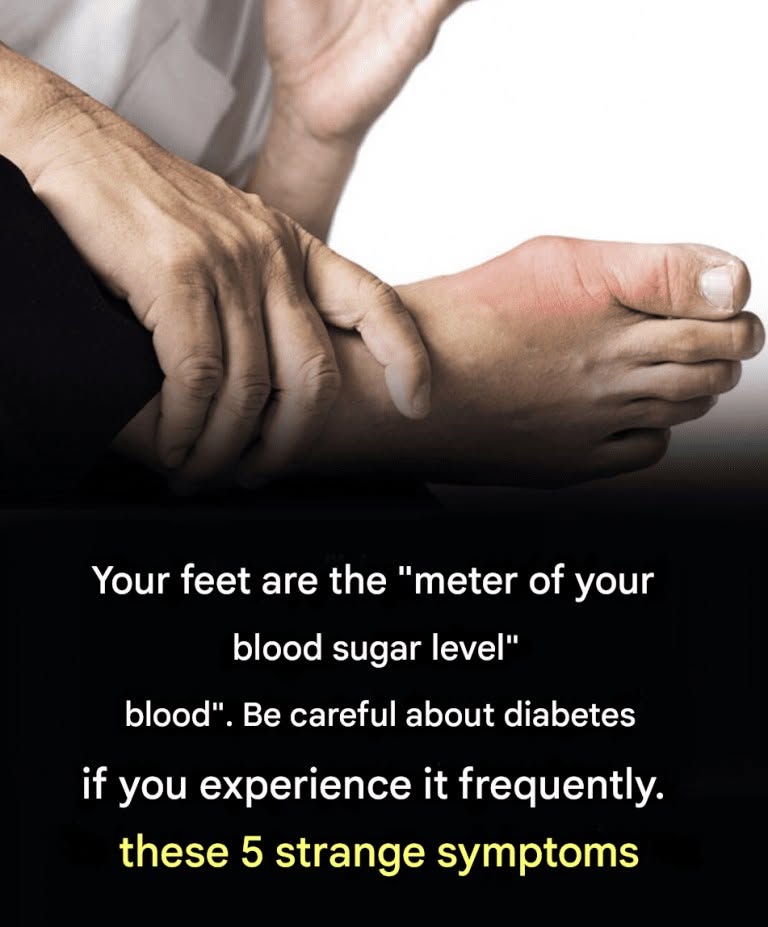
High blood sugar levels over time can affect nerves and blood vessels throughout the body, particularly in the lower extremities. Health awareness posts often highlight this connection, featuring graphics like “Your feet are the ‘meter of your blood sugar level’… Be careful about diabetes if you experience these 5 strange symptoms.”
Recognizing warning signs early helps individuals seek medical evaluation before potential complications progress.
Visual Breakdown: Diabetic Foot Health Infographic
The image features a close-up of a person holding an inflamed or painful foot against a dark background, highlighting common physical discomforts linked to blood sugar fluctuations.
+-----------------------------------------------------------------------+
|                    HEALTH INFOGRAPHIC ANALYSIS                        |
|                                                                       |
|   [ Foot Pain Visual ]    ---> Person gripping an inflamed foot       |
|                                         |                             |
|                                         v                             |
|   [ Headline Warning ]    ---> Frames feet as blood sugar indicators   |
|                                         |                             |
|                                         v                             |
|   [ Symptom Reminder ]    ---> Prompts viewers to watch for 5 key     |
|                                diabetic warning signs                 |
+-----------------------------------------------------------------------+
Key Visual Elements
- Targeted Focus: Close-up imagery of the big toe joint and foot arch.
- Direct Messaging: Clear text emphasizing the link between persistent foot symptoms and elevated blood sugar levels.
- Call to Action: Encourages individuals experiencing chronic foot pain or numbness to consult healthcare professionals.
5 Common Foot Symptoms Linked to Elevated Blood Sugar
- Numbness or Tingling (Diabetic Neuropathy): Prolonged high blood sugar can damage peripheral nerves, leading to a “pins and needles” sensation or loss of feeling in the toes and feet.
- Burning Sensation: Nerve irritation often manifests as persistent warmth, aching, or burning sensations, especially noticeable at night.
- Dry, Cracking Skin: Nerve damage can disrupt sweat production in the feet, causing skin to become excessively dry, prone to severe cracking, or vulnerable to infections.
- Slow-Healing Sores or Cuts: Reduced blood circulation makes it harder for minor cuts, blisters, or ulcers on the feet to heal promptly.
- Cold Feet or Discoloration: Damaged blood vessels restrict blood flow, making the feet feel constantly cold or causing noticeable changes in skin color and tone.
Summary of Diabetic Foot Symptoms
| Symptom | Primary Cause | Early Indicator |
| Tingling / Numbness | Peripheral nerve damage | Reduced sensitivity to touch or temperature |
| Burning Pain | Hypersensitive damaged nerves | Increased pain or discomfort at rest |
| Dry / Cracked Skin | Loss of autonomic moisture regulation | Deep heel cracks susceptible to bacteria |
| Slow-Healing Ulcers | Impaired capillary circulation | Persistent blisters or open sores |
| Temperature Sensitivity | Restricted vascular blood flow | Frequent coldness in toes and soles |
Frequently Asked Questions (FAQ)
1. Why do high blood sugar levels affect the feet first?
The longest nerves and smallest blood vessels in the human body supply the feet and toes. As a result, nerve damage (neuropathy) and poor circulation tend to show symptoms in the feet before other parts of the body.
2. When should you see a doctor for foot symptoms?
If you experience persistent numbness, burning sensations, loss of feeling, or non-healing cuts and ulcers, consult a primary care physician or podiatrist for proper diagnostic evaluation and blood glucose testing.
Conclusion
Paying attention to foot changes and maintaining routine healthcare checkups are key steps in managing metabolic health and preventing long-term complications.
