
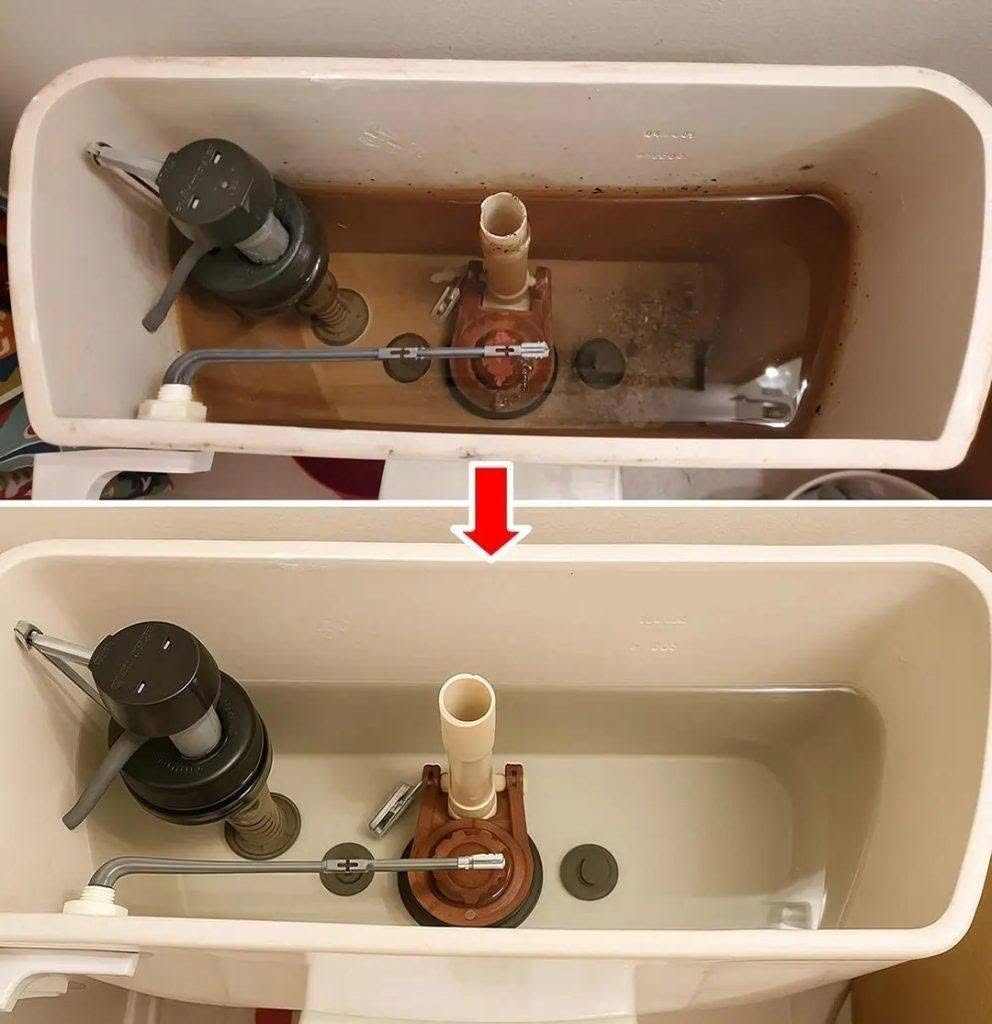
Over time, toilet tanks accumulate mineral scale, rust deposits, and sediment from incoming tap water, leaving porcelain stained, dark, and murky. Viral before-and-after social media posts demonstrate how simple home cleaning techniques can transform a heavily stained toilet reservoir back to sparkling clean condition.
Cleaning inside the toilet tank regularly prevents mineral buildup from damaging internal mechanisms like fill valves and flappers.
Visual Breakdown: Before and After Transformation
The image showcases a top-down view comparing a dirty, discolored toilet tank to a thoroughly cleaned and restored reservoir.
+-----------------------------------------------------------------------+
|                    TOILET TANK CLEANING TRANSFORMATION                 |
|                                                                       |
|   [ BEFORE IMAGE ]  ---> Discolored porcelain, rust stains, murky water|
|                                         |                             |
|                                         v                             |
|   [ AFTER IMAGE ]   ---> Bright white porcelain, crystal clear water  |
+-----------------------------------------------------------------------+
Key Visual Components
- Before Panel (Top): Shows heavy brown rust lines, mineral deposits clinging to porcelain walls, and cloudy standing water.
- Red Transition Arrow: Points down to indicate the cleaning transformation.
- After Panel (Bottom): Shows pristine white porcelain walls, clean plumbing components, and clear standing water.
Step-by-Step Toilet Tank Deep Cleaning Guide
- Shut Off the Water Supply: Locate the shut-off valve behind the toilet base and turn it clockwise until fully closed.
- Drain the Reservoir: Flush the toilet and hold down the handle until almost all the water drains out of the tank.
- Apply Cleaning Solution: Pour white distilled vinegar or an acidic toilet bowl cleaner along the inner walls to break down mineral scale and rust deposits.
- Scrub Internal Walls: Use a long-handled scrub brush or nylon brush to gently scrub away remaining residue, taking care not to dislodge plastic valve assemblies or chain connections.
- Turn Water On and Rinse: Turn the shut-off valve back on to fill the tank with fresh water, then flush 2–3 times to rinse away dissolved grime and leftover cleaner.
Cleaning Method Comparison
| Cleaning Method | Active Ingredients | Best For | Safety Considerations |
| Distilled White Vinegar | Mild Acetic Acid | Mineral buildup & light rust | Safe for plastic/rubber components |
| Citric Acid Powder | Natural Organic Acid | Tough hard-water scale | Non-toxic and gentle on internal parts |
| Commercial Rust Remover | Phosphoric / Oxalic Acid | Heavy iron & rust discoloration | Requires gloves and good ventilation |
Frequently Asked Questions (FAQ)
1. Can bleach damage internal toilet tank parts?
Yes. Bleach can degrade rubber flappers, washers, and plastic seals over time, causing leaks or continuous running water. Vinegar or citric acid are safer alternatives for deep cleaning toilet tanks.
2. How often should a toilet tank be cleaned?
Cleaning the interior of a toilet tank twice a year helps prevent mineral buildup, keeps flushing mechanisms working smoothly, and prevents unpleasant odors.
Conclusion
Keeping your toilet tank clean extends the life of internal plumbing components while maintaining household hygiene and water clarity.
