
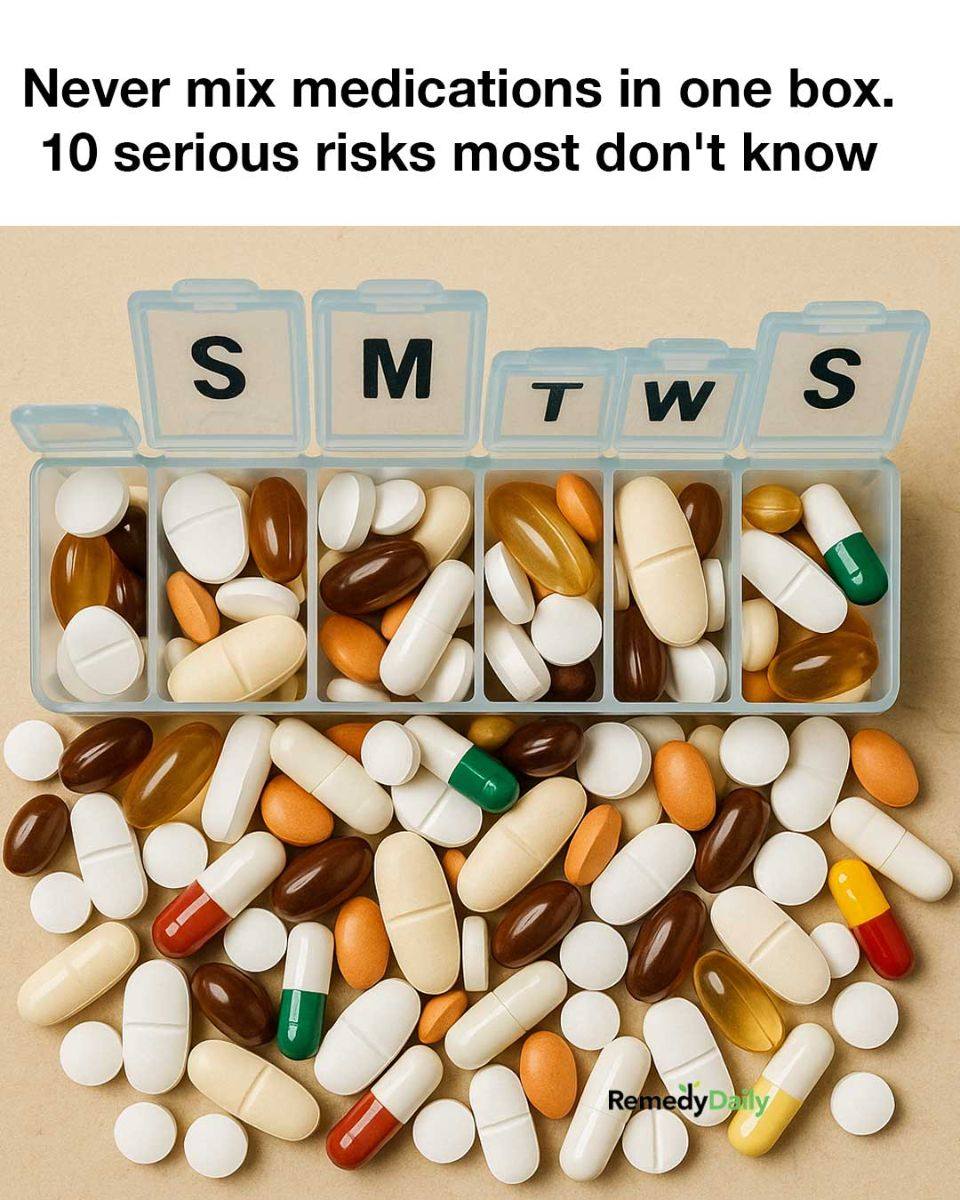
Managing multiple daily medications and supplements requires organization, and pill boxes are widely used to keep track of schedules. However, storing loose pills together in a single compartment can introduce unexpected risks related to pill degradation, accidental mix-ups, and moisture exposure.
Understanding how environmental factors and physical contact affect pharmaceuticals is key to ensuring your prescriptions remain effective and safe.
Below is an overview of medication storage risks and best practices for organizing your daily regimen safely.
Medication Storage Safety Matrix
+-------------------------------------------------------------------+
|                   MEDICATION STORAGE RISKS & GUIDELINES           |
|                                                                   |
|  [ ACCIDENTAL MIX-UPS ] • Similar looking pills can lead to incorrect|
|                           dosages or missed medication            |
|  [ MOISTURE EXPOSURE ]  • Humidity and air exposure weaken pill   |
|                           potency over time                       |
|  [ CROSS-CONTAMINATION] • Residue or powder transfer between      |
|                           different active ingredients            |
+-------------------------------------------------------------------+
Key Highlights of Safe Medication Management:
-
Identification Challenges: Many tablets and capsules look nearly identical once removed from their original blister packs or bottles.
-
Environmental Sensitivity: Moisture, heat, and light degrade certain active ingredients quickly when removed from original protective packaging.
-
Cross-Contamination: Powder residue from un-coated tablets can transfer onto adjacent pills in shared containers.
-
Child Safety Concerns: Traditional pill organizers lack child-resistant locks found on standard prescription bottles.
Best Practices for Organizing Daily Medications
1. Keep Medications in Original Packaging When Possible
Original bottles provide vital information, including dosing instructions, expiry dates, and pill appearance descriptions.
2. Use Blister-Packed Pill Organizers
If using a organizer is essential for adherence, consider individual blister packs or organizers designed with sealed, moisture-proof compartments.
3. Consult Your Pharmacist
Ask your pharmacist if any of your specific prescriptions are moisture-sensitive or require special storage conditions, such as refrigeration or light shielding.
Conclusion
Taking a proactive approach to medication management ensures you get the full health benefits of your treatments while avoiding common storage pitfalls.
Frequently Asked Questions (FAQ)
Can pills lose their potency in a pill box?
Yes, pills exposed to humidity and ambient air can break down or lose effectiveness faster than those kept in moisture-sealed original containers.
How often should I clean my pill organizer?
If you use a reusable organizer, clean and thoroughly dry it between uses to prevent residue buildup from different medications.
