
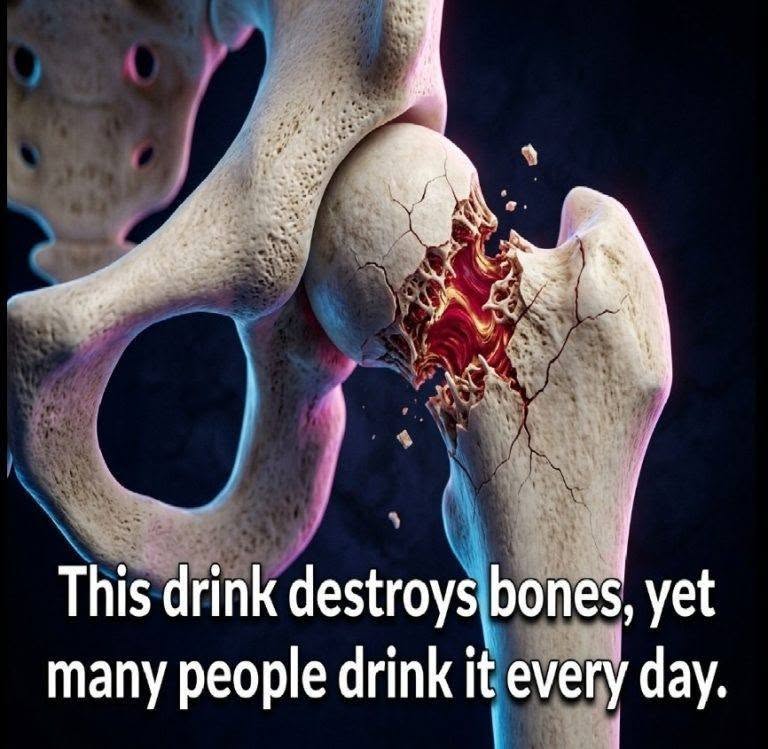
Viral health posts frequently raise alarming questions about popular everyday beverages and their long-term effects on skeletal health. A dramatic medical graphic showing a fractured hip joint displays the statement: “This drink destroys bones, yet many people drink it every day.”
While sensationalized claims often circulate on social media, understanding the medical relationship between dietary beverages and bone density can help individuals make informed daily choices.
Visual Breakdown: Bone Density and Joint Health
The graphic illustrates a severe femoral neck fracture at the hip joint, highlighting structural vulnerability in bone tissue.
+-----------------------------------------------------------------------+
|                    HIP JOINT ANATOMY BREAKDOWN                        |
|                                                                       |
|   [ Acetabulum ]    ---> Socket portion of the pelvic bone            |
|                                         |                             |
|                                         v                             |
|   [ Femoral Head ]  ---> Ball portion fitting into the hip socket     |
|                                         |                             |
|                                         v                             |
|   [ Femoral Neck ]  ---> Critical structural bridge susceptible to    |
|                          fractures from bone density loss (osteoporosis)|
+-----------------------------------------------------------------------+
Key Anatomical Components
- Pelvic Socket (Acetabulum): The curved cup of the hip bone that holds the head of the femur.
- Femoral Head & Neck: The ball-and-socket connection of the upper thigh bone.
- Trabecular Bone Structural Loss: The porous interior tissue shown crumbling under severe impact or advanced bone loss (osteoporosis).
Which Beverages Impact Bone Health?
Health articles that use this viral hook typically address common everyday drinks associated with calcium loss or decreased bone density:
- Carbonated Soda & Cola: Colas contain phosphoric acid, which in excess can alter the calcium-to-phosphorus ratio in the body. Furthermore, replacing milk or water with sugary sodas reduces overall calcium intake.
- Excessive Alcohol Consumption: Heavy daily drinking interferes with the body’s ability to absorb calcium, disrupts vitamin D activation, and reduces bone formation cells (osteoblasts).
- High Caffeine Drinks: Consuming excessive caffeine (such as multiple energy drinks or dark coffees daily) can cause a mild, temporary increase in calcium excretion through urine.
Beverage Impact Summary
| Beverage Category | Primary Mechanism | Impact Level | Healthy Alternative |
| Dark Colas | High phosphoric acid & added sugars | Moderate | Sparkling water with natural lemon |
| Excess Alcohol | Impairs calcium absorption & osteoblasts | High | Herbal teas or mocktails |
| High Caffeine | Slight increase in urinary calcium loss | Low to Moderate | Moderate coffee intake with added milk |
Frequently Asked Questions (FAQ)
1. Does drinking soda actually destroy bones instantly?
No. Moderate intake of carbonated beverages does not “destroy” bones immediately. The primary risk occurs when sugary sodas replace nutrient-rich beverages like milk, plant-based calcium drinks, or water over many years.
2. How can I protect and strengthen my bones?
Ensure adequate daily intake of calcium and Vitamin D, engage in regular weight-bearing exercises (like walking or resistance training), and limit excessive soda, alcohol, and caffeine consumption.
Conclusion
While dramatic headlines often exaggerate the impact of daily drinks, maintaining a balanced diet rich in essential minerals remains key to lifelong bone strength.
