
Introduction
Getting a good night’s rest is essential for overall health, energy levels, and daily well-being. While many factors contribute to sleep quality—such as comfortable mattresses, room temperature, and bedtime routines—the position in which we sleep also plays a surprisingly significant role in our bodily functions.
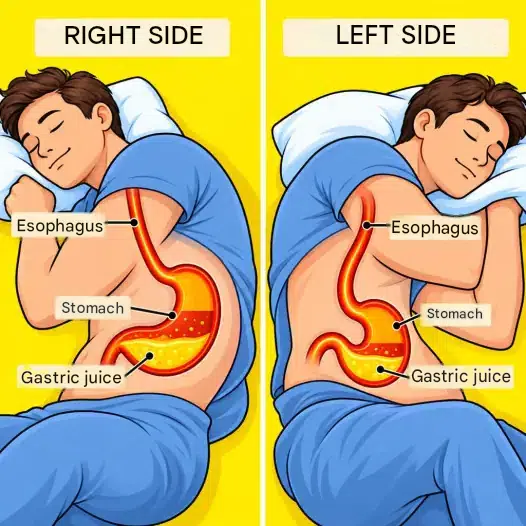
A viral health graphic circulating online compares sleeping on the right side versus the left side, illustrating how anatomy and gravity influence gastric juices and digestion. Exploring the physiological impact of sleep posture provides valuable insights into managing acid reflux and supporting optimal digestive health.
The Anatomy of Digestion and Sleep Posture
Understanding how the digestive tract is positioned inside the body helps explain why sleeping on a specific side can influence symptoms like heartburn and acid reflux.
Key Anatomical Factors
- Stomach Placement: The stomach naturally sits on the left side of the upper abdomen, curving upward toward the esophagus.
- Gravity and Gastric Juices: When sleeping on the left side, the gastric junction is positioned above the level of gastric acid, making it harder for stomach fluids to flow backward into the esophagus.
- Right-Side Effects: Sleeping on the right side can cause the stomach to relax above the esophagus, which may make it easier for gastric acid to leak and trigger acid reflux.
Health Benefits of Proper Sleep Posture
Making small adjustments to your sleeping habits can offer noticeable improvements in comfort and nighttime digestion.
Major Advantages of Left-Side Sleeping
- Reduced Heartburn: Left lateral positioning is widely recommended by health experts to alleviate nighttime acid reflux and GERD symptoms.
- Improved Circulation: Sleeping on the left side can support better blood flow throughout the body, particularly for pregnant individuals.
- Enhanced Digestion: Gravity naturally assists waste movement through the colon when resting on the left side.
Interesting Facts About Sleep and Human Physiology
The study of sleep science and human posture features several fascinating insights:
- Positional Preferences: Most people shift positions multiple times throughout the night, though side sleeping is one of the most common sleep postures worldwide.
- Historical Sleep Habits: Throughout history, sleeping postures have been studied for their impact on longevity, digestion, and physical recovery.
- Modern Ergonomics: Today, sleep specialists use medical imaging to understand how gravity and organ placement interact while we rest.
Practical Tips for Managing Acid Reflux at Night
If you experience nighttime heartburn or digestive discomfort, consider these helpful adjustments:
- Try Sleeping on Your Left: Shift to your left side to use gravity to your advantage and keep gastric juices contained.
- Elevate the Head of Your Bed: Raising your upper body slightly can further prevent stomach acids from rising during sleep.
- Avoid Late Meals: Give your body adequate time to digest food before lying down for the night.
Conclusion
While sleep comfort is a personal preference, understanding how our anatomy interacts with gravity can make a real difference in our daily wellness. Simple adjustments, such as switching to your left side, can help manage acid reflux and support better digestion all night long.
FAQ Section
Why does sleeping on the left side help with acid reflux?
The stomach is positioned on the left side, which keeps gastric juices below the esophagus and prevents acid from leaking upward during sleep.
What happens when you sleep on your right side?
Right-side sleeping can relax the lower esophageal sphincter relative to stomach acid levels, potentially increasing the likelihood of heartburn.
Is side sleeping recommended for everyone?
Side sleeping is generally beneficial for digestion and circulation, though individual comfort and medical conditions should always be considered.
What are other ways to reduce nighttime heartburn?
Avoiding heavy meals right before bedtime, elevating your upper body, and consulting a healthcare professional for persistent symptoms can help.
