
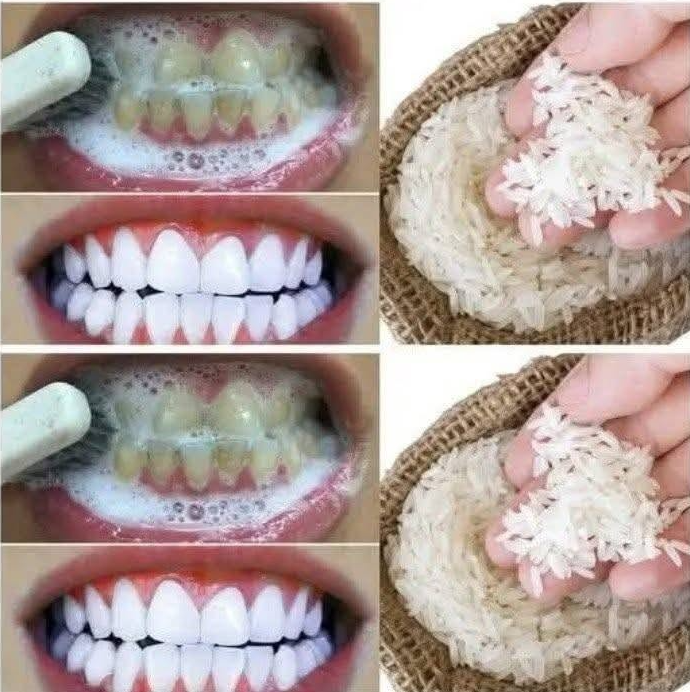
Viral DIY life hacks circulating across social media platforms often claim that brushing with finely ground raw rice flour or homemade rice powder can instantly erase yellow stains and whiten teeth within seconds. Accompanying dramatic before-and-after imagery frequently promises professional whitening results using simple kitchen staples.
While raw rice contains beneficial nutrients when consumed as part of a balanced diet, using uncooked, ground rice directly as a abrasive tooth scrub is a dental myth that can lead to irreversible enamel damage.
This comprehensive guide breaks down the biological facts behind teeth staining, evaluates natural whitening safety, details step-by-step oral hygiene guidelines, and offers practical advice on household budgeting and dental health insurance security.
The Dental Science: Enamel Structure and Abrasive Risks
+———————————————————————–+
| ENAMEL ABRASION & STAIN PATHWAY |
+———————————————————————–+
| 1. RAW RICE POWDER –> Coarse silica granules act as abrasive scrub |
+———————————————————————–+
|
v
+———————————————————————–+
| 2. ENAMEL EROSION –> Scratches protective outer tooth enamel layer |
+———————————————————————–+
|
v
+———————————————————————–+
| 3. DENTIN EXPOSURE –> Exposes yellowish inner layer & boosts sensitivity|
+———————————————————————–+
1. Hardness and Particle Surface Scratches
Outer tooth enamel is the hardest substance in the human body, but it is highly susceptible to mechanical abrasion. Uncooked ground rice consists of rigid starch granules and hard silica particles. Brushing with raw rice powder acts like sandpaper against tooth surfaces, creating microscopic scratches across the protective enamel layer.
2. The Mechanics of Dentin Exposure
Teeth naturally derive their subtle cream or yellowish undertone from dentin, the bone-like tissue lying directly beneath transparent outer enamel. Excessive use of harsh DIY abrasives strips away thin enamel over time, exposing more underlying dentin and making teeth appear more yellow long-term while triggering painful nerve sensitivity to hot and cold foods.
3. Surface Extrinsic Stains vs. Intrinsic Discoloration
Extrinsic stains caused by coffee, tea, red wine, or tobacco adhere to the outer enamel film and can be safely removed using ADA-approved whitening toothpastes containing mild micro-polishing agents. Intrinsic staining within the tooth structure requires professional peroxide-based bleaching gels evaluated by a licensed dentist.
Teeth Whitening Method Safety Comparison Table
+——————–+———————–+———————–+
| Whitening Method | Relative Safety Level | Enamel Impact Risk |
+——————–+———————–+———————–+
| ADA Whitening Paste| High Safety Standard | Safe Micro-Polishing |
| Peroxide Bleach Gel| Safe Under Guidelines | Controlled Penetration|
| Baking Soda (Mild) | Moderate / Periodic | Low-to-Mild Abrasion |
| Ground Rice Powder | Unsafe DIY Abrasive | Severe Scratch/Erosion|
+——————–+———————–+———————–+
Step-by-Step Instructions: Safe and Effective Daily Oral Hygiene
Follow these evidence-based steps to maintain strong enamel and naturally bright teeth:
+———————————————————————–+
| SAFE ORAL HYGIENE GUIDE |
+———————————————————————–+
| Step 1: Brush twice daily with a soft-bristled toothbrush. |
| Step 2: Use ADA-accepted fluoride toothpaste to remineralize enamel. |
| Step 3: Floss daily to remove plaque & stains between teeth. |
| Step 4: Rinse with water after consuming staining foods or drinks. |
| Step 5: Schedule bi-annual professional dental cleanings & checkups. |
+———————————————————————–+
Choose a Soft-Bristled Brush: Always use a soft or ultra-soft manual or electric toothbrush. Hard bristles and aggressive scrubbing wear down enamel and irritate gum tissue.
Utilize Fluoride Toothpaste: Select toothpastes carrying the American Dental Association (ADA) Seal of Acceptance. Fluoride helps remineralize weakened enamel and protects against tooth decay.
Floss and Clean Interdentally: Floss daily to remove trapped food particles and plaque film from areas between teeth that toothbrushes cannot reach.
Rinse After Staining Foods: After drinking coffee, tea, or acidic juices, rinse your mouth thoroughly with clean water to prevent dark pigments from settling onto enamel surfaces.
Seek Professional Cleanings: Visit your dental clinic every six months for professional prophylaxis to safely polish surface stains and evaluate oral health.
Home Management, Household Budgeting, and Financial Health
Prioritizing safe oral care and preventive health habits directly supports long-term family budgeting and financial stability.
Smart Home Budgeting & Dental Prevention Savings
Attempting unverified DIY teeth whitening remedies using kitchen abrasives can cause severe structural damage, resulting in costly restorative treatments such as composite bonding, dental crowns, or veneers. Sticking to simple, approved daily brushing habits prevents expensive emergency dental repairs. Managing your health care and family budget intentionally enables households to preserve capital to build emergency savings accounts, pay off high-interest credit card debt, or allocate funds toward long-term financial investments.
Preventive Oral Health and Insurance Coverage
Routine preventive care—including professional cleanings, routine checkups, and fluoride treatments—is fully or partially covered by most dental insurance plans. Utilizing your health and dental insurance benefits keeps preventive care affordable while maintaining long-term physical well-being and personal financial security.
Frequently Asked Questions (FAQ)
Can ground rice powder safely whiten teeth if mixed with lemon juice?
No. Mixing ground rice with acidic lemon juice creates a dangerous combination: the citric acid softens tooth enamel, while the harsh rice powder scrubs it away, causing rapid enamel breakdown and extreme tooth sensitivity.
What is the safest way to whiten teeth naturally at home?
The safest at-home method is using ADA-accepted whitening strips or toothpastes containing low-concentration hydrogen peroxide or carbamide peroxide. These agents break down organic stain molecules chemically without scratching tooth enamel.
Conclusion
While raw rice is a nutritious kitchen staple, it should never be used as an abrasive tooth polish. Stick to soft-bristled toothbrushes, fluoride toothpastes, and regular dental checkups to keep your smile healthy, strong, and bright!
