
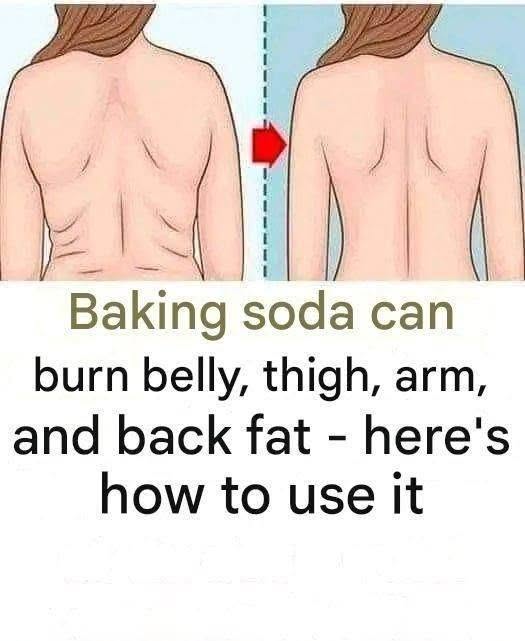
Viral social media posts frequently claim that simple household items like baking soda (sodium bicarbonate) can target and dissolve stubborn fat across the belly, thighs, arms, and back. These posts often pair dramatic before-and-after illustrations with promises of quick physical transformations. However, nutritional science and human physiology confirm that no single pantry ingredient can selectively target or burn body fat.
Understanding how baking soda affects the body—and why spot reduction is biologically impossible—helps separate online health myths from safe, effective weight management.
Baking Soda Fat Loss Claims vs. Biological Reality
Examining popular claims about baking soda against established medical science clarifies why it cannot burn targeted body fat.
+——————————————————————————-+
| BAKING SODA MYTH VS. PHYSIOLOGICAL REALITY |
+————————–+—————————————————-+
| VIRAL CLAIM | PHYSIOLOGICAL / METABOLIC REALITY |
+————————–+—————————————————-+
| 1. Targeted Fat Burning | Spot reduction is a myth. The body mobilizes fat |
| (Back, Arms, Belly) | systemically through a sustained caloric deficit. |
| 2. Melts Adipose Tissue | Sodium bicarbonate neutralizes stomach acid, but |
| | has no biochemical power to break down body fat. |
| 3. Rapid 7-Day Results | True adipose reduction requires weeks of consistent|
| | nutrition and physical activity balance. |
| 4. Detoxifies Body Fat | The liver and kidneys handle internal cleansing |
| | without external chemical assistance. |
+————————–+—————————————————-+
1. Spot Reduction Is Biologically Impossible
The human body stores and burns fat systemically across all adipose tissue reserves. You cannot force the body to burn fat exclusively from the back, arms, or abdomen by consuming specific ingredients or performing targeted exercises. Overall body fat decreases evenly as total energy expenditure exceeds total caloric intake over time.
2. What Baking Soda Actually Does in the Body
Baking soda is sodium bicarbonate, a basic compound used primarily in baking and as an antacid to neutralize stomach acid. When consumed, it reacts with gastric hydrochloric acid to produce carbon dioxide gas, water, and salt. It has no metabolic mechanism or enzymatic pathway capable of breaking down or melting lipid stores in human fat tissue.
3. Digestive Risks of Consuming Baking Soda
Regularly drinking baking soda water can cause significant health complications. High intake introduces excess sodium into the bloodstream, which can spike blood pressure, cause fluid retention, and lead to metabolic alkalosis—a dangerous shift in the body’s natural pH balance. It can also cause stomach cramps, severe gas, and nausea.
4. Temporary Bloating Changes Are Not Fat Loss
Some individuals may mistake temporary changes in fluid balance or digestive relief for rapid fat loss. While neutralizing stomach acid might temporarily reduce gastric bloating, it does not alter subcutaneous or visceral fat stores.
Health, Financial, and Safety Risks of Household Quick Fixes
Relying on unverified home remedies for weight loss carries notable physical and financial drawbacks.
Protecting Cardiovascular and Kidney Health
Consuming high amounts of sodium bicarbonate places unnecessary strain on the kidneys and cardiovascular system. Individuals with hypertension, kidney disease, or heart conditions are especially vulnerable to sodium overload.
Preserving Long-Term Digestive Function
Overusing antacid remedies like baking soda neutralizes essential stomach acids needed for proper nutrient digestion and absorption, potentially triggering acid rebound and chronic indigestion.
Practical Actionable Steps for Genuine, Sustainable Weight Loss
Focus on a Consistent Caloric Deficit: Aim for a manageable daily reduction of 300 to 500 calories through balanced nutrition and increased movement to achieve steady fat loss.
Prioritize Whole, Unprocessed Foods: Build meals around lean proteins, high-fiber vegetables, whole grains, and healthy fats to support satiety and metabolic health.
Engage in Full-Body Strength Training: Work all major muscle groups—including upper and lower back muscles—to improve muscle tone, posture, and overall daily caloric burn.
Maintain Healthy Hydration: Drink plenty of plain water throughout the day to support cellular metabolism and digestive health without adding unnecessary sodium.
Fascinating Facts About Baking Soda and Metabolism
Sports Science Application: In athletic performance testing, high-distance runners sometimes use controlled “bicarbonate loading” under strict medical supervision to temporarily buffer lactic acid buildup in muscles during high-intensity sprints—not for fat burning.
Natural pH Regulation: The human body tightly regulates blood pH between 7.35 and 7.45 using lungs and kidneys, making dietary attempts to alter systemic acidity unnecessary and potentially harmful.
Conclusion
While the idea of using baking soda to burn away back fat or belly fat sounds convenient, it is fundamentally a myth. Achieving genuine, long-term body composition changes relies on proven healthy habits: a balanced diet, consistent physical activity, adequate sleep, and proper hydration.
Frequently Asked Questions (FAQ)
Can drinking baking soda water help you lose belly or back fat?
No. Baking soda has no metabolic ability to burn or break down body fat in any area of the body.
What happens if you drink baking soda every day?
Daily consumption of baking soda can lead to high sodium intake, elevated blood pressure, fluid retention, gastrointestinal distress, and dangerous disruptions in blood pH balance (metabolic alkalosis).
Why do some people claim baking soda reduced their waistline?
Any temporary change is typically due to a reduction in stomach bloating or fluid loss, which can temporarily change how the stomach feels but does not remove actual body fat.
What is the best way to lose stubborn back fat?
The only effective way to lose fat from the back is to reduce overall body fat through a consistent caloric deficit, healthy diet, and full-body strength training to tone underlying back muscles.
