
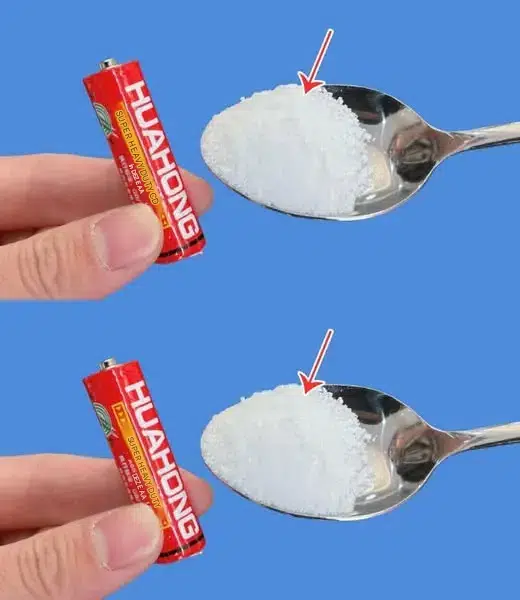
The internet is full of creative household hacks, ingenious DIY tricks, and viral video demonstrations claiming to solve everyday problems with common kitchen ingredients. Among the most popular claims floating around social media are tutorials showing people how to restore dead batteries using just a spoonful of salt, Epsom salt, or other household chemicals.
While these dramatic demonstrations make for engaging viewing, can adding salt actually bring a depleted alkaline or rechargeable battery back to life? Examining the electrochemistry of battery cells helps separate viral internet myths from scientific facts, while highlighting how energy storage technology truly operates.
The Electrochemical Principles Inside Battery Cells
To understand why household chemical tricks cannot magically revive dead batteries, it is essential to examine how energy is stored and released within a cell.
1. How Standard Batteries Generate Power
Chemical Reactions: Batteries produce electricity through irreversible or reversible oxidation-reduction (redox) reactions between internal chemical reactants, an electrolyte, and metal electrodes.
Depletion of Reactants: Over time, as a battery is used, active chemical materials inside the casing are fully consumed or converted into stable compounds, meaning the chemical energy source is exhausted.
Sealed Units: Modern consumer batteries (like alkaline or lithium cells) are hermetically sealed containers designed to prevent leakage and protect users from internal components.
2. Why Adding Salt Does Not Restore Power
External Application is Ineffective: Sprinkling salt, pouring saltwater, or attempting to inject solutions into a sealed commercial battery does nothing to replenish the consumed internal reactants.
Internal Electrolytes: While certain specialized industrial batteries (such as wet-cell lead-acid batteries used in automobiles) rely on liquid electrolyte solutions that can sometimes be maintained or adjusted, standard household alkaline batteries operate on entirely different chemical systems where external salt has no physical pathway inside.
Corrosion and Safety Risks: Attempting to puncture or tamper with household batteries to introduce foreign substances like salt creates severe risks of acid leaks, chemical burns, or violent ruptures.
Financial, Environmental, and Safety Considerations
Disposing of spent batteries and managing household energy supplies safely involves important economic and environmental factors.
Responsible Battery Management
Safe Recycling Practices: Instead of trying unproven viral hacks to revive dead cells, recycling spent batteries through municipal drop-off programs ensures that valuable metals like steel, zinc, and manganese are recovered safely.
Preventing Damage: Tampering with damaged or depleted batteries can ruin electronics if leakage occurs, leading to costly replacements of remote controls, flashlights, or devices.
Investing in Quality Power: Purchasing reputable rechargeable NiMH (nickel-metal hydride) batteries provides a sustainable, cost-effective long-term solution compared to repeatedly buying single-use alkaline cells.
Practical Tips for Battery Care and Household Safety
To maximize the lifespan of your household electronic devices and ensure safety, follow these reliable guidelines:
Store Batteries Properly: Keep unused batteries in a cool, dry place at room temperature to minimize self-discharge and corrosion.
Remove Batteries During Long Storage: If you plan not to use an electronic device for several months, remove the batteries to prevent destructive acid leaks.
Never Mix Old and New Batteries: Mixing different brands, chemistries, or charge levels in the same device causes uneven drainage and increases the risk of leakage.
Use Certified Chargers: Always use manufacturer-approved smart chargers designed specifically for your rechargeable battery types.
Fascinating Insights Into Battery History and Technology
The First Battery: Invented by Alessandro Volta in 1800, the “voltaic pile” used alternating discs of copper and zinc separated by brine-soaked cardboard (saltwater paper)—which is likely the historical root of modern salt-and-battery myths!
The Limits of Recycling: While consumer batteries cannot be revived with kitchen salt, modern industrial recycling facilities use advanced pyrometallurgical and hydrometallurgical processes to extract high-purity lithium and cobalt from spent electric vehicle batteries.
The Danger of Short Circuits: Placing loose batteries together in a drawer with metal objects can create accidental short circuits, generating heat and draining power rapidly.
Separating Myth From Reality
While viral videos promoting quick fixes like salt-infused battery hacks are entertaining to watch, they do not align with the laws of electrochemistry. Understanding how batteries function protects your electronics, keeps your home safe from chemical hazards, and ensures you rely on proven methods for managing household power.
Frequently Asked Questions (FAQ)
Can salt water revive an old car battery?
In very specific historical or emergency scenarios involving flooded lead-acid batteries with evaporated electrolyte levels, adding distilled water (or rarely, specific electrolyte adjustments) could temporarily alter performance, but adding table salt introduces destructive chloride ions that permanently ruin lead-acid plates. Modern car batteries should simply be replaced when depleted.
Are household battery revival hacks dangerous?
Yes. Puncturing, heating, or tampering with sealed alkaline or lithium batteries can cause thermal runaway, toxic chemical leaks, and skin irritation.
Why do some batteries leak a white powder as they age?
As alkaline batteries discharge over time, the zinc anode oxidizes and potassium hydroxide electrolyte leaks out, reacting with carbon dioxide in the air to form potassium carbonate crystals (the white crust often seen in old devices).
What is the best way to dispose of dead batteries?
Take them to a local retail recycling drop-off point, hazardous waste facility, or municipal collection center rather than throwing them in standard household trash.
