
Introduction
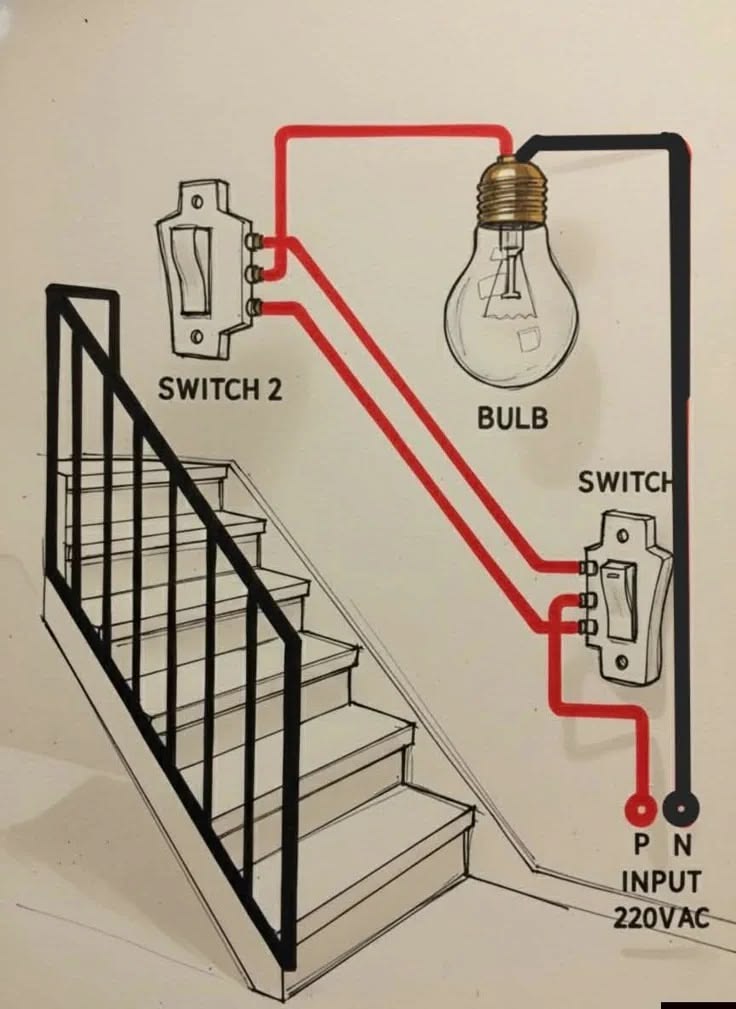
In residential home construction and electrical wiring, ensuring safe and convenient lighting control across multi-level spaces is essential. One of the most common and practical electrical configurations in two-story homes is the two-way switch setup, which allows homeowners to turn a single staircase light on or off from two different locations—typically at the top and bottom of the stairs. An instructional wiring diagram illustrating a 220VAC input connected to a light bulb, Switch 1, and Switch 2 next to a staircase provides a clear visual blueprint for this electrical circuit.
Understanding basic home electrical systems is vital for safety, maintenance, and home improvement projects. Just as prudent financial budgeting, securing property insurance, managing home loans, and consulting legal services protect your physical and financial assets, understanding electrical wiring protects your home from hazards. In this comprehensive guide, we will explore the principles of two-way switching circuits, examine standard wiring components, share practical safety tips, and answer common electrical questions.
The Mechanics of Two-Way Light Switching Circuits
A two-way switching circuit utilizes two single-pole double-throw (SPDT) switches to control a single electrical load (the light bulb) from two distinct locations.
Phase (Live) and Neutral Power Distribution
-
Power Input (220VAC): The electrical circuit originates from a live Phase ($P$) wire and a Neutral ($N$) wire supplying standard household alternating current.
-
Switch Interconnections: The live wire connects into the first switch, while traveler wires run between the common and traveler terminals of Switch 1 and Switch 2 to redirect current depending on switch orientation.
-
Completing the Circuit: The final connection routes current through the light bulb fixture before returning via the Neutral ($N$) wire to complete the closed electrical loop.
How Toggle Positions Interact
When either switch is toggled, it reroutes the electrical current through alternate paths (traveler wires). If both switches align their internal paths, the circuit closes and the bulb illuminates; if one switch alters its position, the circuit opens and the light turns off.
Safety Protocols and Best Practices for Home Electrical Work
Working with household electricity requires strict adherence to safety guidelines to prevent shocks, short circuits, or electrical fires.
Turning Off Main Power
Always shut off the main circuit breaker feeding the work area before removing switch plates, handling wires, or installing light fixtures. Verify that wires are completely dead using a non-contact voltage tester.
Complying with Electrical Codes
Electrical wiring must adhere to local municipal building codes and safety standards. Using properly rated copper wire gauges, secure wire connectors, and grounded electrical boxes ensures long-term reliability.
Practical Tips for Electrical Maintenance and Troubleshooting
If you are inspecting or troubleshooting a staircase lighting circuit, follow these practical tips:
-
Label Wires Before Disconnecting: When replacing old switches, take a photo or label traveler and live wires to ensure correct reconnection.
-
Check Bulb Wattage Ratings: Ensure the light bulb installed in the staircase fixture does not exceed the maximum wattage rating specified by the light socket.
-
Consult Licensed Electricians: If you encounter unfamiliar wiring configurations, flickering lights, or tripped breakers, hire a certified electrician to diagnose and repair the issue safely.
Fascinating Facts About Electrical Switching History
-
The Invention of the Three-Way Switch: The two-way switch mechanism (commonly referred to in North America as a three-way switch) was patented in the late 19th century to solve the challenge of controlling hallway and staircase lighting efficiently.
-
AC Power Standardization: Nikola Tesla and George Westinghouse’s standardization of Alternating Current (AC) in the late 1800s made long-distance power distribution and complex multi-switch home wiring safe and practical.
-
Modern Smart Switches: Contemporary home automation has introduced smart two-way switches that allow wireless multi-location control via smartphone apps and voice assistants.
Conclusion
Understanding how two-way staircase light switches operate empowers homeowners to appreciate the underlying mechanics of residential electrical systems. By following proper wiring layouts, respecting safety protocols, and knowing when to call professionals, you can maintain a safe, functional, and well-lit home. Master your electrical basics and keep your home brilliantly illuminated!
FAQ Section
What is the difference between a one-way and a two-way switch?
A one-way switch controls a light from a single location, whereas a two-way switch configuration allows a single light to be operated independently from two separate locations.
Why are there traveler wires in a two-way switch circuit?
Traveler wires act as alternative electrical pathways connecting the two switches, allowing either switch to open or close the circuit regardless of the other’s position.
Is it safe to do DIY electrical wiring at home?
Minor tasks like replacing a switch cover or swapping a light bulb are generally safe for DIYers, but complex circuit wiring should always be handled by a licensed electrician to ensure safety and code compliance.
