
ADVERTISEMENT
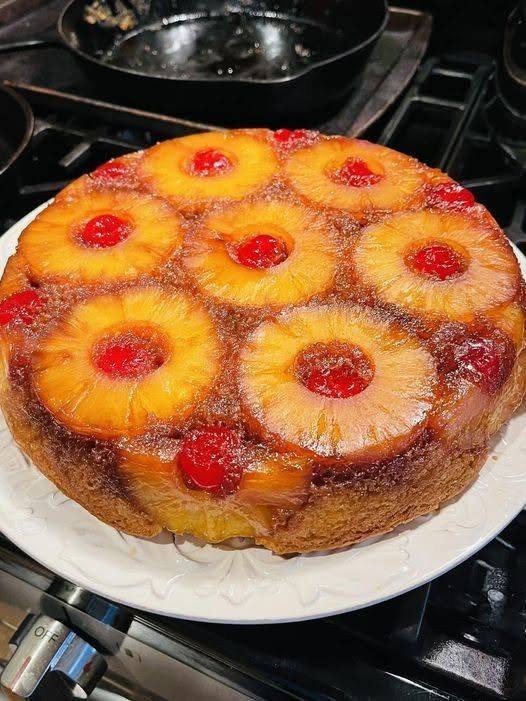
There is something truly magical about a homemade pineapple upside-down cake. The combination of juicy pineapple rings, bright red maraschino cherries, buttery caramelized brown sugar, and soft golden cake makes this dessert a timeless favorite.
ADVERTISEMENT
Baked in a cast-iron skillet, this classic cake develops a beautiful caramel topping that becomes the centerpiece when you flip it onto a serving plate.
Best of all, you don’t need to be an expert baker to make a dessert that looks impressive and tastes delicious.
Follow this simple step-by-step recipe to make a moist, tender pineapple upside-down cake that your family will ask for again and again.
Ingredients
For the Pineapple Topping
¼ cup (57 g) unsalted butter
¾ cup (150 g) packed brown sugar
1 can (20 oz / 567 g) pineapple rings in juice, drained
ADVERTISEMENT
10–12 maraschino cherries, drained
1–2 tablespoons pineapple juice, if needed
For the Cake Batter
1½ cups (190 g) all-purpose flour
1 cup (200 g) granulated sugar
½ cup (113 g) unsalted butter, softened
2 large eggs, at room temperature
½ cup (120 ml) milk
1½ teaspoons baking powder
1 teaspoon vanilla extract
¼ teaspoon salt
Instructions
Step 1: Preheat the Oven
Preheat your oven to 350°F (175°C).
Use a well-seasoned 10-inch cast-iron skillet that is suitable for oven use. Alternatively, you can use a 9-inch round cake pan.
Step 2: Prepare the Caramel Topping
Place the cast-iron skillet over low heat and add the butter.
Once the butter has melted, sprinkle in the brown sugar. Stir gently until the sugar is moistened and the mixture looks glossy.
Spread the mixture evenly across the bottom of the skillet.
Remove the skillet from the heat and allow it to cool slightly before arranging the fruit.
Step 3: Arrange the Pineapple and Cherries
Drain the pineapple rings thoroughly, reserving a little juice if desired.
Arrange the pineapple rings in a single layer over the brown sugar mixture.
Place one maraschino cherry in the center of each pineapple ring. You can also add cherries in the spaces between the rings for a more colorful presentation.
Take your time with this step because the fruit arrangement will become the top of your cake after flipping.
Step 4: Prepare the Dry Ingredients
In a medium bowl, whisk together the flour, baking powder, and salt.
Set the mixture aside.
Combining the dry ingredients separately helps distribute the baking powder evenly throughout the batter.
Step 5: Cream the Butter and Sugar
In a large mixing bowl, beat the softened butter and granulated sugar until the mixture becomes light and fluffy.
This usually takes about 2–3 minutes with an electric mixer.
Add the eggs one at a time, beating well after each addition. Stir in the vanilla extract.
The mixture should look smooth and creamy.
Step 6: Finish the Cake Batter
Add approximately one-third of the flour mixture to the butter mixture and mix gently.
Pour in half the milk and mix again.
Continue alternating the remaining flour mixture and milk, finishing with the flour mixture.
Mix only until the ingredients are combined. Overmixing can make the cake dense instead of tender.
The finished batter should be thick but easy to spread.
Step 7: Assemble the Cake
Carefully spoon the batter over the pineapple rings and cherries in the skillet.
Spread it gently with a spatula to create an even layer without disturbing the fruit.
Make sure the batter reaches the edges of the skillet.
Step 8: Bake Until Golden
Place the skillet in the preheated oven and bake for approximately 35–45 minutes.
The cake is ready when the top is golden brown and a toothpick inserted into the center comes out clean or with a few moist crumbs.
If the center still looks wet, continue baking for a few more minutes and test again.
Step 9: Let the Cake Rest
Remove the skillet from the oven using oven mitts, as the handle will be extremely hot.
Allow the cake to rest for approximately 10 minutes.
This brief resting period allows the caramel topping to settle while keeping it warm enough to release from the skillet.
Do not allow the cake to cool completely in the pan, because the caramel may harden and cause the fruit to stick.
Step 10: Flip the Cake
Place a large, heat-resistant serving plate over the skillet.
Wearing oven mitts and keeping the plate firmly against the skillet, carefully flip the skillet and plate together in one controlled movement.
Leave the skillet in place for a few seconds, then slowly lift it away.
The golden pineapple rings and glossy red cherries should now be beautifully displayed on top of the cake.
If a pineapple ring or cherry sticks to the skillet, gently remove it with a spatula and place it back on the cake.
Allow the cake to cool slightly before slicing and serving.
Tips for the Best Pineapple Upside-Down Cake
Drain the pineapple well. Excess liquid can make the topping watery and affect the cake’s texture.
Use room-temperature ingredients. Eggs, milk, and butter at suitable temperatures help the batter combine evenly.
Avoid overmixing. Mix the batter only until the flour disappears to keep the cake soft and tender.
Watch the baking time. Cast-iron skillets retain heat well, so check the cake toward the earlier end of the baking window.
Flip while the cake is still warm. Waiting too long can cause the caramelized topping to stick to the skillet.
Protect your hands. Always use oven mitts when handling a hot cast-iron skillet, including when flipping the cake.
Delicious Variations
Sprinkle chopped pecans between the pineapple rings for extra crunch.
Coconut Pineapple Cake
Replace a small portion of the flour with unsweetened shredded coconut for a tropical flavor.
Spiced Pineapple Cake
Add ½ teaspoon of cinnamon to the cake batter for a warm, comforting taste.
Pineapple and Brown Butter Cake
Brown the butter used in the batter, allow it to cool until softened, and use it for a deeper, nutty flavor.
