
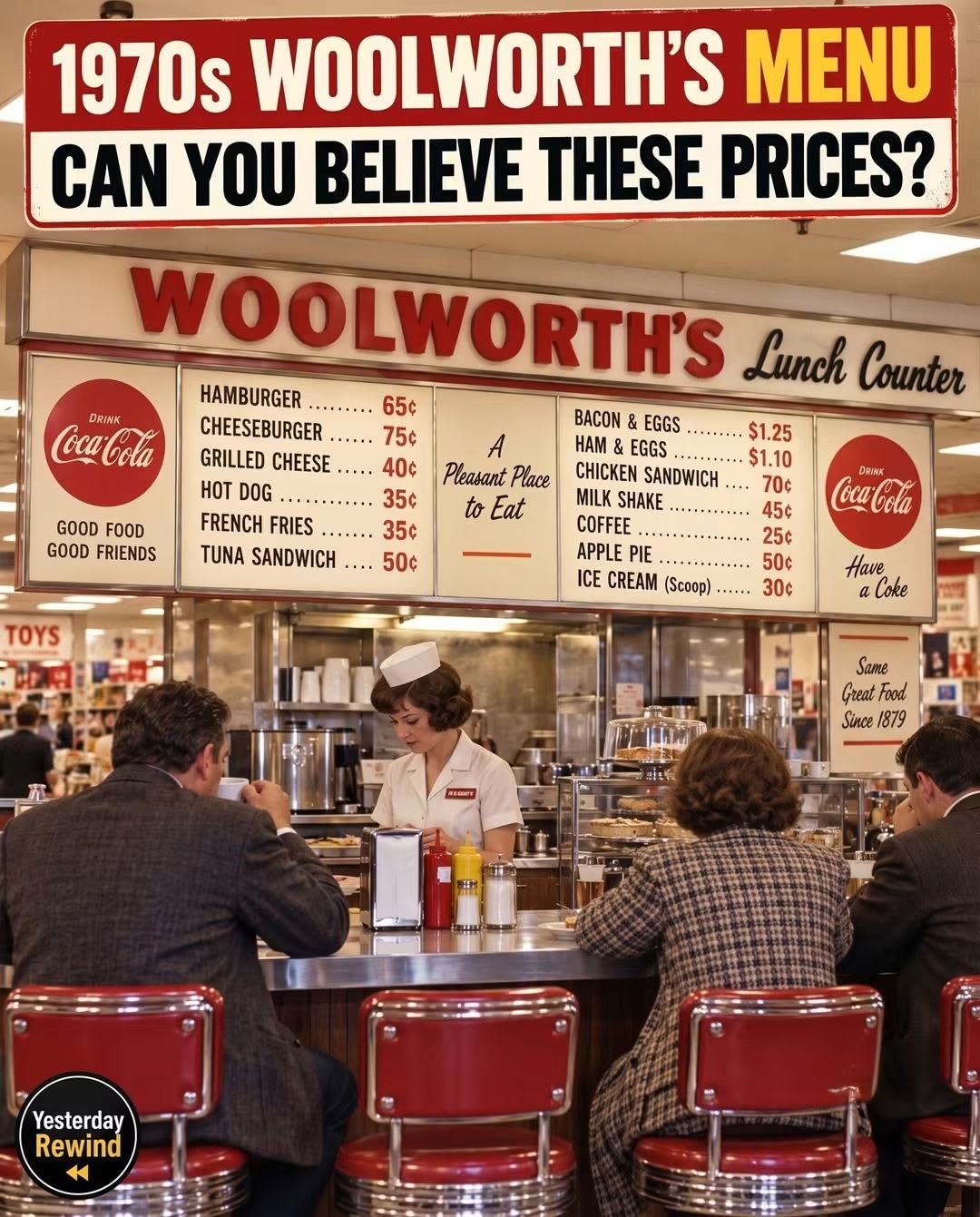
The Magic of Woolworth’s Lunch Counters and Unbelievable 1970s Prices
For decades, the bustling lunch counter at F. W. Woolworth & Co. was an iconic American institution. Long before fast-food drive-thrus and digital ordering kiosks dominated daily life, walking into a local Woolworth’s meant stepping up to a shiny chrome-and-vinyl counter for a quick, affordable meal. Whether stopping for a 65¢ hamburger, a 45¢ milkshake, or a hot cup of coffee for just a quarter, generations of shoppers experienced a welcoming community gathering space right in the middle of department stores.
Examining the history of Woolworth’s lunch counters, the economics of mid-century dining, and why these retro prices evoke such powerful nostalgia reveals how deeply food culture and retail spaces have transformed over the years.
The History and Rise of Department Store Lunch Counters
Frank Winfield Woolworth revolutionized retail in the late 19th century by pioneering the “five-and-dime” store concept, offering fixed, low-cost goods that made shopping accessible to the general public. As stores expanded into massive multi-level emporiums across American downtowns and suburban shopping malls, introducing the in-store lunch counter was a masterstroke of customer service.
These counters provided a convenient, comfortable spot for shoppers, working professionals, and families to take a break without leaving the store. The sight of servers in crisp white hats and aprons pouring coffee from glass carafes became a defining image of mid-century Americana.
Affordable Accessibility: Prices were intentionally kept low so working-class families and shoppers could enjoy a hot meal or treat during a day out.
Community Interaction: Lunch counters served as social hubs where strangers sat shoulder-to-shoulder on red vinyl stools, sharing daily news and conversations.
Speed and Efficiency: The classic menu featured quick, comforting diner staples—from grilled cheese sandwiches and hot dogs to classic milkshakes and apple pie—prepared right in front of the customer.
The Economics of Inflation: Comparing Then and Now
When modern consumers look at vintage menus displaying hamburgers for 65 cents and bacon and eggs for $1.25, the price differences often spark immediate amazement. However, understanding these prices requires looking through the lens of economic inflation and wage growth over the past half-century.
In the 1970s, the U.S. economy experienced significant shifts, including periods of high inflation and changing manufacturing costs. While nominal prices were drastically lower, calculating the purchasing power parity reveals that consumer purchasing habits and median household incomes were scaled very differently than they are today.
Despite economic changes, the psychological appeal of affordable, unpretentious dining remains as strong as ever. The modern fascination with retro diner culture highlights a collective yearning for simplicity and value in an increasingly expensive world.
Financial Wisdom and Budgeting Lessons from the Past
The culture of mid-century dining out also reflects broader lessons in household budgeting and mindful spending. In earlier eras, dining out was viewed as an occasional treat rather than an everyday convenience, keeping household food budgets balanced and predictable.
Applying traditional financial mindfulness to modern life involves several proven strategies:
Prioritize Home-Cooked Meals: Preparing meals at home using basic ingredients remains one of the most effective ways to lower monthly expenses compared to frequent dining out.
Evaluate Discretionary Spending: Track small daily purchases—such as gourmet coffee or takeout lunches—to see how minor expenses accumulate over time.
Build Long-Term Savings: Directing saved funds toward high-yield savings accounts, retirement funds, or mortgage principal reductions helps secure lasting financial stability.
Practical Tips for Recreating the Retro Diner Experience at Home
If you want to capture the cozy charm and classic flavors of a 1970s Woolworth’s lunch counter in your own kitchen, try these simple ideas:
Keep the Menu Simple: Focus on classic, comforting diner fare—such as grilled cheese sandwiches, crispy french fries, thick milkshakes, and simple hamburgers.
Set the Scene: Use retro dinnerware, checkered placemats, or counter seating if available to establish an authentic mid-century atmosphere.
Make Milkshakes from Scratch: Combine quality vanilla ice cream, whole milk, and traditional syrups (like chocolate or malt) in a blender, serving it in a tall glass with a cherry on top.
Embrace Unplugged Family Time: Leave smartphones and digital devices in another room while enjoying a casual meal together, encouraging old-fashioned conversation.
Fascinating Facts About Woolworth’s Lunch Counters
Historic Civil Rights Milestones: Beyond food and milkshakes, Woolworth’s lunch counters played a pivotal role in American history as the site of historic sit-ins led by civil rights activists protesting segregation in the 1960s.
The First Counter: While lunch counters became synonymous with Woolworth’s in the mid-20th century, the company installed its first experimental food counter in the late 1870s to keep shoppers inside stores longer.
The Final Closing: Although the original F. W. Woolworth company closed its traditional variety stores in the 1990s, the nostalgic memory of its lunch counters remains a beloved symbol of mid-century retail culture.
Conclusion
The enduring popularity of vintage Woolworth’s menus isn’t just about cheap food—it is a celebration of a slower, more connected era when simple pleasures were shared over a counter stool. Remembering those classic prices and welcoming atmospheres reminds us of the comfort found in community, tradition, and shared everyday moments.
FAQ Section
When did Woolworth’s lunch counters close?
Most traditional Woolworth’s lunch counters and variety stores operated through the mid-20th century before the company phased out its American retail operations and closed its remaining stores in the late 1990s.
What were the most popular items on a Woolworth’s menu?
Classic favorites included milkshakes, grilled cheese sandwiches, hamburgers, hot dogs, club sandwiches, and traditional desserts like apple pie and ice cream scoops.
Why do vintage menus evoke such strong nostalgia?
Vintage menus remind people of simpler times, childhood memories with grandparents, affordable treats, and community-focused spaces that felt warm and unhurried.
