
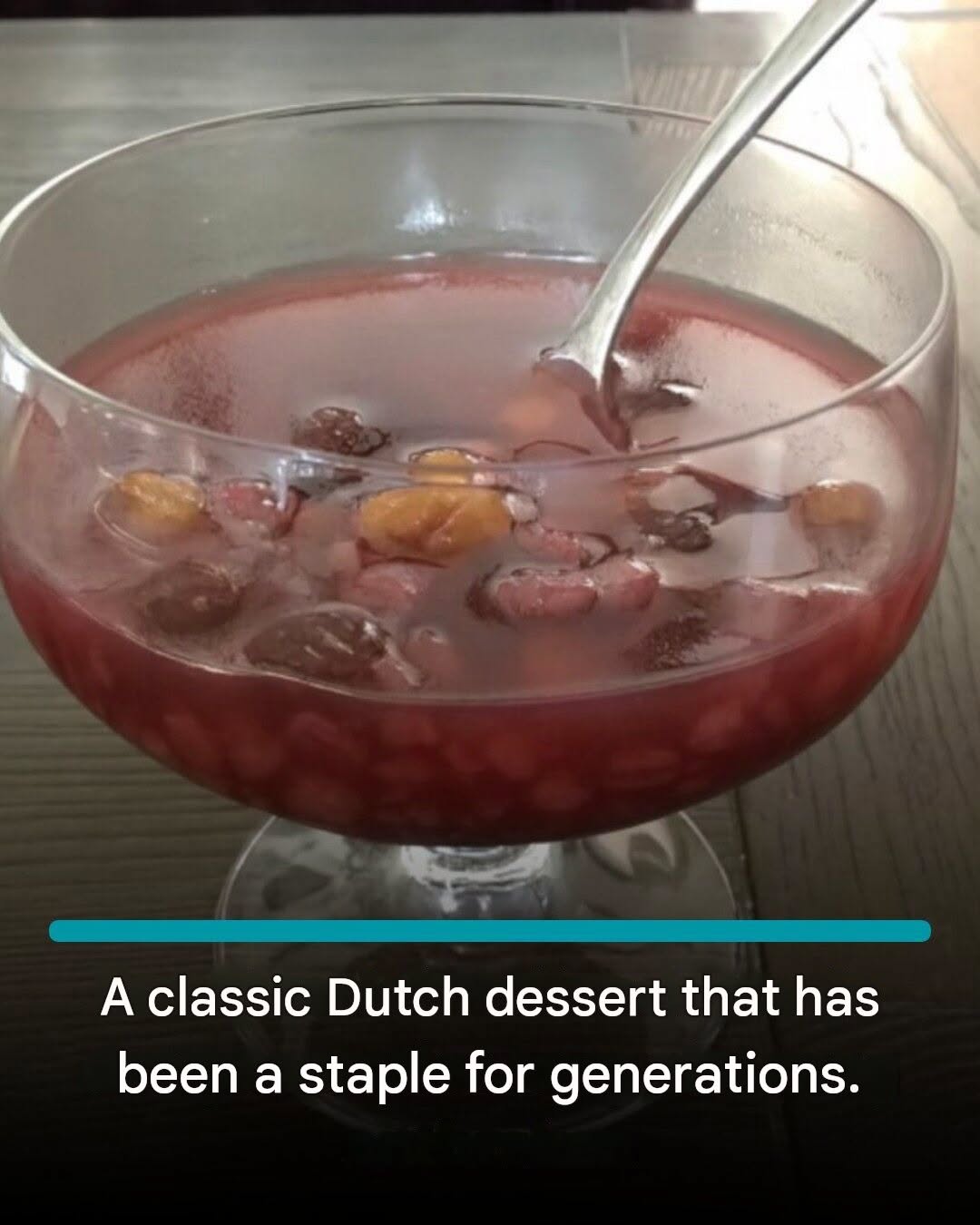
Although the name suggests otherwise, watergruwel tastes anything but unpleasant – anyone who has tasted this deep red, slightly sour dessert from grandma’s kitchen knows that for sure. This dish is reappearing regularly on social media these days, but that is no coincidence.
For generations born before 1975, explanation is hardly necessary. Yet, a single glance at that gleaming red mass is enough to evoke memories: the Sunday pot, the wooden spoon, and the characteristic scent of berry juice mixed with cinnamon spreading through the house.
What is watergruel, actually?
Watergruwel,
better known in large parts of the Northern Netherlands as krentjebrij or krentenbrij, is a traditional Dutch dessert. The base is groats, or hulled barley, which is gently cooked until it becomes a creamy porridge.
Red fruit juice or berry juice is mixed in, along with a generous spoonful of raisins or currants. The result: a fruity, slightly tart porridge with that unmistakable deep red color.
Warm from the pan, a comfort on cold days; once chilled and set, a surprisingly hearty dessert.
Where does that strange name come from?
Many people immediately think of something scary when they hear the word “gruwel.” However, the word has absolutely nothing to do with horror. In Old Dutch, “gruul” or “gruwel” simply meant porridge or gruel, often made from groats.
The pronunciation shifted over the centuries, but the original meaning remained. Watergruwel is therefore literally “porridge cooked on water,” without ulterior motives. In Frisian, it is called krintsjebrij, while in Groningen and Drenthe, krentjebrij is known as krentjebrij. Three names, one dish.
A dessert from frugal times
Watergruwel was born during a
period when luxury was absent from most farmhouse tables. Groats kept well, were affordable, and were very filling. Combined with a splash of berry juice or red lemonade syrup and some dried fruit, you had a dessert that was both nutritious and warming.
In the nineteenth century, groats were a staple in Dutch cuisine. When ready-made berry juice appeared on the market in bottles, watergruwel acquired its typical bright color. Before that, the tint was often somewhat duller, depending on the season and the fruit used.
