
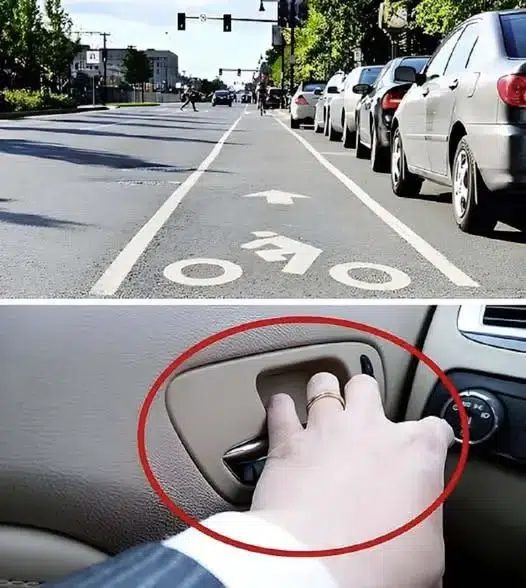
For millions of drivers around the world, arriving at a destination, parking on a busy city street, and stepping out of the vehicle is an automatic routine. We unbuckle our seatbelts, reach across with the hand closest to the door, pull the latch, and push the door open to step onto the street. However, road safety experts, cycling advocates, and traffic authorities highlight that this casual habit can lead to severe, life-threatening accidents—especially for passing bicyclists, motorcyclists, and pedestrians.
Understanding vehicle ergonomics, blind spots, and the simple safety method known as the “Dutch Reach” can prevent devastating “dooring” accidents. In this comprehensive article, we explore the mechanics of street-side exiting, legal and insurance implications, and essential safety practices for all motorists.
The Danger of “Dooring” and Blind Spots
When a driver parks parallel to a bike lane or heavy traffic corridor and opens their car door without checking thoroughly, an oncoming cyclist or scooter rider can collide with the sudden obstacle. These accidents—commonly referred to as “dooring”—often result in severe injuries, as cyclists are thrown over handlebars or into moving traffic lanes.
Using your hand closest to the door (the left hand for a left-hand drive vehicle) creates a rigid, narrow posture that restricts your upper body rotation, making it difficult to look backward over your shoulder into your blind spot.
The Solution: The “Dutch Reach” Technique
Originating in the Netherlands decades ago—where cycling is a primary mode of transportation and bicycle safety is heavily emphasized—a simple technique called the Dutch Reach completely eliminates this hazard.
How to Practice the Dutch Reach
Use Your Far Hand: When opening your vehicle door, always reach across your body to open the latch using your right hand (in a left-hand drive car).
Force Natural Body Rotation: Reaching across your chest naturally forces your torso to twist and turn.
Check Your Blind Spot: This rotation automatically aligns your eyes with the side mirror, the rear window, and the blind spot over your shoulder, allowing you to check for approaching cyclists or pedestrians before pushing the door open.
Financial, Legal, and Insurance Considerations
Traffic safety habits carry significant legal and financial consequences for vehicle operators.
1. Legal Liability and Traffic Citations
In many jurisdictions, opening a car door into the path of a cyclist or moving vehicle is classified as a traffic violation resulting in hefty fines, penalty points, and full legal liability for any resulting injuries or property damage.
2. Auto Insurance Impact
Insurance claims resulting from dooring accidents can significantly increase your annual premium rates. Adopting safe exit routines protects you from preventable liability and expensive legal disputes.
Essential Road Safety Best Practices
To protect vulnerable road users and ensure a safe exit every time you park, follow these practical steps:
Practice the Dutch Reach Consistently: Make using your opposite hand an automatic habit whenever exiting a vehicle parked near active traffic lanes.
Check Mirrors First: Always glance at your side-view mirror before touching the door handle.
Open the Door Slowly: Crack the door open a few inches first to signal to oncoming cyclists or drivers that you are about to exit.
Fascinating Facts About Traffic Safety
Global Adoption: The Dutch Reach technique has been officially integrated into driver education manuals and cycling safety campaigns across North America, Europe, and major metropolitan areas worldwide.
Built-In Bicycle Infrastructure: Many modern urban centers install protected bike lanes separated from parked cars by physical buffers or concrete curbs to minimize door-zone conflicts.
Conclusion
Opening your car door with your left hand is a subtle habit, but switching to the Dutch Reach by using your right hand can save lives. By forcing your body to turn and look into your blind spot, you protect cyclists, pedestrians, and yourself from unexpected accidents.
Frequently Asked Questions (FAQ)
What is the Dutch Reach?
The Dutch Reach is a safety technique where a driver or passenger uses the hand farthest from the door to open it, forcing their body to twist so they can check for oncoming cyclists and traffic.
Why is opening a car door with the left hand dangerous?
Using the hand closest to the door restricts upper body rotation, preventing you from looking effectively into your blind spot and increasing the risk of striking a passing cyclist.
Is the Dutch Reach required by law?
While not always explicitly written as a standalone law, drivers are legally responsible for opening vehicle doors safely without obstructing traffic or causing accidents.
Does this technique apply to passengers as well?
Yes! Passengers exiting on the traffic side of a vehicle should also use the hand farthest from the door to check for hazards before stepping out.
