
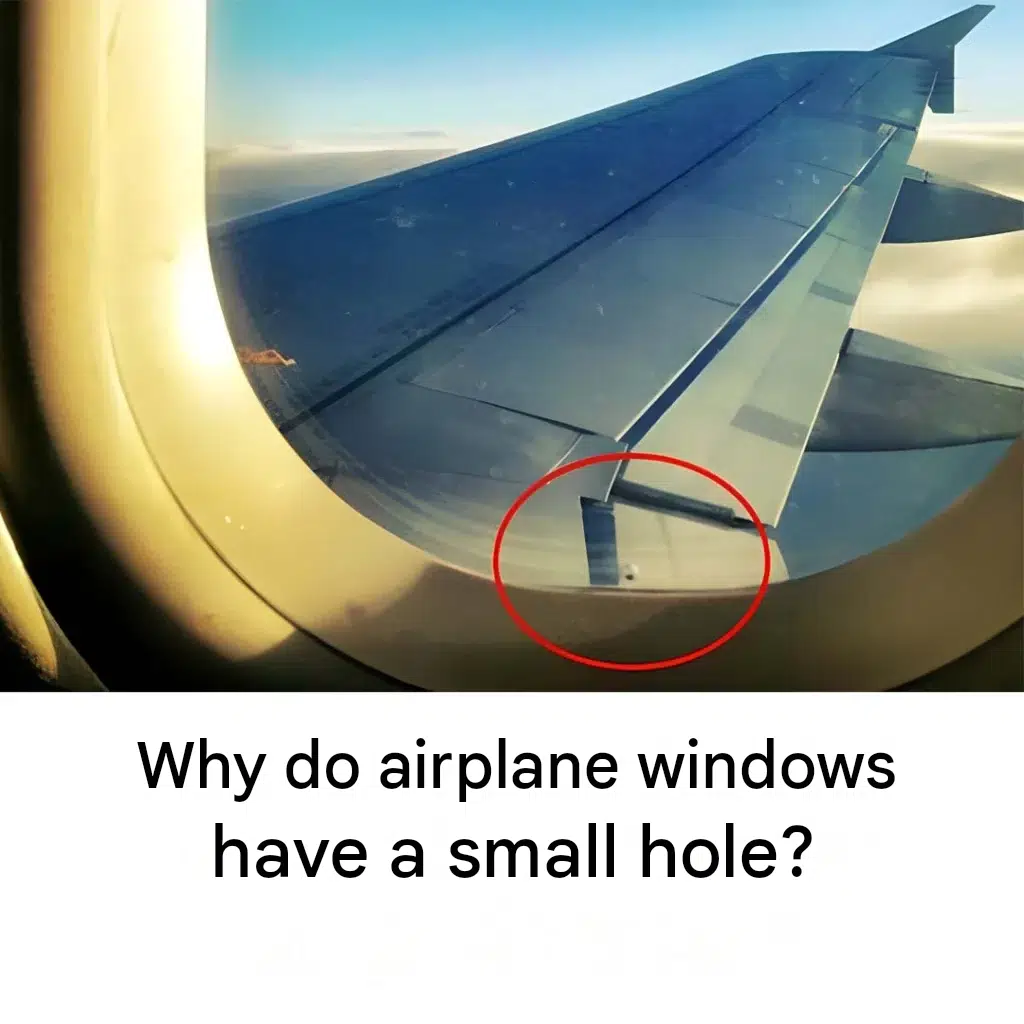
For millions of people worldwide, boarding a commercial airliner is a routine part of business travel, family vacations, or global exploration. When settling into your seat next to the window, gazing out at the sweeping cloudscapes or the wing cutting through the sky is one of the classic highlights of flying. However, if you look closely at the inner pane of an airplane window, you will notice a tiny, unassuming circular hole near the bottom.
To the untrained eye, a hole in an aircraft window might seem like a alarming design flaw or a breach in cabin pressure. In reality, that tiny aperture is an engineering masterpiece designed to keep passengers safe, comfortable, and structurally secure at 35,000 feet. Understanding the physics and engineering behind commercial aviation windows reveals the incredible complexity hidden in plain sight during every flight.
The Physics of Cabin Pressure and Altitude
To understand why the small hole exists, we must examine the extreme environments commercial airplanes navigate daily. When cruising at typical altitudes between 30,000 and 40,000 feet, the outside atmospheric pressure is dangerously low and temperatures plummet to around -50°F (-45°C) to -60°F (-51°C). Humans cannot survive in such thin air without artificial pressurization.
To keep passengers comfortable, aircraft fuselages are pressurized to simulate an altitude of roughly 6,000 to 8,000 feet. This creates a massive pressure differential: the air pressure pushing outward from inside the cabin is significantly higher than the freezing, thin air pressing inward from the outside. Every structural element of the aircraft—especially the windows—must be engineered to withstand this continuous stress cycle flight after flight.
The Three-Pane Window Design
Commercial airplane windows are not made of fragile glass; they are constructed from high-grade, durable stretched acrylic. Furthermore, every standard passenger window consists of three distinct layers:
The Outer Pane: Positioned on the exterior of the fuselage, this pane bears the brunt of the external air pressure differential.
The Middle Pane: Located just behind the outer pane, this secondary layer acts as a fail-safe safety barrier. If anything were to ever compromise the outer pane, the middle pane is strong enough to maintain full cabin pressure independently.
The Inner Pane: This is the plastic pane closest to the passenger seat. Its primary purpose is purely cosmetic and protective—it keeps passengers from touching, scratching, or damaging the critical middle and outer panes.
What Does the Tiny Hole Actually Do?
That famous tiny hole is drilled exclusively into the middle pane of the window assembly. It serves two vital engineering functions:
1. Regulating Pressure Distribution
The hole acts as a pressure-equalizing valve (often referred to as a “bleed hole”). By allowing air to pass between the passenger cabin and the space between the outer and middle panes, the hole ensures that the cabin pressure is primarily exerted against the heavy-duty outer pane. Without this tiny hole, the middle pane would be forced to absorb the full pressure differential, increasing the risk of structural fatigue or cracking.
2. Preventing Fogging and Condensation
At high altitudes, the extreme cold on the outside surface of the window would normally cause moisture from the warm cabin air to condense and freeze on the glass, completely blocking the view. By regulating airflow and temperature across the window layers, the bleed hole prevents frost and condensation from forming on the panes, keeping the window crystal clear for passengers and flight crew.
Financial, Legal, and Maintenance Considerations in Aviation
Aviation safety and structural integrity involve rigorous regulatory oversight, substantial financial investments, and strict maintenance protocols.
1. Airline Maintenance and Safety Compliance
Aviation regulatory authorities—such as the Federal Aviation Administration (FAA)—enforce stringent maintenance schedules. Commercial airlines employ specialized technicians to inspect every cabin window during routine heavy maintenance checks. Any scratches, crazing, or damage to the inner or outer panes result in immediate replacement to maintain airworthiness and avoid costly operational delays.
2. Insurance and Risk Management
Passenger safety is paramount in the commercial aviation industry. Ensuring that every structural component—down to the multi-pane window assemblies—meets rigorous safety standards minimizes liability risks, protects airline insurance profiles, and ensures compliance with global safety certifications.
3. Investment in Advanced Aerospace Materials
Modern aircraft manufacturers invest heavily in research and development to create lighter, stronger acrylic and composite window materials. These innovations reduce overall aircraft weight, improving fuel efficiency and lowering operating costs for airlines across competitive global routes.
Essential Travel Safety and Preparedness Tips
While aircraft windows are engineered to withstand immense forces, passengers can ensure a smoother journey by following standard travel best practices:
Keep Window Shades Open During Takeoff and Landing: Airlines require window shades to be raised during critical phases of flight so that cabin crew and passengers can easily assess exterior conditions in an emergency.
Do Not Tamper with Window Panes: Never press excessively hard, pick at seals, or insert objects near the window panes. Leave the inner plastic shield intact.
Stay Hydrated: Cabin air at high altitudes has low humidity. Drink plenty of water during long flights to stay comfortable and counteract dry air effects.
Fascinating Facts About Aircraft Windows
Curved Design: Airplane windows are curved rather than square because curved corners distribute stress evenly across the fuselage. Sharp square corners act as stress concentration points that can lead to catastrophic structural cracks.
Stretched Acrylic: The material used in aircraft windows is not standard glass; it is a specialized stretched acrylic polymer capable of flexing under pressure without shattering.
Bird Strike Resistance: Outer aircraft windshields in the flight deck are thick, multi-layered laminated structures designed to withstand high-speed impacts with birds or debris during takeoff and landing.
Conclusion
The tiny hole in an airplane window is far from a random defect or a cause for concern. It is a brilliant example of aerospace engineering that balances cabin pressure between the panes, prevents frost from blocking your view, and ensures structural safety at 35,000 feet. The next time you gaze out the window at the clouds, you can appreciate the intricate science keeping you safe in the skies.
Frequently Asked Questions (FAQ)
What happens if the outer airplane window cracks during flight?
If the outer pane were to experience a rare fracture, the middle pane—supported by the bleed hole equalizing pressure—is fully engineered to maintain cabin pressurization safely until the aircraft can land at the nearest airport.
Why are airplane windows rounded instead of square?
Rounded windows prevent stress concentration. In early jet aviation, square windows experienced high stress loads at their sharp 90-degree corners, leading to structural cracks. Curving the edges distributes pressure uniformly.
Can the inner plastic window pane break easily?
The inner pane is designed to protect the critical outer layers from passenger contact. While it can scratch or crack under heavy impact, it does not hold cabin pressure, meaning a damaged inner pane does not compromise flight safety.
Do all commercial airplanes have this bleed hole?
Yes. Virtually all modern commercial transport aircraft—from narrow-body regional jets to massive wide-body airliners like the Boeing 777 or Airbus A350—utilize multi-pane window designs featuring a pressure-equalizing bleed hole.
