
French fries are universally loved as one of the ultimate comfort foods worldwide. However, every potato enthusiast has a distinct preference when it comes to thickness, texture, and crunch. Whether you prefer ultra-thin shoestring fries or thick-cut steak chips, the size of a French fry dramatically changes its ratio of crispy exterior to soft, fluffy interior.
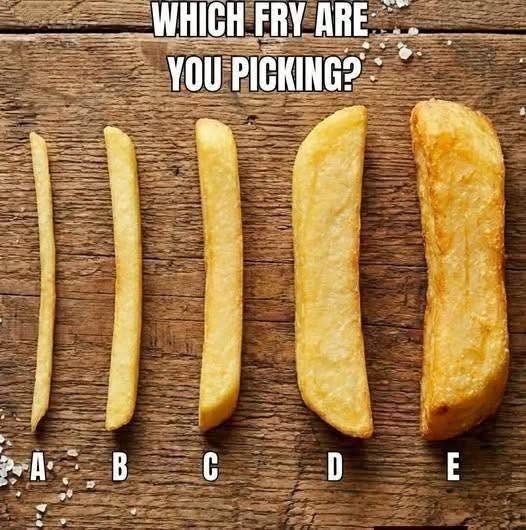
A viral image circulating online shows five distinct cuts of French fries labeled A through E on a rustic wooden board, accompanied by the text: “WHICH FRY ARE YOU PICKING?” The image showcases a complete spectrum of thickness—ranging from an ultra-thin shoestring fry (A) and standard fast-food cut (B), to medium-cut (C), thick steak-cut (D), and heavy pub-style wedge/chip (E).
In this guide, we will break down the characteristics of each fry cut, compare their textures and ideal uses, share culinary tips for achieving maximum crispiness at home, and discuss balanced lifestyle practices.
Breakdown of the French Fry Spectrum (A to E)
Each fry thickness offers a unique balance of crispiness and fluffy potato texture.
+——————————————————-+
| THE FRENCH FRY TEXTURE SPECTRUM |
+——————————————————-+
|
+——————–+——————–+
| |
v v
+———————–+ +———————–+
| THIN CUTS (A & B) | | THICK CUTS (D & E) |
+———————–+ +———————–+
| * Maximum surface area| | * Fluffy, pillow-like |
| * High crunch factor | | potato interior |
| * Quick oil frying | | * Retains heat longer |
+———————–+ +———————–+
| |
+——————–+——————–+
|
v
+————————-+
| MEDIUM CUT (C) |
| The classic balance of |
| crunch and softness |
+————————-+
Fry A: The Shoestring Cut
Style: Matchstick / Shoestring
Texture Profile: Super crispy with minimal soft interior.
Best Paired With: Smash burgers, steak frites, or seasoned snacks where maximum crunch is desired.
Fry B: Standard Fast-Food Cut
Style: Classic French Fry (approx. 1/4 inch)
Texture Profile: Golden and crispy on the outside with a light, airy center.
Best Paired With: Traditional fast-food burgers, ketchup, or dipping sauces.
Fry C: Medium Hand-Cut
Style: Diner / Bistro Cut (approx. 3/8 inch)
Texture Profile: Balanced 50/50 blend of crunchy golden exterior and warm potato flavor.
Best Paired With: Gourmet burgers, artisan sandwiches, and aioli dips.
Fry D: Steak Cut
Style: Thick Steak Fry (approx. 1/2 inch)
Texture Profile: Lightly crisp skin surrounding a rich, velvety potato core.
Best Paired With: Steaks, loaded cheese toppings, and heavy dipping sauces.
Fry E: Pub-Style Triple-Cooked Chip / Wedge
Style: British Pub Chip / Chunk Cut
Texture Profile: Deeply golden, blistered outer crust with a dense, baked-potato-like center.
Best Paired With: Fish and chips, malt vinegar, or hearty pub entrees.
Comparing French Fry Cuts and Cooking Styles
Choosing the right fry cut depends heavily on your preferred cooking method and sauce pairing.
Fry Cut Surface-to-Volume Ratio Crunch Rating Interior Fluffiness Ideal Cooking Method
A (Shoestring) Extremely High 5 / 5 1 / 5 Flash Deep Frying
B (Standard) High 4 / 5 3 / 5 Deep Frying / Air Frying
C (Medium) Moderate 3.5 / 5 3.5 / 5 Double-Frying Method
D (Steak Cut) Low 2.5 / 5 4.5 / 5 Oven Baking / Air Frying
E (Pub Chip) Very Low 3 / 5 (Blistered) 5 / 5 Par-boiling + Double Frying
How to Make Restaurant-Quality Fries at Home
Achieving the perfect balance of a crunchy crust and tender interior requires proven culinary techniques:
Soak in Cold Water: Soak raw cut potatoes in cold water for 30 minutes to release excess surface starch, preventing them from sticking or burning prematurely.
Par-Boil Before Frying: Boil thick-cut fries (C, D, and E) in salted water with a splash of vinegar until just tender. The vinegar prevents the potato from breaking apart.
The Double-Fry Technique:
First Fry (Blanching): Fry at a lower temperature ($325^\circ\text{F}$ / $160^\circ\text{C}$) to cook the interior through.
Second Fry (Crisping): Increase heat ($375^\circ\text{F}$ / $190^\circ\text{C}$) to create a golden, blistered outer crust.
Season Immediately: Toss fries in salt and spices immediately after removing them from the hot oil so the seasoning adheres properly.
Supporting Quality Nutrition, Healthcare, and Financial Peace
Enjoying delicious treats like French fries is part of a balanced lifestyle. Combining mindful indulgence with organized personal planning ensures long-term comfort and security.
Balancing Culinary Habits with Healthcare
While crispy side dishes make meals enjoyable, maintaining a balanced diet rich in whole foods supports overall wellness. Routine physical exams with a healthcare provider help monitor blood pressure, cholesterol, and metabolic health. Having reliable health insurance ensures affordable access to preventative checkups, routine labs, and nutrition guidance when needed.
Protecting Household Stability and Assets
Creating a low-stress lifestyle promotes overall health and peace of mind. Keeping family responsibilities structured ensures a solid foundation:
Financial Management: Managing mortgage payments, tracking personal loans, lowering credit card debt, and maintaining savings provide long-term security.
Home Insurance Coverage: Securing comprehensive property insurance safeguards your home against unexpected structural damage or loss.
Legal and Estate Security: Keeping estate documents, legal arrangements, and family records current protects household assets for future generations.
Practical Tips for Air Frying French Fries
Air frying is a popular alternative that uses up to 80% less oil while retaining great crunch:
Do Not Overcrowd the Basket: Arrange fries in a single layer or small batches to allow hot air to circulate freely.
Toss with a Light Oil Coat: Spraying cut potatoes with high-smoke-point oil (like avocado or canola oil) helps achieve an even, golden crunch.
Shake Every 5 Minutes: Shaking the basket periodically ensures uniform browning across all sides.
Fascinating Historical Facts About French Fries
Not Originally French: French fries originated in Belgium, where villagers traditionally fried small fish. When rivers froze in winter, they cut potatoes into fish-like shapes and fried them instead!
Why “French” Fries? American soldiers stationed in Belgium during World War I dubbed the dish “French fries” because the official language of the Belgian army was French.
Thomas Jefferson Introduced Them to America: President Thomas Jefferson served “potatoes, fried in the French manner” at a White House dinner in 1802.
Conclusion
Whether you prefer ultra-crispy shoestring fries (A) or thick, fluffy steak chips (E), every French fry cut offers a unique culinary experience. Using techniques like double-frying or air-frying allows you to recreate restaurant-quality side dishes right in your own kitchen.
By pairing mindful eating with regular health checkups, reliable insurance coverage, and smart financial management, you create a stable, comfortable lifestyle. Cast your vote today and let us know which fry cut takes your top spot!
Frequently Asked Questions (FAQ)
Q1: Which potato variety makes the best French fries?
Russet (Idaho) potatoes are best for French fries because their high starch and low moisture content yield a fluffy interior and crispy exterior.
Q2: Why are my homemade fries soggy?
Fries turn soggy if the starch isn’t rinsed off, if the oil temperature drops too low, or if the frying basket is overcrowded.
Q3: Is air frying healthier than deep frying?
Yes. Air frying requires significantly less oil, reducing total calories and fat while providing a similar crisp texture.
Q4: Why do chefs double-fry potatoes?
The first fry cooks the potato internally without burning the outside, while the second high-heat fry creates a crispy, golden crust.
Q5: What oil is best for frying potatoes?
High-smoke-point oils with neutral flavors—such as peanut oil, canola oil, or avocado oil—are ideal for frying.
