
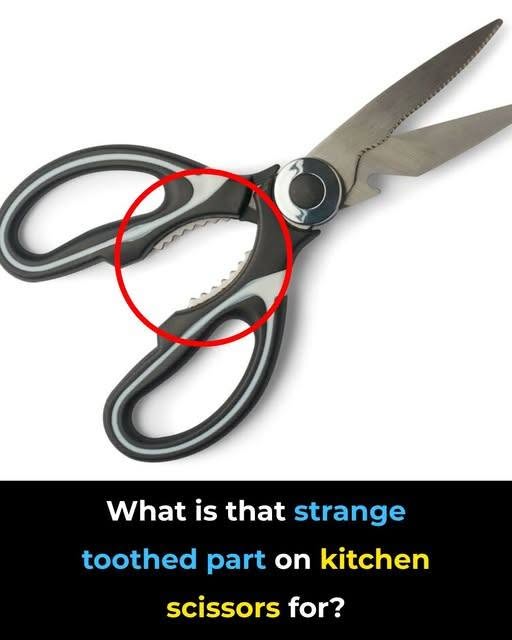
Kitchen shears are among the most versatile multi-tools in modern culinary spaces. While most home cooks frequently use the sharp blades for snipping herbs, trimming poultry, or opening stubborn food packaging, many remain puzzled by the metal, serrated “teeth” embedded directly between the handles.
Far from being a decorative feature, this integrated steel grip serves several distinct functional purposes designed to save time and effort during food preparation.
In this helpful kitchen guide, we explain the primary uses for the toothed center on kitchen scissors, highlight other hidden shear features, and share essential care tips to keep your tools sharp and sanitary.
The Core Functions of the Toothed Center Grip
The steel serrated teeth positioned between the plastic or rubber hand grips serve three main kitchen functions:
1. Cracking Nuts and Hard Shells
The primary historical purpose of the steel teeth is as a built-in nutcracker. Placing walnuts, pecans, or almonds between the handles and applying steady pressure allows the ridged teeth to grip the smooth outer shell securely and crack it open without crushing the nut inside.
2. Opening Stubborn Bottle Caps and Jar Lids
The curved, metallic teeth act as a high-leverage jar and bottle opener. Clamping the teeth around tight plastic soda bottle caps, small twist-off metal lids, or sauce caps gives you a non-slip grip and extra leverage to break stubborn seals effortlesly.
3. Cracking Seafood Shells
For crab legs, lobster claws, and thick shellfish, using regular scissor blades can dull the edge or slip. Positioning tough shells between the handle teeth allows you to crush hard exoskeleton segments cleanly without damaging the delicate meat inside.
Other Hidden Features in Heavy-Duty Kitchen Shears
Modern kitchen shears often pack multiple extra tools into a single design:
-
Bottle Opener Notch: A small curved cutout located on the outer spine of the blade is specifically engineered to pry off metal crown bottle caps (like glass soda or beer bottles).
-
Bone Notch: A small semi-circular notch near the pivot point of the blades provides extra leverage to cut through tough chicken bones or wooden skewers without slipping.
-
Herb Stripper: Small circular holes engineered near the handles allow you to pull herb stems (like rosemary or thyme) through the opening to strip the leaves instantly.
-
Take-Apart Shears: High-quality kitchen scissors feature a center pivot hinge that allows the two blades to separate completely, ensuring easy cleaning and preventing food particles from collecting in hidden crevices.
Maintenance and Home Safety Standards
Keeping kitchen tools clean and well-maintained prevents cross-contamination and extends their lifespan.
Proper Hygiene and Cleaning Practices
Because kitchen shears frequently touch raw poultry, meat, and seafood, thoroughly washing them after each use is vital. If your shears detach at the pivot, separate the blades to clean out food residue and dry them completely before reassembling to prevent rust.
Investing in Quality Kitchen Essentials
High-carbon stainless steel kitchen shears resist corrosion, retain sharp edges longer, and withstand heavy leverage tasks like cracking shells without bending or breaking.
Practical Kitchen Hacks for Multi-Purpose Shears
-
Snip Pizza and Flatbreads: Skip bulky rolling cutters—use kitchen shears to cut precise slices of pizza, quesadillas, or flatbreads quickly.
-
Trim Dough and Pastry: Shears give you far greater control than a knife when trimming excess pie crusts or cutting decorative pastry lattice strips.
-
Chop Canned Tomatoes in the Can: Avoid messy cutting boards by placing shears directly inside a can of whole peeled tomatoes and snipping them down to size.
Conclusion
The steel teeth on your kitchen scissors are a clever, built-in tool meant to crack nuts, open stubborn caps, and break through seafood shells. Unlocking these built-in features makes daily cooking easier and far more efficient!
Frequently Asked Questions (FAQ)
Can kitchen shears go in the dishwasher?
While many stainless steel shears are labeled dishwasher safe, hand washing and immediate towel drying is recommended to prevent dulling the blade edges and rust formation.
How do you sharpen kitchen scissors?
You can sharpen kitchen scissors using a specialized scissor sharpener, a sharpening stone, or by making several smooth cuts through folded aluminum foil or fine-grit sandpaper.
Why do some kitchen shears come apart?
Detachable shears are designed for hygiene. Separating the blades allows you to clean food bacteria and moisture out from the pivot joint where the blades meet.
