
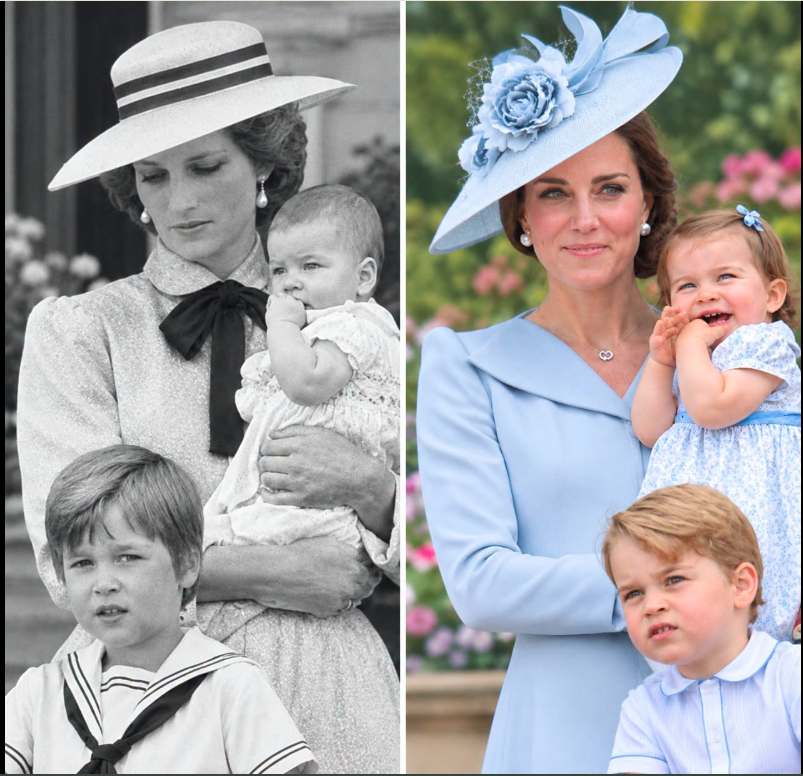
Princess Diana was photographed almost everywhere she went.
Royal ceremonies. Charity visits. Red carpets. Hospital corridors. School runs. Family holidays. Even ordinary moments could become international news when Diana was involved.
ADVERTISEMENT
Yet some of the photographs that continue to fascinate people decades later are not the grand royal portraits.
They are the quieter ones.
ADVERTISEMENT
A young Diana laughing with friends. A mother enjoying time with her sons. A woman relaxing away from formal duties. A princess who, for a brief moment, looks less like one of the world’s most famous people and more like someone simply enjoying an ordinary day.
That is what makes rare and candid photographs of Diana so compelling. They do not necessarily reveal a completely different person. Instead, they fill in parts of a story the public never got to see in full.
Before the Crown, There Was Simply Diana
Long before the world knew her as the Princess of Wales, Diana Spencer was a young woman growing up in a prominent British family.
Photographs from her childhood and teenage years offer a striking contrast with the polished images that would later dominate newspapers and magazines.
One recently highlighted collection includes photographs from Diana’s time at West Heath Girls’ School, where she attended between 1973 and 1977. The images show a teenage Diana relaxing with friends and enjoying everyday school life.
There is something revealing about seeing her at that age.
There is no crown.
No royal ceremony.
No enormous crowd waiting outside.
Just a young woman surrounded by friends, years before she could have known how dramatically her life was about to change.
A childhood friend who knew Diana during those years recalled her as fun-loving, caring and ordinary in the best possible sense.
And that may be one of the most interesting things about the photographs.
They remind us that before Diana became a global figure, she was simply Diana.
The Girl Behind the Famous Smile
Diana’s smile eventually became one of the most recognizable in the world.
But her photographs show that the smile wasn’t limited to official appearances.
Candid images frequently capture her laughing, joking and appearing genuinely relaxed around people she trusted.
That matters because royal photography can create a strange illusion.
A formal portrait can make someone appear almost larger than life. The clothing, surroundings, posture and ceremony all reinforce the idea that the person being photographed occupies a special position.
A casual photograph does the opposite.
It brings the person back down to earth.
That is particularly noticeable in photographs of Diana at home or away from formal royal duties. Images from residences including Park House and Kensington Palace offer glimpses of places where she spent time raising her children and finding moments away from public attention.
The settings are familiar.
The emotions are familiar.
And suddenly the princess feels much closer.
Then Motherhood Changed Everything
Perhaps the most touching photographs of Diana are the ones showing her with Prince William and Prince Harry.
Diana was determined that her sons would experience parts of childhood that had little to do with royal protocol.
Photographs show her taking them on outings, enjoying holidays and sharing playful moments away from official events.
Some images show the family at amusement parks and other ordinary recreational settings. One particularly memorable photograph shows Diana riding a log flume with William and Harry in 1993.
It is an almost wonderfully ordinary family scene.
Except for one detail.
The woman enjoying the ride was one of the most photographed people on Earth.
For Diana, moments like these appear to have offered something precious: the chance for her sons to experience life as children rather than simply as future members of the royal family.
And for the public, the photographs provided a glimpse of a mother who wanted her children to laugh and have fun.
The Royal Who Often Seemed More Comfortable Without the Ceremony
Diana’s public duties could be intensely formal.
She attended state occasions, met dignitaries and appeared at events where every detail mattered.
But some of her most memorable photographs came from moments when the ceremony fell away.
She had a reputation for engaging directly with people rather than keeping a distant royal posture.
That quality became especially important in her humanitarian work.
Photographs from her visits to hospitals, meetings with patients and encounters with children often show her sitting or standing close to the people she had come to see.
She did not always appear to be looking past them toward the photographers.
Instead, she appeared focused on the individual in front of her.
That quality helped define the public image of the “People’s Princess.”
One Handshake Became a Powerful Message
Diana’s work surrounding HIV and AIDS provides one of the clearest examples of how a photograph could become more than a photograph.
In the 1980s and 1990s, fear and misinformation about HIV were widespread.
Diana publicly interacted with people living with HIV and AIDS, helping challenge the idea that casual physical contact could transmit the virus.
Those moments were photographed around the world.
Her willingness to sit with patients, shake hands and show physical compassion helped make an important point without requiring a lengthy speech.
The picture itself communicated something powerful.
It said that these people should not be treated as untouchable.
Years later, those photographs remain among the most important images associated with her humanitarian work.
Another Chapter: The Woman Away From the Cameras
Diana’s life became increasingly complicated as her marriage to then-Prince Charles deteriorated.
The couple separated in 1992, and their divorce was finalized in 1996.
For someone already subjected to enormous media attention, the breakdown of the marriage brought even greater scrutiny.
That makes private photographs from the same general period especially interesting.
They remind us that there was a person underneath the headlines.
Diana could be fashionable and glamorous, but she could also be playful.
She could appear confident at a formal event and then look completely relaxed in a family setting.
She could be surrounded by hundreds of people one day and spend another day simply enjoying time with her children.
The photographs don’t erase the difficulties of her life.
They simply show that those difficulties were not the entirety of it.
The Teenage Photographs May Be the Most Revealing
There is something particularly poignant about seeing photographs of Diana before she became famous.
A recent collection of photographs and personal correspondence belonging to her former school friend Katherine Hanbury brought attention to Diana’s teenage years. The photographs show her at school with friends, including relaxed moments in and around the school grounds.
These images were taken before the world knew how significant Diana would become.
That makes them different from photographs taken after her engagement to Charles.
There is no expectation that she will become an international icon.
No one is watching her because she is a princess.
She is simply a teenager.
Hanbury later described Diana as someone who enjoyed ordinary girlhood experiences and was caring toward those around her.
Looking at those photographs today, it is difficult not to wonder what that young woman might have thought if someone had told her what was coming.
A royal wedding.
Two sons.
Worldwide fame.
A difficult marriage.
Humanitarian work.
And ultimately, a life that would end far too soon.
Diana’s Style Was Famous, But Her Humanity Lasted Longer
It is impossible to discuss Diana without mentioning fashion.
Her clothes became part of popular culture. Certain dresses remain instantly recognizable, and her hairstyles and accessories influenced millions of women.
But fashion was only one reason people became fascinated with her.
The deeper connection came from her personality.
Diana often appeared approachable in a world that could seem distant and formal.
She made eye contact.
She smiled.
She touched people’s hands.
She listened.
And sometimes, she simply looked as though she was enjoying herself.
Those details helped transform a royal figure into someone many people felt they knew personally.
