
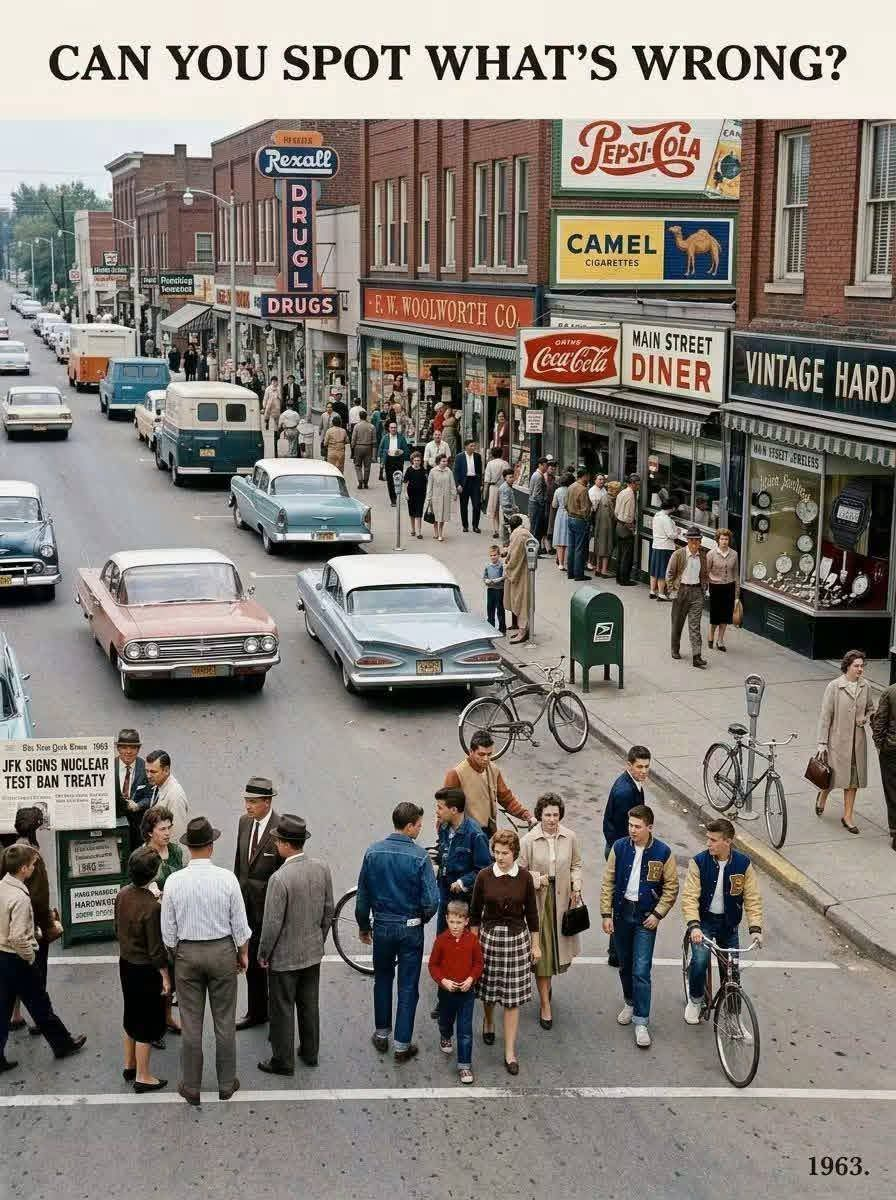
Visual perception challenges and historical observation puzzles have captured the fascination of readers across social media platforms and online communities. These nostalgic images—often depicting bustling downtown scenes from mid-20th century America—offer a unique combination of historical nostalgia and cognitive brain workouts. Searching a detailed vintage scene for subtle mistakes, modern intrusions, or altered historical details requires keen attention to detail and sharp visual perception.
In this deep dive, we explore how observational logic puzzles stimulate brain activity, why vintage imagery evokes such strong nostalgic interest, and how engaging in visual brain teasers can enhance your mental focus and long-term cognitive health.
The Visual Mechanics of Spotting Details in Complex Scenes
When presented with a busy vintage street scene filled with classic automobiles, period fashion, storefront signage, and pedestrians, your visual system undertakes a complex task. Rather than processing the entire picture instantaneously, your eyes move across key regions in rapid micro-movements, scanning individual components for inconsistencies.
Pattern Recognition: The brain’s visual cortex quickly identifies familiar shapes, such as classic 1950s and 1960s cars, period clothing, and retro advertisements.
Anachronism Detection: As your memory compares scene elements against historical knowledge, your cognitive system flags items that feel out of place—such as modern digital devices, misplaced timelines, or altered signage.
Focused Attention: Filtering out crowded visual elements allows you to pinpoint subtle details, such as a newspaper headline, a store display anomaly, or an unexpected object on the sidewalk.
In many visual riddle images, key anomalies—such as a modern smartwatch displayed in a 1963 jewelry store window—challenge your perception by blending seamlessly into an otherwise authentic setting.
Cognitive Reserve and the Benefits of Visual Exercises
Engaging in visual search puzzles does more than test your knowledge of history; it actively supports neural plasticity and cognitive resilience. Just as physical activity benefits cardiovascular fitness, mental challenges stimulate working memory and observational speed.
Building cognitive reserve through visual puzzles, reading, and continuous learning helps maintain mental sharpness over time.
Key Aspects of Cognitive Training
Active Processing: Actively searching an image forces your brain to stay engaged, strengthening attention span.
Memory Retrieval: Comparing visual details against prior knowledge reinforces long-term memory access.
Stress Reduction: Taking a few minutes during a busy day to focus on a relaxing puzzle provides a healthy mental break.
Nostalgia, History, and Lifestyle Well-Being
Vintage photography and mid-century aesthetics resonate deeply with audiences because they evoke memories of simpler times, community-centered main streets, and rich cultural heritage. Exploring historical settings allows us to reflect on how technology, travel, commerce, and daily life have transformed over the decades.
Understanding historical progression also offers perspective on personal planning and long-term security. Just as communities in the mid-20th century built foundational infrastructure, individuals today rely on strategic financial planning, retirement preparation, sound health habits, and protective legal structures to secure their future.
Pillars for a Balanced and Secure Life
Financial Planning: Building a strong portfolio through diversified investments, loans, or mortgages ensures stable long-term growth.
Comprehensive Healthcare: Prioritizing health, wellness, and preventive care helps maintain high energy and cognitive vitality throughout life.
Risk Management: Protecting valuable assets with appropriate insurance and legal services provides peace of mind in an unpredictable world.
Practical Tips for Solving “Spot What’s Wrong” Puzzles
To improve your speed and success rate when analyzing detailed visual puzzles, consider applying these observational techniques:
Divide the Image into Quadrants: Break a busy image into smaller, manageable sections (top-left, top-right, bottom-left, bottom-right) to ensure thorough coverage.
Scan Specific Categories: Search for anomalies systematically by category—first check the vehicles, then examine clothing styles, store signs, and finally smaller foreground objects.
Look for Anachronisms: Pay special attention to technology, such as electronic devices, digital displays, modern logos, or vehicles from a later era than the labeled date.
Zoom in on Fine Print: Check newspaper headlines, street signs, and shop displays where creators frequently hide subtle visual tricks.
Interesting Facts About Mid-Century American Main Streets
The Hub of Commerce: In the early 1960s, downtown Main Streets were the primary economic centers for local communities, featuring variety stores like Woolworth’s, local pharmacies, and family-owned diners.
Automotive Design: Vehicles from the late 1950s and early 1960s featured iconic tailfins, chrome trim, and distinct color schemes that make them easily recognizable today.
News Distribution: Newspaper stands and street corner vendors were the primary source for breaking news, offering daily printed editions covering major global and national events.
Conclusion
A classic “spot what’s wrong” picture is a fun visual journey into history and a fantastic workout for your eyes and mind. Finding hidden details in a vintage street scene sharpens your attention span, tests your historical awareness, and keeps your visual processing active. By combining mental stimulation with balanced lifestyle habits and thoughtful long-term planning, you can keep your mind focused and ready for any challenge.
Frequently Asked Questions (FAQ)
1. What is the subtle detail often hidden in vintage street scene puzzles?
Visual puzzles frequently feature anachronisms—objects or technologies that did not exist during the depicted historical era, such as a modern digital smartwatch in a 1960s store window or modern vehicle models in an old photograph.
2. How do visual search puzzles support brain health?
Visual search challenges stimulate attention control, visual discrimination, working memory, and pattern recognition, contributing to long-term cognitive agility.
3. Why do vintage main street images appeal to so many people?
Vintage images evoke feelings of nostalgia, classic design appreciation, and curiosity about history, making them engaging visual subjects for readers of all ages.
4. What is the best strategy for finding missing or incorrect details in visual riddles?
Systematically scanning the image quadrant by quadrant and examining distinct elements—such as signage, clothing, technology, and background details—is the most reliable method for spotting inconsistencies.
