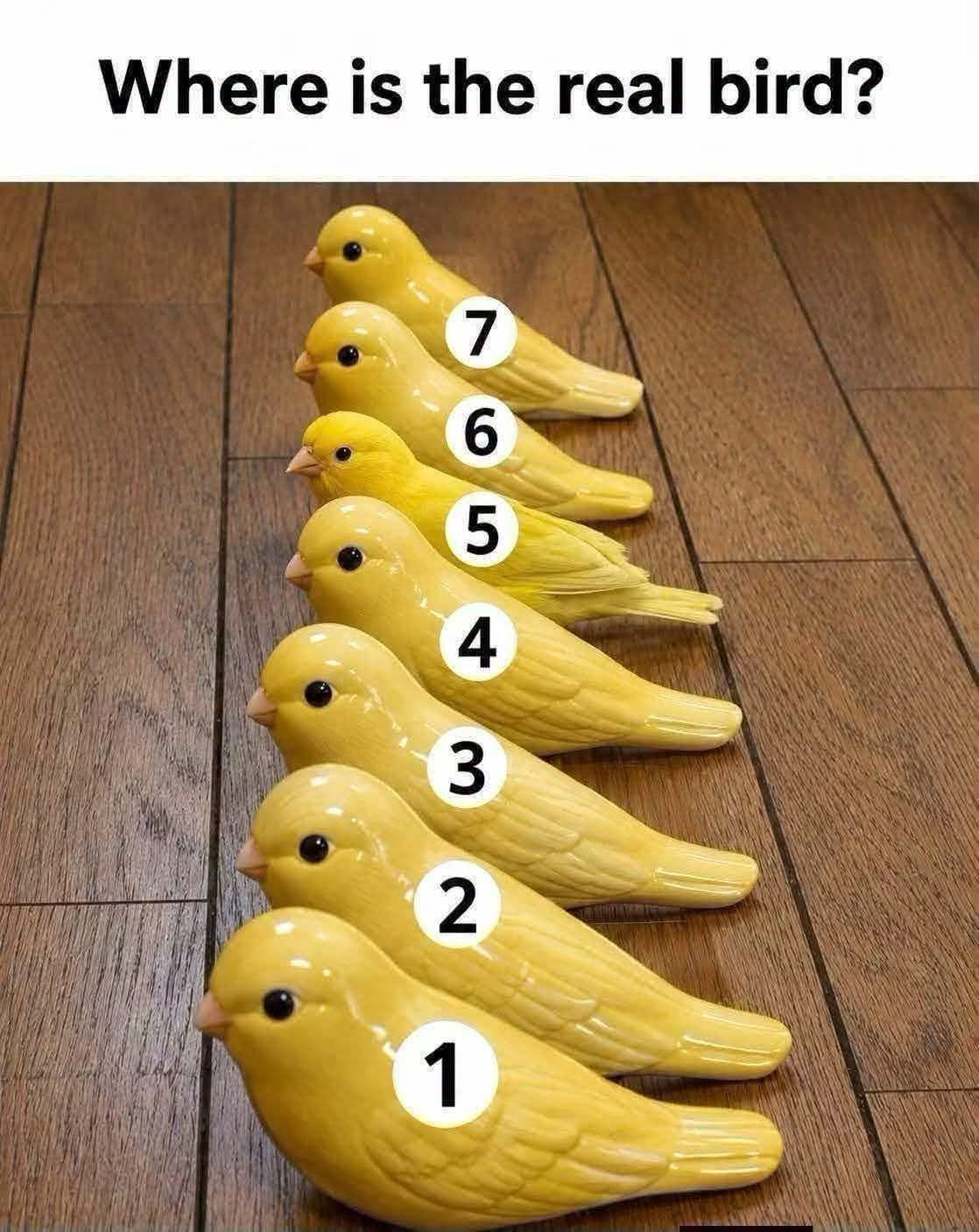
Visual search puzzles and optical illusions are among the most engaging brain teasers across social media platforms. A popular viral challenge displaying a line of seven yellow, bird-shaped objects arranged neatly on a wooden floor asks a captivating question: “Where is the real bird?” At first glance, all seven birds appear identical in shape, color, and size. However, six of these items are ceramic or plastic decorative figurines, while one is an actual, living yellow canary blending seamlessly into the row. Spotting the real bird requires a sharp eye for natural texture, subtle feather detail, and organic anatomical features. In this comprehensive puzzle guide, we reveal the exact answer, analyze the visual details that distinguish the real bird from the figurines, and explore the science of visual camouflage and optical perception.The Answer: Which Number Is the Real Bird?The real bird hidden in the lineup is Number 5. +——————————————————————-+
| THE CANARY LINEUP MATRIX |
| |
| [ NUMBERS 1, 2, 3, 4, 6, 7 ] → Ceramic / Plastic Figurines |
| (Smooth glaze, carved tail) |
| [ NUMBER 5 ] → REAL CANARY |
| (Soft organic feathers, real beak)|
+——————————————————————-+
Detailed Visual Analysis: Figurines vs. The Real CanaryA closer inspection reveals clear visual differences between the living bird and the artificial decorations: 1. Feather Texture and LayeringFigurines (1, 2, 3, 4, 6, 7): Feature a smooth, glossy glazed finish with uniform, carved feather lines molded into hard plastic or ceramic. Real Canary (5): Exhibits soft, organic, overlapping down feathers across its chest, wings, and tail. The feathering on its tail extends outward in natural, delicate layers rather than a rigid molded point. 2. Beak and Eye FeaturesFigurines (1, 2, 3, 4, 6, 7): Have painted or molded pinkish-beige beaks and solid black, glossy bead eyes with flat reflections. Real Canary (5): Displays a natural, flesh-toned beak with fine anatomical contours and a real, expressive eye. 3. Tail Structure and PostureWhile the figurines rest flat on the wooden floor with molded tail tips resting smoothly against the grain, bird number 5 holds its tail and flight feathers slightly elevated in a natural resting perch stance. Cognitive Science: How Camouflage and Pattern Recognition WorkWhy does this optical puzzle fool so many casual viewers?1. The Gestalt Principle of SimilarityThe human brain naturally groups objects that share similar colors, shapes, and alignments. Because all seven items share bright yellow hues and bird silhouettes, your visual cortex initially treats the entire line as a uniform set of manufactured objects. 2. Visual Discrimination and Focal AttentionTo break through the illusion, your brain must transition from broad visual processing to detailed feature inspection. Scanning individual details—such as surface texture, light reflection, and feather edges—allows your eyes to identify the organic outlier. Practical Lessons for Mental Agility and ObservationEngaging with visual riddles and observation puzzles offers clear cognitive benefits:Sharpens Attention to Detail: Practicing visual differentiation builds observational focus that translates into everyday tasks, such as proofreading documents or inspecting products.Encourages Critical Thinking: Pausing to evaluate subtle evidence before making quick assumptions strengthens analytical decision-making skills.Lighthearted Social Engagement: Optical challenges serve as fun, interactive conversation starters for family, friends, and online communities.Fun Facts About Domestic CanariesHistory of Color: Domesticated canaries originate from the Canary Islands. While wild canaries are typically greenish-yellow, centuries of selective breeding produced the vibrant, solid yellow “Lipochrome” canary seen today. Famous Singers: Male canaries are renowned for their elaborate vocal songs, which they use to mark territory and attract mates.Historical Working Companions: Canaries were famously used in coal mines during the 20th century as early warning systems for dangerous gases due to their sensitive respiratory systems.ConclusionWhile all seven birds look remarkably alike at first glance, Number 5 stands out as the only real, living canary thanks to its soft, layered feathers and natural tail structure. Exercising your perception with fun visual challenges is a fantastic way to keep your mind sharp and test your observational skills. Frequently Asked Questions (FAQ)How can you tell Number 5 is the real bird?Number 5 displays real, soft feathering across its body and tail, unlike the smooth, hard glazed surface of the molded figurines (1, 2, 3, 4, 6, and 7). Why are domestic canaries bright yellow?Selective breeding over hundreds of years isolated yellow pigment mutations, creating the iconic bright yellow domestic canary seen in household aviaries today. What is the best technique for solving visual search puzzles?Focus on microscopic details like texture, shadows, and surface reflections rather than overall color or silhouette shapes.
Visual Illusion Challenge: Can You Spot the Real Canary Hidden in the Lineup?