
Introduction
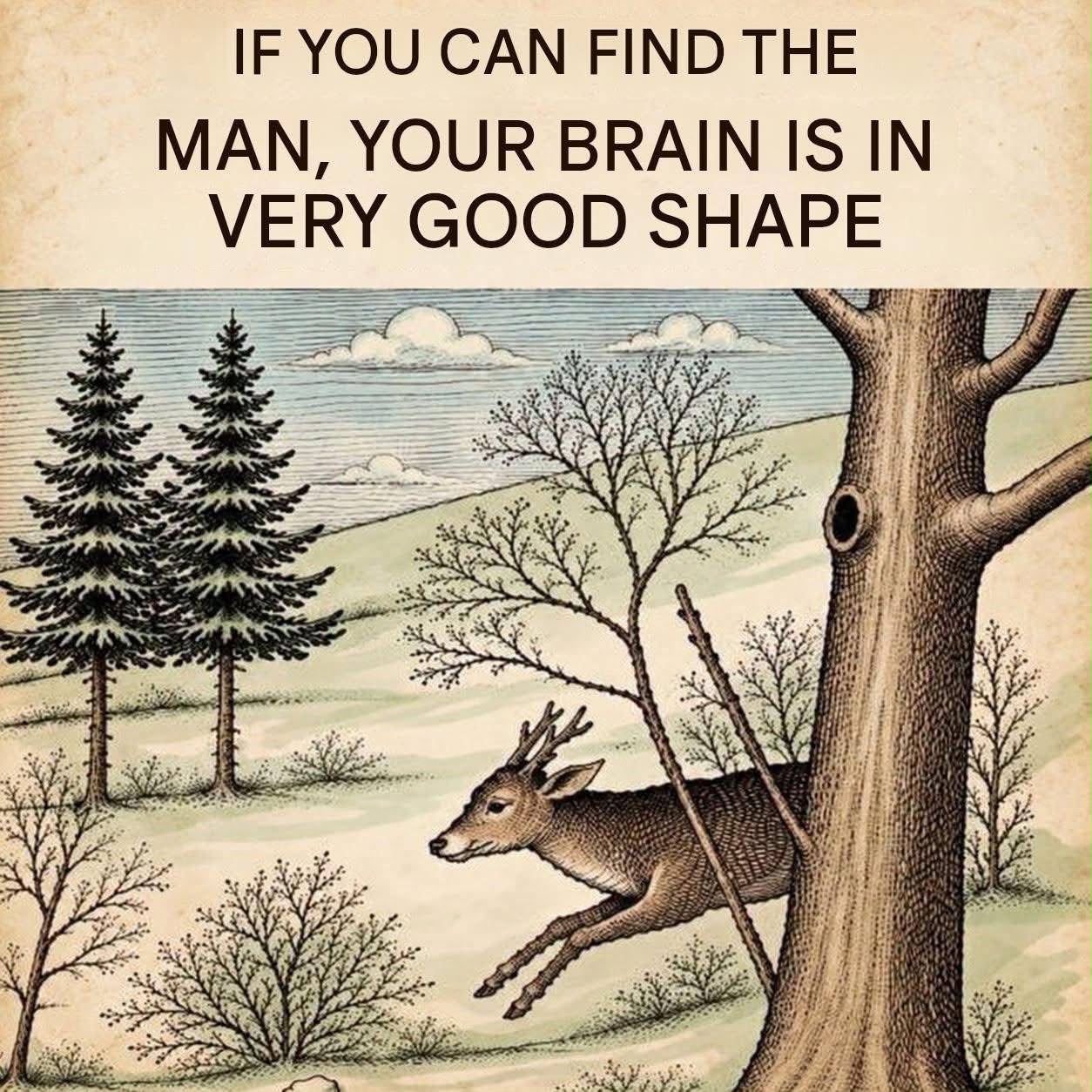
In the vibrant digital world of social media, captivating optical illusions and hidden picture puzzles frequently capture public attention. When a user scrolls through their Facebook feed and encounters an intricate vintage-style drawing of a deer leaping through a landscape with the challenge, “If you can find the man, your brain is in very good shape,” comment sections instantly ignite with curiosity, friendly debate, and shared discoveries. What makes these visual puzzles so irresistible, and why do our brains struggle to spot hidden shapes right away?
Why do optical illusions hold such powerful appeal? Beyond serving as lighthearted internet entertainment, visual puzzles tap into our universal love for problem-solving, cognitive challenges, and pattern recognition. They test our visual perception and reward us with a satisfying “aha!” moment when our brains finally process the hidden image.
However, understanding visual processing and cognitive agility extends far beyond social media fun. In professional sectors such as graphic design, neurology, psychology, user experience testing, and computer vision, understanding how the human brain interprets visual data is critical. Whether a neurologist is studying cognitive processing, a designer is creating intuitive user interfaces, or an educator is building engaging learning tools, visual science matters. In this comprehensive guide, we will explore the psychology of optical illusions, analyze how hidden picture puzzles trick our brains, and discuss how mental exercises benefit our overall cognitive health.
The Psychology Behind Hidden Picture Puzzles
When we look at a complex image, our brains rely on cognitive shortcuts and Gestalt principles of perception to make sense of the scene quickly.
How Our Brains Process Visual Information
Holistic Processing: The human brain naturally tends to process an entire scene as a unified whole rather than immediately analyzing individual components. In the puzzle image, our eyes are immediately drawn to the large foreground elements: the leaping deer and the prominent tree on the right.
Camouflage and Contour Integration: Hidden figures in classical optical illusions are often cleverly integrated into natural shapes—such as tree branches, foliage, or background contours.
The Solution Reveal: If you flip or tilt the image sideways, the branching pattern of the tree behind the deer reveals the hidden silhouette of a man’s face or body, turning a natural landscape into a clever optical trick.
Why Visual Puzzles Go Viral
Posts featuring hidden challenges thrive on social media because they create an interactive competition. Users eagerly comment with their results, tag friends to test their perception, and share the post to see who can spot the hidden figure first.
Professional Applications in Neurology, Design, and Psychology
While spotting a hidden man in a vintage illustration is a fun online pastime, visual perception and cognitive processing are foundational across professional fields.
Neurology and Cognitive Science
Neurologists and psychologists study how the brain processes visual illusions to understand neurological pathways, cognitive flexibility, and how visual information is decoded in the cerebral cortex.
Graphic Design and User Experience (UX)
Visual artists and UX designers utilize principles of perception, contrast, and focal points to guide user attention effectively through digital interfaces, advertisements, and physical layouts.
Education and Cognitive Training
Educators use puzzles and visual brain teasers to enhance students’ observational skills, critical thinking, and attention to detail.
Practical Tips to Sharpen Your Visual Perception and Cognitive Agility
If you want to improve your observation skills and keep your mind sharp, incorporating a few simple habits can make a dramatic difference:
Practice Visual Puzzles Daily: Engage with hidden object games, spot-the-difference challenges, and optical illusions for a few minutes each day.
Change Your Perspective: When stuck on a visual puzzle, try looking at the image from a distance, tilting your screen, or turning it upside down to break automatic viewing habits.
Slow Down and Scan: Instead of looking at the image as a whole, methodically scan different quadrants section by section to catch hidden details.
Challenge Your Friends: Share puzzles with colleagues or family members to discuss different ways of perceiving the same visual data.
Interesting Facts About Optical Illusions and Human Sight
Historical Roots: Hand-drawn optical illusions and hidden-figure puzzles date back to the 19th century, often published in Victorian magazines as popular parlor games.
Brain Plasticity: Regularly challenging your visual processing with puzzles helps stimulate neural connections, supporting cognitive longevity and mental agility.
Social Media Engagement: Content that triggers an “aha!” moment consistently achieves high organic reach because users love testing their perceptual skills against others.
Conclusion
Optical illusions and hidden picture puzzles are much more than passing internet entertainment; they serve as delightful reminders of how complex and fascinating human visual perception truly is. By challenging our brains to look beyond the obvious, we sharpen our cognitive flexibility and observation skills. Whether you are solving brain teasers online, studying graphic design, or simply enjoying a quiet moment of curiosity, keeping an active and observant mind is an invaluable asset. Stay curious, keep exploring, and enjoy the art of visual problem-solving!
FAQ Section
How do hidden picture illusions trick the human brain?
Optical illusions trick the brain by using camouflage, contour lines, and natural patterns (like tree branches) to mask secondary shapes, relying on our tendency to focus on prominent foreground objects first.
What are the cognitive benefits of solving visual puzzles?
Regularly engaging with optical illusions and puzzles helps improve visual attention, pattern recognition, cognitive flexibility, and overall mental agility.
Why do puzzle posts perform so well on social media?
Puzzles create an interactive challenge that prompts users to test their skills, compare results in the comment section, and share the content with friends.
