
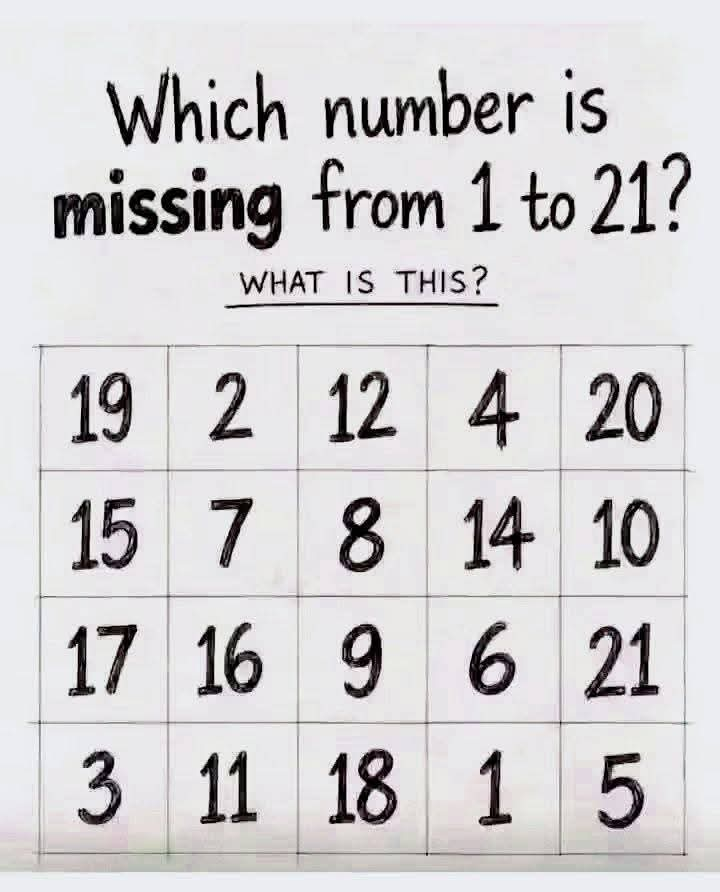
Brain teasers, numerical visual puzzles, and quick observational challenges have taken the digital world by storm. Millions of people across the globe engage daily with grid puzzles asking them to spot missing numbers, hidden shapes, or subtle discrepancies. While these visual riddles offer quick entertainment on social media platforms, their impact reaches far beyond mere fun. Engaging in daily mental exercises plays a vital role in cognitive preservation, memory enhancement, and overall brain health.
In this deep dive, we explore how logical puzzles work, why visual scanning challenges stimulate neural pathways, and how incorporating mental workouts into your daily routine can support long-term brain wellness and mental sharpness.
The Science of Visual Scanning and Number Recognition
When you look at a grid of jumbled numbers ranging from 1 to 21, your brain immediately activates several key region areas simultaneously. Rather than processing the entire grid as a single image, your eyes perform rapid movements known as saccades. These micro-movements scan individual grid cells, while your working memory keeps track of which numbers you have already identified.
Visual Perception: The occipital lobe processes the numerical shapes and patterns displayed on the screen.
Working Memory: The prefrontal cortex maintains an active mental checklist of the sequential numbers from 1 through 21.
Pattern Recognition: The parietal lobe helps organize spatial awareness, ensuring you don’t re-check cells you’ve already scanned.
When tasked with finding a missing number in a sequence—such as discovering that 13 is absent from the grid—your brain exercises selective attention, filtering out visual distraction to identify the exact missing datapoint.
Cognitive Reserve and Long-Term Mental Fitness
Just as physical exercise strengthens muscle tissue and cardiovascular endurance, regular cognitive stimulation builds what neuroscientists call “cognitive reserve.” Cognitive reserve refers to the brain’s ability to improvise, find alternate ways of getting a job done, and build resilience against age-related cognitive decline.
Participating in diverse mental activities—ranging from visual observation puzzles and crosswords to strategic financial planning and learning complex new skills—helps forge new neural connections.
Key Factors in Building Cognitive Strength
Novelty: Challenging your brain with new types of puzzles keeps cognitive pathways active.
Consistency: Engaging in daily 5-to-10-minute mental exercises yields better long-term benefits than sporadic, intensive sessions.
Complexity: Gradually increasing the difficulty of logical problems ensures continuous neural stimulation.
The Intersection of Health, Wellness, and Cognitive Support
Maintaining peak mental performance isn’t solely about solving puzzles; it requires a holistic approach to personal health and lifestyle management. Physical health, sleep quality, and proper nutrition play supporting roles in how efficiently our brains process information.
Essential Pillars for Optimal Brain Health
Nutritious Lifestyle: Diets rich in omega-3 fatty acids, antioxidants, and essential vitamins nourish brain cells and protect against oxidative stress.
Preventive Healthcare: Regular consultations with healthcare providers, proper medical checkups, and early diagnostic assessments help manage risk factors like high blood pressure and diabetes, which directly affect cerebral blood flow.
Rest and Recovery: Quality sleep consolidates memory and clears metabolic waste from brain tissues, ensuring high cognitive readiness each day.
Financial and Personal Peace of Mind: Reducing overall life stress through sound financial planning, adequate insurance coverage, and organized personal management frees up mental energy, reducing cognitive fatigue.
Practical Tips to Boost Focus and Pattern Recognition
If you want to improve your speed and accuracy at solving visual grids and logic puzzles, try applying these proven observational strategies:
Systematic Scanning: Avoid jumping randomly across the grid. Instead, scan systematically row by row or column by column.
Sequential Counting Method: Count silently from 1 upwards, scanning the board for each specific number in order until you hit a gap.
Elimination Strategy: Focus on striking out pairs or clusters of numbers that sit visually close to each other.
Take Short Breaks: If your eyes tire, pause for a moment to rest your visual focus before attempting a new puzzle grid.
Fascinating Facts About Puzzles and the Human Brain
The Dopamine Effect: Successfully solving a visual riddle releases small amounts of dopamine, the neurotransmitter responsible for reward, motivation, and mood elevation.
Ancient Origins: Numerical and word puzzles date back thousands of years, with ancient civilizations creating magic squares and riddles as tools for philosophy and mathematics education.
Speed of Recognition: The human brain can recognize and interpret visual images in as little as 13 milliseconds, making rapid visual search one of our fastest cognitive abilities.
Conclusion
A simple grid asking you to find a missing number between 1 and 21 is more than a quick distraction—it is a mini workout for your brain. By spotting that 13 was missing from the set, you gave your visual working memory and attention control a healthy workout. Integrating simple visual challenges, healthy lifestyle habits, and lifelong learning into your routine keeps your mind sharp, focused, and ready for life’s complex decisions.
Frequently Asked Questions (FAQ)
1. What is the correct missing number in the grid puzzle?
The missing number in the 1 to 21 sequence is 13. All other numbers from 1 to 21 are present within the grid cells.
2. How do daily brain teasers benefit cognitive function?
Regularly engaging in brain teasers helps improve working memory, sharpens attention to detail, enhances visual scanning speed, and contributes to long-term cognitive reserve.
3. Are visual puzzles effective for people of all ages?
Yes! Visual puzzles provide cognitive benefits for children, adults, and seniors alike by encouraging active problem-solving, spatial reasoning, and mental agility.
4. What other lifestyle habits support long-term memory and brain health?
Along with mental exercises, maintaining a balanced diet, exercising regularly, prioritizing sleep, managing stress, and getting regular medical checkups are key to long-term brain health.
