
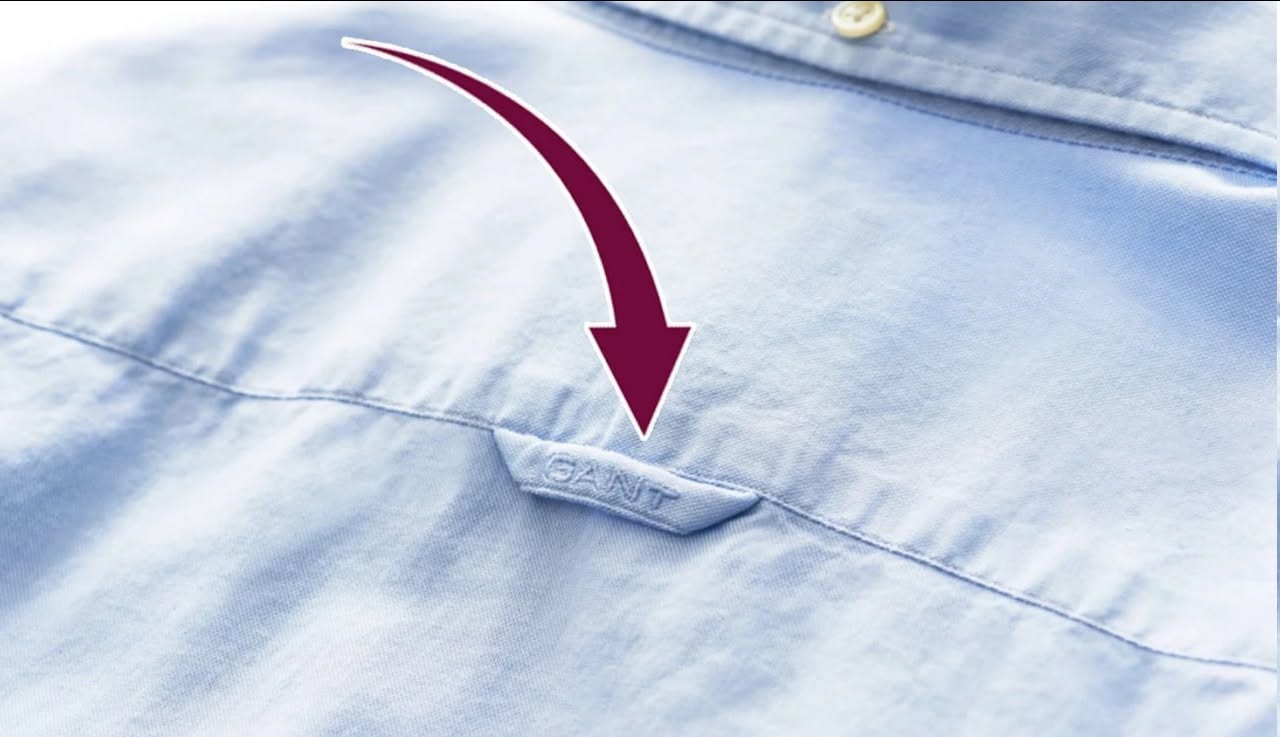
If you look closely at the back of standard button-down Oxford shirts—especially below the shoulder yoke—you will often find a small fabric loop. While many modern wearers assume it is purely decorative or a brand label accent, this feature, known as a locker loop, has a rich history tied to tailoring, sports, and Ivy League culture.
From preventing fabric wrinkles in gym lockers to signaling romantic relationship status in the 1960s, the locker loop is one of menswear’s most functional traditional details.
Below is an overview of the origins, functional uses, and history of the dress shirt locker loop.
Locker Loop Design & History Matrix
+-------------------------------------------------------------------+
|               SHIRT LOCKER LOOP FEATURE MATRIX                    |
|                                                                   |
|  [ ORIGIN ]          • East Coast sailors & US Ivy League sports  |
|  [ PRIMARY PURPOSE ] • Hang shirts wrinkle-free without hangers   |
|  [ TAILORING ]       • Located at back yoke above box pleat       |
|  [ CULTURAL ICON ]   • Cut off loop to signal relationship status |
+-------------------------------------------------------------------+
Key Highlights of the Shirt Locker Loop:
-
Practical Functionality: Originally designed for sailors and locker rooms without wire hangers, allowing shirts to be hung on a simple peg or hook without creasing.
-
Ivy League Popularity: Massively popularized in the 1960s by shirtmakers supplying Ivy League universities (most notably GANT).
-
Relation to the Box Pleat: Tailored directly into the seam above the back box pleat to distribute tension evenly across the shoulders when hanging.
-
Cultural Dating Rituals: College students in the 1960s would famously snip the loop off their shirt when they were in a committed relationship.
History and Legacy of the Locker Loop
1. Maritime & Nautical Origins
-
The Problem: 19th-century sailors on ships had limited storage space and no access to suit hangers or irons.
-
The Solution: Tailors added a sturdy fabric loop to the back of work shirts so sailors could hang them on wall pegs to dry quickly without wrinkling.
2. The Ivy League Era (1960s)
-
The Rise: American heritage brands like GANT integrated locker loops into Oxford cloth button-down (OCBD) shirts for college athletes hanging clothes in locker rooms.
-
The Trend: The loop quickly became a signature staple of prep style and high-end menswear craftsmanship.
3. The Dating Tradition
-
Singles vs. Taken: On college campuses, men would wear the loop intact while single.
-
Snipping the Loop: When a man started dating someone exclusively, his girlfriend would cut off the loop (or he would cut it off himself) to show he was “off the market.”
Conclusion
What began as a practical solution for hanging shirts without hangers became a timeless menswear hallmark that continues to blend tailoring heritage with everyday utility.
Frequently Asked Questions (FAQ)
What is the loop on the back of a shirt called?
It is officially called a locker loop (or sometimes a hanger loop or fruit loop).
Should you cut the loop off your shirt?
No. Leaving the loop intact preserves the original tailored look and heritage craftsmanship of classic Oxford button-down shirts, allowing you to hang the shirt easily on pegs.
