
Introduction
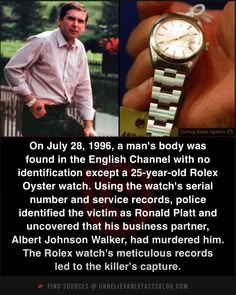
In July 1996, fishermen in the English Channel pulled a mysterious body from the sea, setting off one of the most remarkable forensic investigations in British crime history. The victim carried no wallet, passport, or identification papers, making immediate identification impossible for Devon and Cornwall police. However, strapped to the victim’s wrist was a single clue: a 25-year-old Rolex Oyster watch that was still ticking.
Through meticulous serial number tracking, servicing records, and forensic detective work, police ultimately identified the victim as Ronald Platt. The investigation revealed a chilling tale of identity theft, financial fraud, and a betrayal led by his former business partner, Albert Johnson Walker. In this comprehensive article, we will explore the fascinating true story of the “Rolex Murder,” examine how forensic evidence brought a fugitive to justice, discuss practical safety and legal tips, and answer key questions about this legendary case.
The Mystery in the English Channel and the Secret Clue
The discovery of the unidentified body presented investigators with a classic cold case challenge until forensic officers inspected the victim’s timepiece.
The Serial Number That Tracking Every Second
Rolex timepieces are renowned for their mechanical durability and rigorous manufacturing standards. Every watch features a unique serial number engraved between the lugs, alongside detailed servicing logs maintained by official horological centers. When police contacted Rolex service centers, they discovered the watch had been serviced in Harrogate, leading detectives directly to Ronald Platt’s identity and medical history.
Uncovering the Double Life of Albert Walker
Once Ronald Platt was identified, detectives probed his personal and professional connections. They discovered that Platt’s former business partner, going by the alias “Ronald Platt,” was actually Albert Johnson Walker—a Canadian fugitive wanted for multi-million dollar financial fraud and embezzlement. Walker had assumed Platt’s identity to hide from international law enforcement agencies.
Financial Fraud, Betrayal, and the Trial
The murder was not a crime of passion, but a calculated effort to conceal financial fraud and maintain a stolen identity.
Identity Theft and Business Manipulation
Albert Walker had manipulated Ronald Platt into moving to Canada, taking advantage of his identity documents to establish bank accounts, secure loans, purchase real estate, and execute complex business ventures. When Platt returned to England unexpectedly, Walker realized his stolen identity was in jeopardy, leading him to plan the fatal boat trip.
The Role of Legal Services and Forensic Evidence
The conviction relied heavily on physical and forensic evidence gathered across international jurisdictions. Expert witness testimony from horologists, ocean current forecasters, and forensic pathologists linked the crime directly to Walker. Walker was convicted of murder in 1998 and sentenced to life imprisonment, demonstrating how forensic science and legal cooperation ensure justice.
Practical Tips for Protecting Your Financial Identity
The tragic case of Ronald Platt underscores the importance of safeguarding personal identity and managing business relationships with caution:
-
Protect Important Identity Documents: Keep birth certificates, passports, and social security cards secured, and never lend official identification papers to business partners or friends.
-
Monitor Personal Financial Accounts Regularly: Check credit reports, bank statements, and loan applications annually to detect unauthorized financial activity or identity impersonation early.
-
Establish Formal Business Contracts: Consult qualified attorneys and legal services before entering into business partnerships or transferring property assets.
-
Verify Professional Credentials: Perform due diligence on prospective business associates, investment advisors, and corporate partners to avoid fraudulent schemes.
Fascinating Facts About the Rolex Murder Case
-
The Power of the Automatic Movement: The Rolex Oyster watch remained working submerged in saltwater because its internal self-winding rotor relies on the natural physical movements of the wearer, allowing forensic experts to establish the precise time of death.
-
Oceanographic Current Mapping: Investigators collaborated with oceanographers to track tidal patterns and water currents in the English Channel, pinpointing the exact location where the body was thrown from Walker’s boat.
-
Interpol’s Top Fugitive: Before his arrest, Albert Walker was one of Canada’s most wanted fugitives, having defrauded investors out of millions of dollars before escaping to Europe.
Conclusion
The “Rolex Murder” stands as a classic testament to human ingenuity and forensic science in criminal investigation. What Albert Walker intended to be a perfect crime was undone by a relentless police investigation and a single durable timepiece that refused to stop ticking. Beyond its dramatic story, the case highlights the importance of identity protection, judicial integrity, and legal accountability in modern society.
FAQ Section
How did police identify the body found in the ocean?
Police used the unique serial number on the victim’s Rolex Oyster watch to pull official service records, which pointed directly to Ronald Platt.
Why did Albert Johnson Walker murder Ronald Platt?
Walker had stolen Platt’s identity to evade international law enforcement for financial fraud. When Platt returned to England, Walker killed him to prevent his fraudulent identity scheme from being exposed.
What happened to Albert Walker after the trial?
Albert Walker was convicted of murder by a British court in 1998 and sentenced to life imprisonment before being transferred to Canada to serve his sentence.
