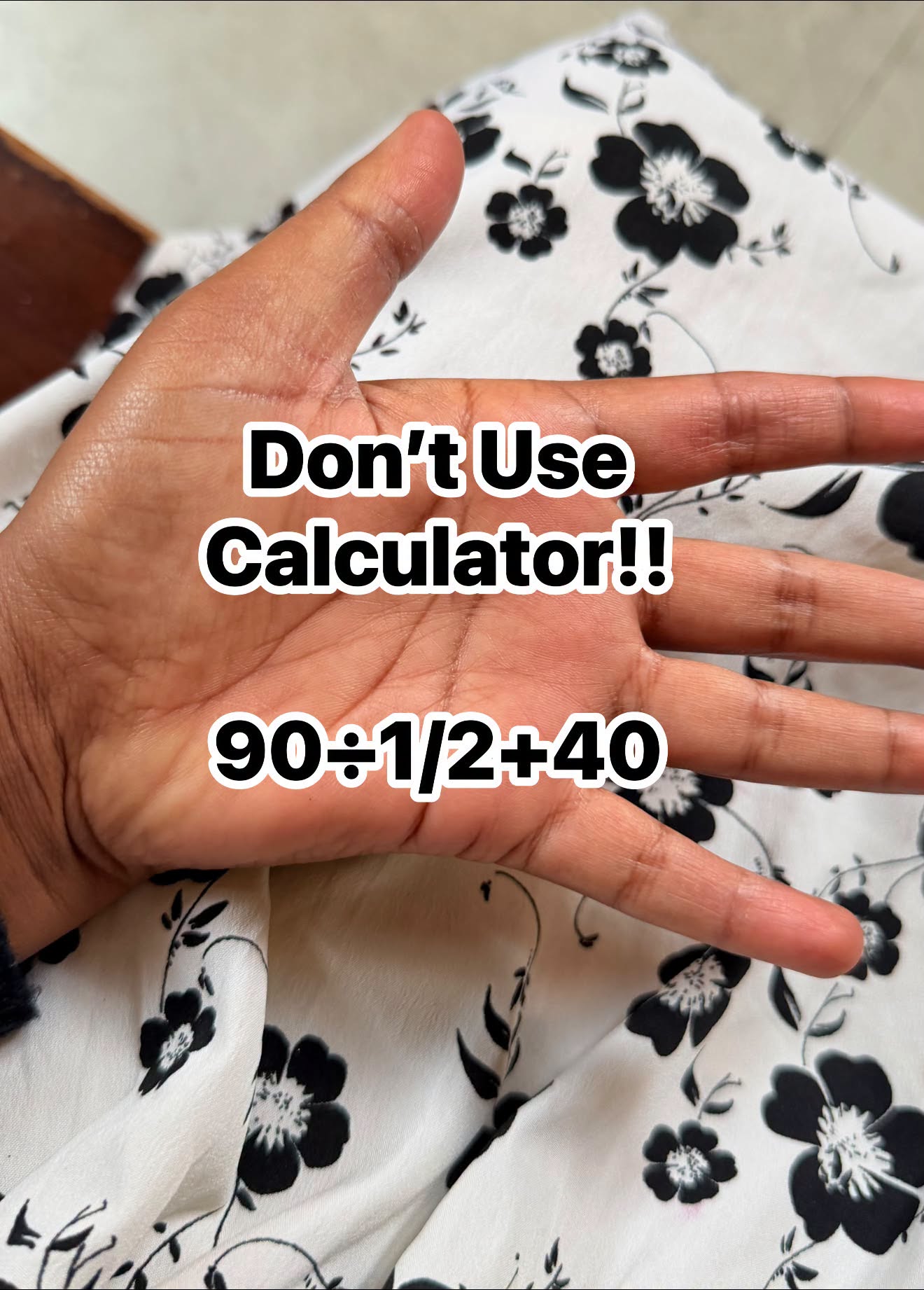
Internet culture is frequently captivated by viral math puzzles, brain teasers, and arithmetic equations designed to spark lively debate across social media networks. Equations that look simple at first glance often divide comment sections into competing factions, generating thousands of shares, reactions, and heated discussions. While these puzzles appear to be harmless tests of elementary arithmetic, they actually provide a fascinating window into human cognitive psychology, educational methodologies, and digital engagement algorithms. Understanding why certain math problems go viral requires examining the role of mathematical conventions, linguistic nuances in phrasing, the cognitive shortcuts that lead people to make common errors, and the mechanics of online content monetization. This article explores the mathematical rules behind these puzzles, the cognitive biases that influence problem-solving, and the broader economic impact of viral digital content. The Language and Mathematics of Fraction DivisionAt the core of fraction-based math puzzles lies a common arithmetic concept that frequently causes confusion: dividing a number by a fraction versus dividing it in half.Parsing the Equation: $90 \div 1/2 + 40$Dividing by a Fraction: Mathematically, dividing a number by a fraction (such as $1/2$) is equivalent to multiplying that number by its reciprocal (which is 2).Analyzing the Steps in the Puzzle:First Step: “Evaluate $90 \div 1/2$.” Following strict mathematical rules, $90 \div (1/2) = 90 \times 2 = 180$. (Note: Many casual readers mistakenly interpret this as dividing 90 in half, getting 45).Second Step: “Add 40.” Taking 180 and adding 40 yields $180 + 40 = 220$. (If 45 was used incorrectly, $45 + 40 = 85$).Depending on whether the reader catches the precise mathematical rule for dividing by a fraction, comment sections quickly fill up with multiple conflicting answers like 220 and 85, driving massive algorithmic engagement. Cognitive Psychology: Why Smart People Make Simple Arithmetic ErrorsThe viral nature of math riddles relies heavily on human cognitive processing and mental shortcuts, often referred to by psychologists as heuristics.System 1 vs. System 2 ThinkingPsychologist Daniel Kahneman’s framework divides human thought into two distinct systems:System 1 Thinking: Fast, automatic, intuitive, and unconscious. When individuals glance quickly at a puzzle, System 1 attempts to process numbers instantly without pausing to parse specific operational rules. System 2 Thinking: Slow, deliberate, analytical, and conscious. Solving the puzzle correctly requires activating System 2 to pause, analyze the fractions, and apply strict logical steps. The Psychology of Online ArgumentationWhen people notice an incorrect answer in a comment section, they feel an immediate psychological urge to correct the mistake. This emotional trigger drives massive comment volume, pushing social media algorithms to amplify the post to wider audiences. Digital Economics and AdSense MonetizationFor digital publishers and content creators, viral math puzzles are powerful tools for driving website traffic, increasing page views, and maximizing advertising revenue through programmatic networks like Google AdSense. High-CPC Keywords in Educational and Financial ContextsWebsites publishing puzzle solutions and brain teasers often integrate high-value commercial and educational topics to attract competitive advertiser bidding:Education and Online Learning: Articles exploring mathematical methodology, cognitive science, and e-learning platforms attract educational advertisers.Technology and Software: Digital platforms utilize advanced analytics to track user engagement, page session duration, and click-through rates. Financial Services and Insurance: High-traffic informational sites optimize ad yield by balancing entertainment content with professional finance and insurance advertising categories.Practical Tips for Solving Online Math PuzzlesTo avoid falling into common cognitive traps when encountering math riddles online, keep these practical tips in mind:Remember Fraction Rules: Recall that dividing any number by a fraction is the same as multiplying by its reciprocal. Break Down Multi-Step Instructions: Solve sequential operations one step at a time rather than rushing through on autopilot. Double-Check Your Work: Recalculate each step independently to verify your final numerical result before joining the comment debate. Be Skeptical of Viral Claims: Remember that many viral puzzles are intentionally structured to provoke ambiguous interpretations and maximize social media engagement. Fascinating Facts About Mathematical Literacy and Viral ContentThe Power of Algorithmic Engagement: Posts featuring common mathematical or fractional misconceptions routinely generate ten times more comments than standard informational articles. Global Educational Variations: While mathematical rules are universal, slight variations in how arithmetic and fractions are taught globally contribute to widespread public confusion over multi-step puzzles. The Precision of Mathematical Language: Precise operational rules have been a cornerstone of mathematics since the development of formal algebra, ensuring clarity in scientific and financial calculations. ConclusionViral math puzzles demonstrate how human psychology, fraction rules, and digital algorithms intersect online. By carefully analyzing expressions like $90 \div 1/2 + 40$ and following sequential operations step-by-step, puzzles yield clear logical solutions while sparking engaging public discussions. Combining entertaining content with solid educational value helps publishers capture audience attention while promoting critical thinking across digital platforms. Frequently Asked Questions (FAQ)What is the correct way to solve $90 \div 1/2$?Mathematically, dividing a number by a fraction ($1/2$) means multiplying it by its reciprocal (2), which results in $90 \times 2 = 180$.What is the final answer to the math puzzle $90 \div 1/2 + 40$?Following the steps strictly: dividing 90 by $1/2$ gives 180, and adding 40 gives a final answer of 220.Why do fraction puzzles generate so much debate online?Fraction puzzles often confuse people who mistakenly divide the whole number in half instead of multiplying by the reciprocal, sparking lively comment sections and high engagement. How do publishers monetize viral math puzzles?Publishers drive high web traffic through social media shares and comments, monetizing page views via automated advertising networks like Google AdSense.
The Psychology and Mathematics of Viral Math Puzzles: Order of Operations, Cognitive Biases, and Online Engagement