
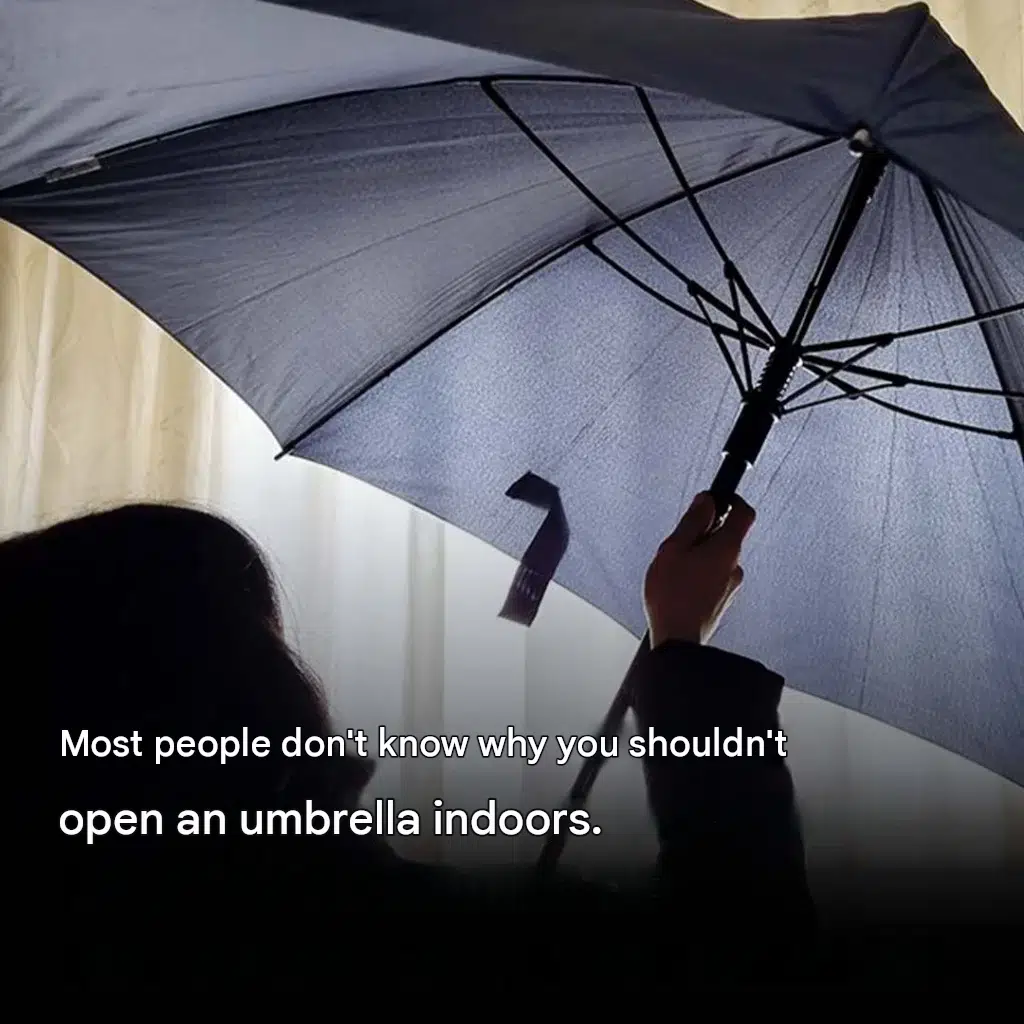
Superstitions have shaped human behavior, cultural traditions, and domestic habits for thousands of years. From avoiding black cats crossing your path to refusing to walk under ladders, everyday life is filled with quirky rules rooted in ancient folklore. Among these beliefs, one of the most widely recognized taboos is the warning never to open an umbrella indoors.
While many modern individuals dismiss this rule as a harmless old wives’ tale, the historical origins, cultural superstitions, and practical safety reasons behind it reveal a fascinating blend of history and superstition. Exploring why this taboo persists provides a captivating look into how ancient fears evolved into modern domestic habits.
The Historical and Mythological Origins of the Indoor Umbrella Taboo
To understand why opening an umbrella inside a home became taboo, we must examine historical practices and ancient societal beliefs.
1. Ancient Egyptian Sunshades and Solar Deities
Sacred Protection: In ancient Egypt, early precursors to umbrellas were constructed from peacock feathers and papyrus, designed primarily to shield nobility from the blazing sun rather than rain.
Insulting the Gods: These sunshades were considered sacred objects connected to solar deities. Opening a parasol indoors—away from the sun—was believed to offend the gods and bring misfortune upon the household.
2. Victorian Spring-Loaded Mechanisms
Dangerous Springs: In 19th-century Victorian England, waterproof umbrellas featuring heavy steel frames and powerful spring-loaded opening mechanisms became popular.
Domestic Hazards: Opening these rigid, fast-expanding metal spikes inside a small, crowded Victorian parlor frequently resulted in shattered glassware, damaged home decor, or sudden facial injuries to nearby family members. Consequently, parents strictly prohibited opening umbrellas indoors for purely practical safety reasons.
Exploring Cultural Superstitions and Psychological Beliefs
Over generations, practical safety rules and ancient myths merged into deeply ingrained superstitions that continue to influence cultural perspectives today.
1. Bringing Bad Luck Into the Home
Symbol of Protection: Because umbrellas are designed to shield people from harsh weather storms, opening one inside a home was thought to invite stormy weather and misfortune under a roof that should remain safe and peaceful.
Superstitious Anxiety: Cultural conditioning often leads individuals to associate minor misfortunes or bad days with breaking these traditional taboos, reinforcing the superstition through psychological confirmation bias.
2. Financial and Legal Considerations of Home Safety
While superstitions don’t impact bank accounts, maintaining a safe, organized home environment certainly does.
Preventing Household Accidents: Practicing caution with sharp objects, large equipment, and unfolding mechanisms indoors protects your property from accidental damage.
Insurance and Risk Management: Keeping walkways clear of cumbersome gear prevents domestic slips, trips, and falls that could lead to household insurance claims or medical expenses.
Practical Tips for Handling and Storing Umbrellas
Whether you believe in superstitions or simply want to keep your home tidy and safe, managing wet umbrellas properly is essential:
Dry Umbrellas Open in Protected Spaces: If possible, let wet umbrellas dry partially open in a garage, entryway, or covered porch to prevent mildew and frame rust.
Use a Designated Umbrella Stand: Keep entryway floors dry and hazard-free by storing folded umbrellas neatly in a designated holder near the door.
Inspect Mechanical Locks: Regularly check the locking pin and fabric ribs of your umbrella to ensure safe operation when caught in sudden downpours.
Avoid Indoor Clutter: Store gear out of main walking corridors to prevent tripping hazards for guests and family members.
Fascinating Insights Into Domestic Superstitions
Global Variations: Different cultures possess unique weather-related superstitions; for instance, opening an umbrella on a bed is considered exceptionally unlucky in several European traditions.
The Evolution of Waterproofing: Early umbrellas were not waterproof; they were strictly sunshades. It wasn’t until the introduction of treated oils and rubberized fabrics in the 18th century that umbrellas became standard rain gear.
Psychological Comfort: Anthropologists note that adherence to minor superstitions provides humans with an illusory sense of control over unpredictable daily environments and weather patterns.
Balancing Tradition and Practicality
Whether you avoid opening umbrellas indoors out of respect for ancient tradition or simply to avoid knocking over your favorite lamp, this enduring taboo remains a fun fixture of cultural folklore. Understanding the rich history behind these everyday rules bridges the gap between ancient myths and modern household habits.
Frequently Asked Questions (FAQ)
Where did the superstition about indoor umbrellas originate?
The taboo stems from a combination of ancient Egyptian sunshade reverence and Victorian-era safety warnings regarding dangerous, spring-loaded metal umbrella frames that could injure people or break indoor objects.
Is it actually bad luck to open an umbrella inside?
From a scientific perspective, opening an umbrella indoors has no direct impact on your luck or fate. However, it can bring bad luck in the form of broken household items or minor indoor accidents!
Why were early umbrellas used primarily for the sun?
In ancient civilizations across Egypt, China, and Greece, umbrellas were crafted as status symbols to protect royalty and nobility from the sun, rather than as rain protection.
How can I store wet umbrellas without making a mess indoors?
Place a waterproof tray or a dedicated umbrella stand with a drip pan near your front entryway so wet gear can drain safely without creating slippery floors.
