
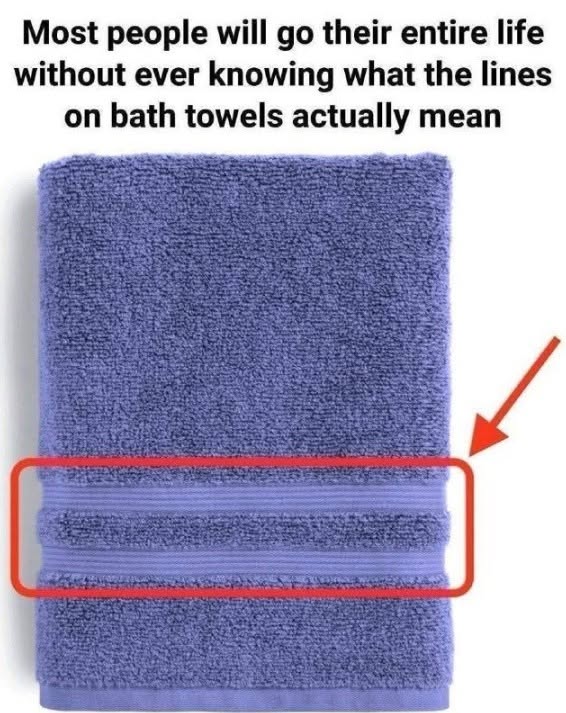
Every single day, millions of people use household items without ever questioning their design, manufacture, or functional purpose. From clothing tags and kitchen utensils to everyday linens like bath towels, subtle features are often built directly into products for very specific reasons. One of the most common everyday mysteries involves the decorative woven bands or raised lines running near the edges of standard bath towels.
While most people assume these woven lines are purely decorative or aesthetic additions designed to make towels look more appealing on retail shelves, they actually serve crucial manufacturing, structural, and functional purposes.
In this comprehensive guide, we explore the textile engineering behind bath towels, the true purpose of the woven border lines, practical tips for linen maintenance, and how proper household organization supports long-term well-being.
The Textile Engineering and Manufacturing of Bath Towels
To understand why those distinct lines exist on your towels, it helps to examine how towels are woven on industrial looms. Terry cloth towels are made using special warp yarns that create loops (or piles) on the surface of the fabric, which provides maximum absorbency, softness, and skin comfort.
However, weaving uniform loops across the entire length and width of a large fabric sheet presents unique challenges during high-speed mass production.
+——————————————————-+
| THE BATH TOWEL WEAVING STRUCTURE |
+——————————————————-+
| |
| 1. Terry Loop Pile Area |
| – Soft, absorbent loops designed for drying |
| – High surface area for moisture retention |
| |
| 2. Dobby Border (The Woven Lines) |
| – Flat weave section without loops |
| – Reinforces structural integrity |
| – Prevents edge curling and fraying |
| |
+——————————————————-+
The Role of the Dobby Border
The raised lines or decorative bands found on bath towels are created using a specialized loom attachment known as a dobby loom. This section of the towel shifts from terry loops to a flat, tight weave. The primary engineering reasons for this design include:
1. Structural Reinforcement and Edge Stability
Because terry loops can easily snag, pull, or unravel at the edges, the flat woven border acts as a stabilizing anchor. It locks the surrounding threads in place, preventing the towel from warping or losing its shape during heavy daily use and repeated machine washing.
2. Controlled Folding and Linen Management
The flat woven lines create natural creases and folding guides. In commercial settings—such as hotels, spas, and fitness centers—towels must be folded rapidly and uniformly for neat stacking on shelves. The woven border lines provide precise visual and structural guides that make folding crisp, uniform squares effortless.
3. Preventing Shrinkage Distortion
Different weave patterns react differently to moisture and heat during laundering. The transition between the flat border weave and the plush loop pile helps distribute tension evenly during the drying cycle, preventing the edges from curling or shrinking faster than the body of the towel.
Practical Tips for Bath Towel Care and Maintenance
To keep your bath towels plush, absorbent, and durable for years, proper laundering and maintenance practices are essential.
Maintenance Habit Best Practice Key Benefit
Washing Frequency Wash towels every 3 to 4 uses Prevents bacteria growth and musty odors
Detergent Usage Use minimal detergent, skip fabric softener Fabric softeners coat fibers, reducing absorbency
Drying Method Dry on medium heat or hang dry Preserves cotton fiber integrity and prevents stiffness
Storage Store only when completely dry in a ventilated space Prevents mold, mildew, and stale odors
1. Ditch the Fabric Softener
While fabric softeners make clothes feel silky, they leave a waxy, chemical residue on cotton terry loops. This coating seals the fibers, drastically reducing the towel’s ability to absorb water. Use white vinegar in the rinse cycle instead to naturally soften fabrics.
2. Avoid Overloading the Washing Machine
Washing too many heavy towels at once prevents them from moving freely, leading to inadequate rinsing and lingering soap buildup that makes towels stiff and scratchy.
Long-Term Planning: Home Organization, Finance, and Well-Being
Maintaining a well-organized linen closet and investing in quality household goods connects directly to broader lifestyle management and asset protection strategies:
Household Budgeting: Purchasing durable, high-quality 100% cotton towels in sets reduces the need for frequent replacements, optimizing your long-term household budget.
Property and Home Maintenance: Keeping your living spaces organized, clean, and well-maintained enhances daily comfort and overall household peace of mind.
Legal and Financial Security: Partnering with qualified professionals for insurance, estate planning, and financial management ensures your family’s long-term stability and security.
Fascinating Facts About Textiles and Towels
Ancient Origins: The first terry cloth towels were mass-produced in the 19th century, though humans have used woven linen and cotton drying cloths for thousands of years.
GSM Measurement: Towel quality is often measured in GSM (grams per square meter). Higher GSM ratings (such as 600 to 900) indicate a denser, heavier, and more luxurious towel.
Egyptian Cotton Supremacy: Long-staple Egyptian cotton is prized worldwide for bath linens because its longer fibers create softer, stronger, and more absorbent loops.
The Power of Loom Technology: The invention of the Jacquard and dobby looms revolutionized the textile industry by making intricate woven patterns and reinforced borders easy to mass-produce.
Conclusion
The lines on your bath towels are far more than a simple design choice—they are a brilliant example of textile engineering designed to reinforce structural integrity, prevent fraying, and make folding effortless.
By understanding the science behind everyday items and practicing proper linen care, you can enhance your daily home routine and keep your household running smoothly.
Frequently Asked Questions (FAQ)
What are the lines on bath towels actually called?
The flat woven bands or lines on towels are typically referred to as dobby borders, named after the dobby loom mechanism used to create patterned, flat sections on woven fabrics.
Do all bath towels have these woven lines?
No, luxury or ultra-plush heavyweight towels sometimes feature a continuous terry loop surface from edge to edge without a dobby border, though they require reinforced stitching along the hems to prevent fraying.
Why do my towels feel stiff and scratchy after washing?
Stiffness is usually caused by detergent residue buildup or the overuse of liquid fabric softeners, which coat the cotton fibers in a waxy layer. Washing with a cup of white vinegar helps strip away this buildup.
How often should I replace my bath towels?
High-quality cotton bath towels typically last between two to five years depending on frequency of use and laundering habits. If they lose absorbency or develop frayed edges, it is time for an upgrade.
What is the best cotton type for bath towels?
Egyptian, Turkish, and Supima cotton are widely considered the finest choices for bath towels due to their long staple fibers, which offer superior softness, durability, and absorbency.
