
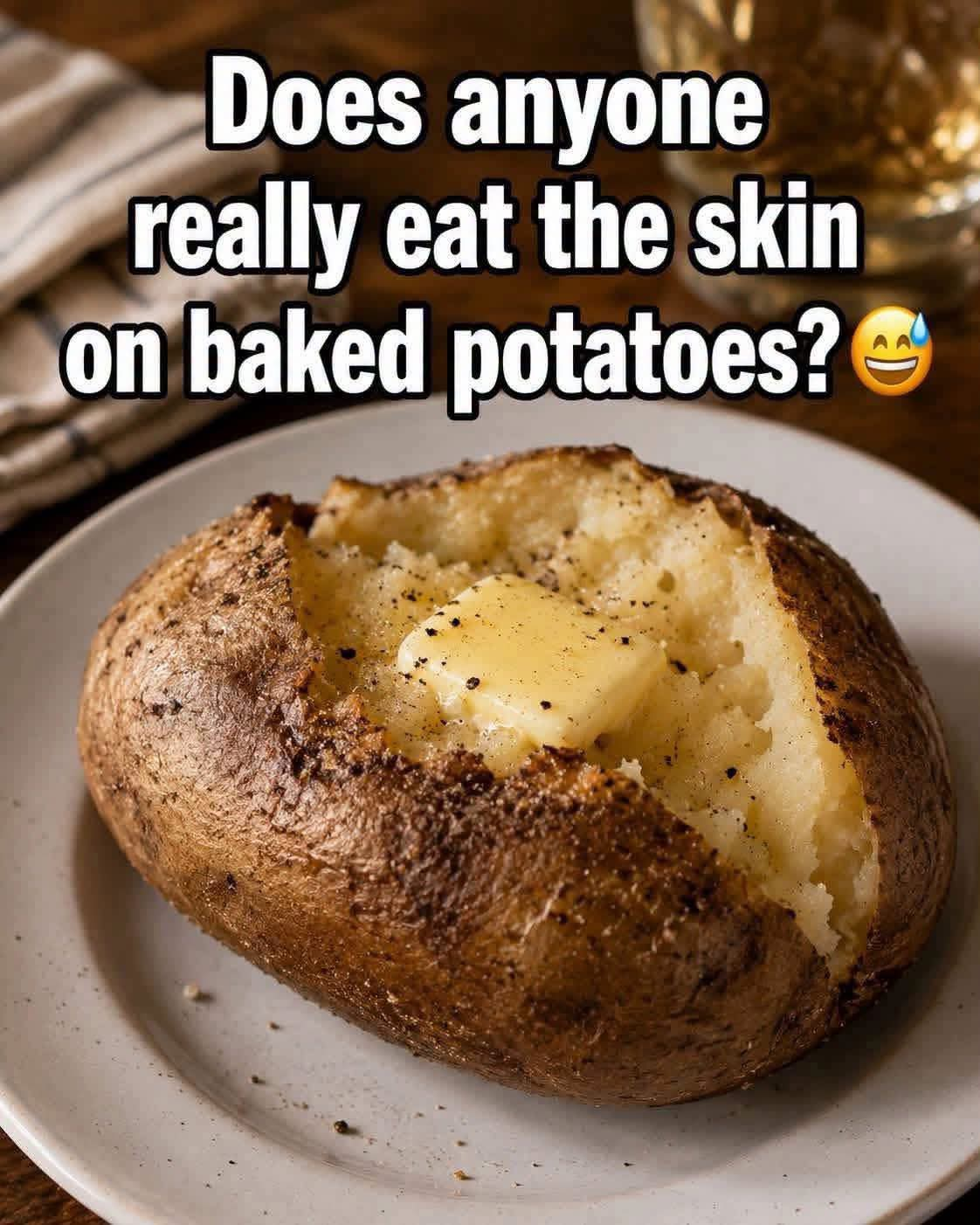
Few comfort foods are as universally loved as a hot, fluffy baked potato topped with melting butter, sea salt, and black pepper. However, a friendly debate continues to divide food enthusiasts across social media: “Does anyone really eat the skin on baked potatoes?”
While some diners scooped out the soft interior flesh and leave the outer skin behind on the plate, culinary enthusiasts and nutritionists strongly advocate for eating the skin. When properly scrubbed, seasoned, and baked to crisp perfection, the skin offers a rich, earthy flavor, satisfying texture contrast, and a concentration of essential nutrients.
In this complete food guide, we examine the nutritional benefits of potato skins, the culinary secrets to achieving extra-crispy jacket potatoes, and practical meal ideas for using leftover skins.
Nutritional Breakdown: Why You Shouldn’t Skip the Potato Skin
Leaving the skin on your baked potato delivers a substantial boost of essential vitamins and dietary minerals:
+-------------------------------------------------------------------+
|                   BAKED POTATO NUTRITION MATRIX                   |
|                                                                   |
|  [ NUTRIENT ]      [ BENEFIT ]                                    |
|  • Dietary Fiber   • Supports digestion and promotes fullness     |
|  • Potassium       • Helps regulate blood pressure & heart health|
|  • Vitamin C       • Supports immune health and antioxidant action|
|  • Iron & B6       • Promotes red blood cell production & energy  |
+-------------------------------------------------------------------+
1. High Dietary Fiber
The skin contains roughly half of a potato’s total dietary fiber. Fiber promotes healthy digestion, aids gut microbiome health, and helps stabilize blood sugar levels to keep you full longer.
2. Rich Source of Potassium
Potato skins are packed with potassium—an essential electrolyte that balances sodium levels and supports cardiovascular health.
3. Essential Iron and Vitamin B6
The outer peel contains a concentrated blend of B vitamins and essential minerals, contributing to steady daily energy production.
Culinary Science: How to Make Potato Skins Taste Amazing
If you find potato skins dry or bland, simple preparation adjustments can make them the best part of the meal:
1. The Oil and Salt Technique
-
Scrub and Dry: Wash the potato thoroughly under cold water to remove dirt, then dry it completely with a clean towel.
-
Coat with Oil: Rub the outer skin evenly with olive oil, avocado oil, or melted butter.
-
Season Generously: Sprinkle coarse sea salt and freshly cracked black pepper over the oiled skin before baking. The salt draws out moisture, creating a blistered, savory exterior.
2. High-Heat Baking vs. Foil Wrapping
Wrapping potatoes tightly in aluminum foil traps steam, resulting in soft, wet skins. For maximum crispiness, bake potatoes unfoiled directly on an oven rack or baking sheet at high heat ($400^\circ\text{F}$ to $425^\circ\text{F}$ or $200^\circ\text{C}$ to $220^\circ\text{C}$).
Practical Kitchen Ideas: Delicious Loaded Potato Skins
If you prefer keeping the flesh and skin separate, leftover baked potato skins make fantastic appetizers:
-
Classic Loaded Skins: Fill hollowed skins with shredded cheddar cheese, crispy bacon bits, sliced green onions, and dollops of sour cream, then broil until golden brown.
-
Crispy Potato Chips: Cut baked potato skins into strips, toss with garlic powder and paprika, and air-fry until extra crunchy for a fast, zero-waste snack.
Conclusion
Not only is the skin on a baked potato completely safe and delicious to eat, but it also holds a majority of the potato’s fiber, potassium, and vitamins. By scrubbing, oiling, and seasoning the outer skin before roasting, you transform a standard jacket potato into a rich, flavorful, and nutritionally complete dish.
Frequently Asked Questions (FAQ)
Is it healthy to eat baked potato skins?
Yes! Potato skins are rich in fiber, potassium, iron, and Vitamin C, offering greater nutrient density than the potato flesh alone.
How do you get potato skins extra crispy?
Avoid wrapping the potato in foil while baking. Rub the dry skin with olive oil or butter, season with coarse salt, and bake at high heat ($400^\circ\text{F}$ / $200^\circ\text{C}$).
Do you need to wash potatoes before eating the skin?
Always scrub potatoes under running water with a vegetable brush to remove dirt, debris, and soil before cooking and eating.
