
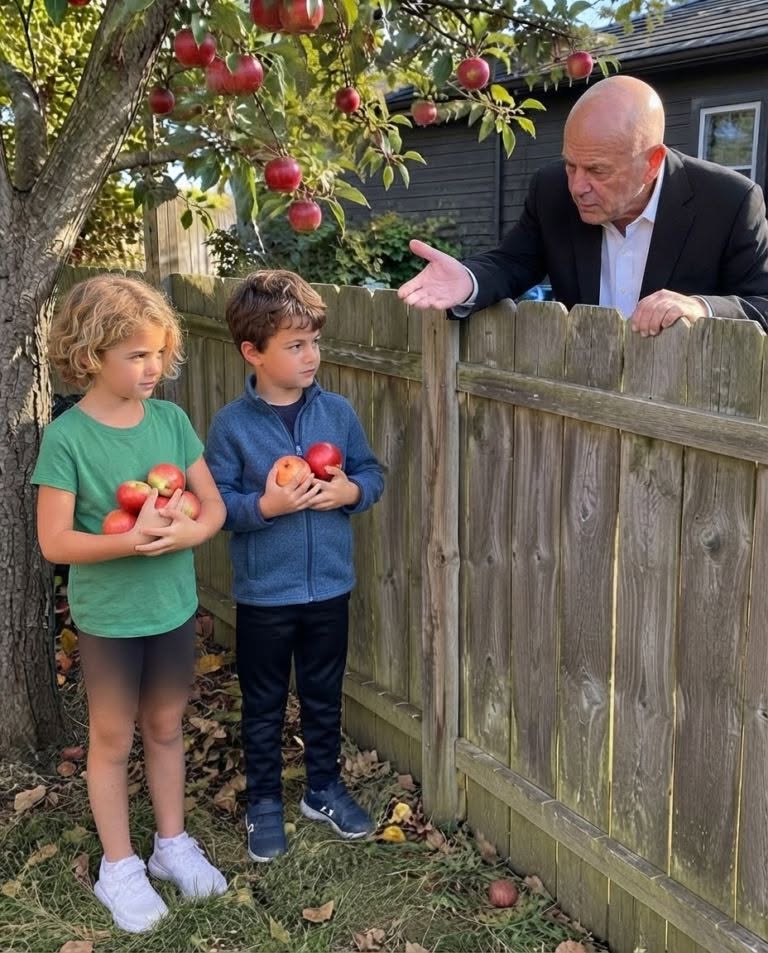
When branches cross property lines and fruit hangs over a neighbor’s fence, what seems like a simple, innocent moment can quickly turn into a complex legal and social dilemma. Neighborly relationships are often built on quiet respect and shared boundaries, but property lines have a unique way of triggering unexpected tension. A classic example of this friction occurs right in suburban backyards across the nation: who actually owns the fruit that hangs over the fence? When young children pick fresh apples from branches extending across a wooden boundary, is it a wholesome neighborhood memory or a technical infringement on property rights?
Understanding property boundaries, tree ownership laws, and modern neighborhood conflict resolution is essential for homeowners, tenants, and families alike. Navigating these situations with patience, legal awareness, and clear communication can protect your property values, preserve peace in your community, and even prevent costly legal battles. Here is a comprehensive guide to understanding property rights, handling fence-line disputes, and building long-term neighborhood harmony.
Understanding Property Boundaries and Tree Ownership Law
To make sense of backyard fruit disputes, one must first understand how property laws apply to trees and foliage. Property lines extend vertically—both upwards into the sky and downwards into the soil—within the defined boundaries of your land title deed.
The Overhanging Branch Rule
In most legal jurisdictions across the United States, a tree’s legal ownership is determined by where its trunk meets the ground.
Trunk Location: If the trunk of an apple tree sits entirely on Neighbor A’s property, Neighbor A legally owns the tree.
Overhanging Canopy: If branches cross over the fence line into Neighbor B’s airspace, Neighbor B generally has the legal right to trim those branches strictly up to the property line, provided doing so does not permanently damage or destroy the tree.
Fruit Rights: The ownership of fruit hanging on overhanging branches varies depending on local municipal ordinances and state common law. In many areas, fruit attached to the branch belongs to the owner of the tree trunk. However, once fruit naturally falls onto neighboring ground, ownership rights often transfer to the owner of the land where it landed.
Boundary Line Trees
When a tree trunk sits directly on the boundary line between two properties, it is classified as a “boundary tree.” In such cases, both property owners share joint ownership of the tree. Neither owner can cut down or severely prune the tree without the explicit consent of the other.
The Economics of Property Disputes and Financial Protection
Minor disputes over trees, fences, and yard space may feel trivial, but if mismanaged, they can lead to severe legal and financial consequences. Knowing how property claims work can help homeowners avoid unnecessary litigation expenses.
Homeowners Insurance and Property Liability
Homeowners insurance policies play a major role in property damage disputes involving trees and boundary structures.
Property Damage: If a heavy branch from a neighbor’s tree falls onto your fence, garage, or roof during a storm, your insurance provider typically covers the property repair costs under standard structural coverage.
Liability Claims: If a hazardous tree on your property drops a heavy limb and injures someone or damages neighboring property after you were formally warned of its decay, you could be held liable for negligence.
Legal Fees and Defense: Neighbor disputes that escalate into civil lawsuits over property lines, trespass, or property destruction can result in tens of thousands of dollars in legal fees. Retaining a real estate attorney or legal services advisor early on is often necessary when formal property survey disputes arise.
Impact on Property Value and Real Estate Sales
Unresolved boundary conflicts can significantly hinder real estate transactions. When selling a home, sellers are legally required to disclose known boundary disputes, ongoing neighbor lawsuits, or unrecorded fence easements to prospective buyers. Unsettled disagreements can lower home valuations, delay mortgage approvals, and cause prospective buyers to walk away from investment opportunities.
Practical Steps to Handle Neighbor Conflicts Gracefully
When dealing with overhanging fruit, boundary fences, or yard intrusion, taking a proactive and civil approach yields the best long-term outcome. Here are practical steps to diffuse backyard tension before it escalates into a formal dispute.
1. Initiate an Informal, Friendly Conversation
Most neighbor disagreements stem from a lack of communication rather than deliberate malice. Approaching your neighbor with a calm, friendly attitude can solve the majority of issues immediately.
Choose a neutral, low-stress time to speak with your neighbor.
Frame the issue collaboratively rather than confrontationally.
Focus on shared solutions that respect both parties’ privacy and enjoyment of their yards.
2. Order an Official Property Line Survey
If you are unsure where your exact boundaries lie, relying on existing fence lines can be misleading. Fences are frequently constructed off-line due to historical errors or terrain obstacles. Hiring a licensed land surveyor provides an official, legally binding map of your property boundaries, establishing clear facts before any legal action or permanent landscaping changes are made.
3. Document Everything Carefully
In situations where tree branches pose a structural danger or property damage is occurring:
Take high-resolution photographs and videos showing the condition of the tree, fence, and overhanging branches.
Keep a written record of all verbal conversations, dates, and agreements made with your neighbor.
Save written correspondence, such as letters or emails, regarding property maintenance requests.
4. Consult Professional Tree Care Specialists
Before trimming large, overhanging limbs from a neighbor’s tree, consult a certified arborist. A professional arborist can evaluate the health of the tree, determine whether pruning will weaken its structural integrity, and perform the trimming safely to prevent accidental damage to fences or homes.
Fascinating Historical and Legal Facts About Property Lines
Ancient Roman Property Laws: The concept of overhanging branch regulation dates back over two thousand years to the Roman Twelve Tables, which allowed landowners to demand the trimming of neighboring trees overhanging their property above a height of 15 feet.
The “Self-Help” Doctrine: In modern common law, the right of a property owner to trim encroaching roots or overhanging branches up to their property line without going to court is known legally as the “right of self-help.”
Spite Fences: Many states have specific statutes prohibiting “spite fences”—structures erected primarily to block a neighbor’s light, air, or visual view out of malicious intent. Courts can order the removal of such structures and award financial damages to the affected neighbor.
Adverse Possession: In rare circumstances, if a neighbor uses a portion of your land across an improperly placed fence line openly, continuously, and without objection for a statutory period (often 10 to 20 years), they may attempt to claim legal ownership of that strip of land through adverse possession.
Protecting Family, Community, and Long-Term Peace
At its core, a home should be a place of relaxation, security, and community. While legal boundaries protect your financial investment, maintaining friendly relations with those living around you is essential for long-term peace of mind. A simple conversation over a fence, an agreement to share fresh garden produce, or a cooperative approach to yard maintenance can transform a potential neighborhood disagreement into an opportunity to build trust and community goodwill.
Conclusion
Whether it is children reaching across a fence for fresh apples or homeowners debating the maintenance of an overhanging shade tree, boundary issues highlight the subtle balance required in shared residential neighborhoods. Understanding property laws, maintaining comprehensive home insurance coverage, relying on professional land surveys, and leading with open communication ensure that your property remains secure and your neighborhood relations remain positive and respectful.
Frequently Asked Questions (FAQ)
Can I legally pick fruit hanging over my fence from a neighbor’s tree?
In many legal jurisdictions, fruit attached to an overhanging branch still belongs to the owner of the tree trunk. While you have the right to trim the branch up to your property line (if it does not harm the tree), picking the fruit directly off the branch without permission can technically be considered property conversion. However, fruit that falls naturally onto your yard often becomes your property. Always check local municipal codes for specific rules in your town.
What should I do if a neighbor’s tree damages my fence?
If a branch or falling tree damages your fence, take photographs immediately and document the damage. Contact your homeowners insurance provider to file a report. Typically, your insurance covers repairs to your fence. If the tree was visibly dead, rotting, or hazardous prior to the incident and your neighbor failed to address it despite notice, their liability insurance may be held responsible.
Can my neighbor force me to cut down my tree if they don’t like it?
No. A neighbor cannot force you to cut down a healthy tree located entirely on your property simply because they dislike its appearance, shadow, or shedding leaves. They only have the legal right to trim branches that extend directly over their property line, provided the pruning does not kill or structurally weaken your tree.
How do I legally prove where my property line is located?
The only legally binding way to verify property boundaries is to hire a professional, licensed land surveyor. A surveyor uses historical deeds, legal descriptions, and specialized measurement equipment to place physical markers on the terrain showing your exact boundary lines.
