
Introduction: The Hidden Value in Your Workshop and Kitchen
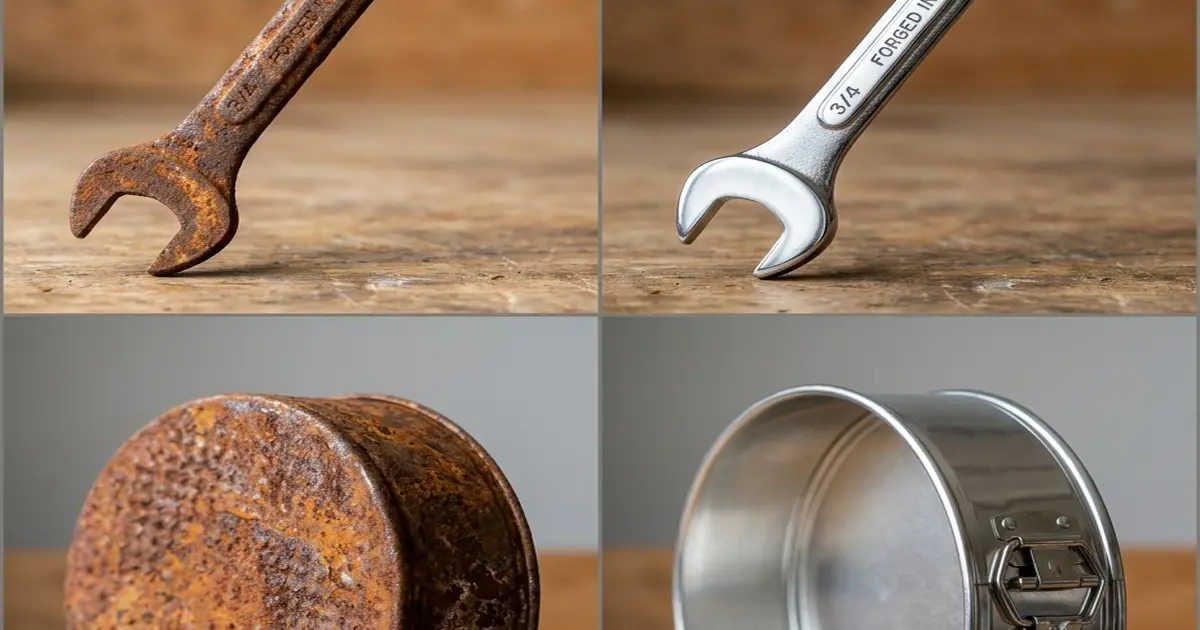
Have you ever unearthed a forgotten heirloom from a grandparent’s workshop, or perhaps an old piece of cookware that has seen better decades, and instantly dismissed it as junk? We are conditioned by our modern consumer culture to discard the old and purchase the new. A rusted wrench, a corroded tin, or a tarnished silver platter is often viewed as a liability, destined for the landfill. However, the image accompanying this article presents a compelling narrative that challenges this assumption. It showcases the dramatic before-and-after transformation of both a 3/4″ forged wrench and a circular metal container, proving that with the right techniques, what appears to be a worthless object can be restored to its original, functional, and even beautiful condition.
This process is not merely a hobby; it is a vital skill that intersects with numerous aspects of our lives, from preserving sentimental family history to making sound financial and investment decisions. In an era where the cost of living is rising, mastering the art of metal restoration can save you significant money on tools, cookware, and decorative items. Moreover, for the entrepreneurial spirit, it offers a lucrative avenue for business. Restoring antique tools or vintage kitchenware and reselling them can yield high profit margins, especially when targeting collectors and those who appreciate quality, lasting craftsmanship.
This comprehensive guide will take you on a journey through the science of metal corrosion, the art of cleaning and restoration, and the practical financial implications of these skills. We will explore how understanding metallurgy and chemistry can help you protect your assets, reduce your liabilities, and even make strategic investments. Whether you are a DIY enthusiast, a budding entrepreneur, or simply someone who hates waste, this article will provide you with the knowledge and inspiration to see the hidden value in every piece of metal you own.
Understanding the Enemy: The Science of Rust and Corrosion
To restore metal effectively, you must first understand what you are fighting against. Corrosion, the primary culprit, is not just surface dirt; it is an electrochemical reaction that fundamentally alters the metal’s composition.
What is Rust?
Rust is the common name for iron oxide. When iron or steel is exposed to both oxygen and moisture, an electrochemical reaction occurs. Electrons are transferred from the iron to the oxygen, causing the iron to oxidize. This results in a reddish-brown, flaky compound that weakens the structural integrity of the metal. The image of the rusted wrench perfectly illustrates this process, where years of exposure have not only discolored but also pitted the surface of the metal.
The Different Types of Corrosion
While rust is specific to iron and steel, other metals corrode in different ways.
Aluminum Oxidation: Aluminum does not rust, but it does corrode. When exposed to air, it forms a thin layer of aluminum oxide. This layer is actually protective, preventing further corrosion, but it appears dull and white.
Tarnish (Patina): Copper, brass, and silver develop a patina, or tarnish, through a reaction with sulfur and other compounds in the air. While this is often considered undesirable, it can also be a sign of authenticity and age, particularly on antique copper cookware.
Pitting Corrosion: This is a highly localized form of corrosion where small pits or holes are formed in the metal. This is particularly dangerous as it can penetrate deep into the metal, compromising its strength without being immediately obvious on the surface.
Understanding these different types of corrosion is crucial, as the restoration method for a rusted wrench will differ significantly from that for a corroded aluminum container or a tarnished silver platter. This knowledge is also valuable for professionals in various industries, such as insurance assessors who need to determine if a piece of equipment is salvageable or a total loss, or legal services professionals dealing with disputes over damaged property.
Preparation: Assessing the Asset and Safety First
Before you pick up a single tool, you must evaluate the object you intend to restore and, more importantly, ensure your own safety.
Assessing Value and Risk
Is the object worth restoring? This is a critical question that requires a balanced view of several factors:
Sentimental Value: Often, the emotional worth of an item far exceeds its market value. Family heirlooms, such as a World War II-era compass or a grandmother’s cast-iron skillet, are priceless.
Monetary Value: Research the item. Is it a rare antique, or a common, easily replaceable tool? A high-end, vintage cast-iron pan (like a Griswold or Wagner) is a significant investment, while a modern, inexpensive one might not be worth the effort and materials.
Structural Integrity: Carefully inspect the item. Is the rust just surface-deep, or has it caused deep pitting or structural cracks? A severely compromised tool cannot be safely restored to its original function.
Cost of Restoration: Calculate the cost of the materials (solvents, abrasives, protective coatings) and the value of your time. If the restoration cost exceeds the item’s value, it may be a poor investment, unless the primary goal is the experience itself.
Safety First: Protecting Yourself and Your Home
Metal restoration involves chemicals, dust, and potentially dangerous tools. Proper safety protocols are non-negotiable.
Work Area: Always work in a well-ventilated area, preferably outdoors or in a garage with the door open. Dust and chemical fumes can be hazardous.
Personal Protective Equipment (PPE):
Safety Glasses: Essential for protecting your eyes from flying debris, wire wheel bristles, and chemical splashes.
Gloves: Wear chemical-resistant gloves when using solvents and work gloves when handling sharp or rough metal.
Respirator: A high-quality respirator (N95 or better) is mandatory when sanding or wire-wheeling, as fine metal and rust dust can be toxic if inhaled.
Chemical Safety: Read and follow the instructions on all chemicals. Store them properly, away from children and pets. Never mix chemicals, as this can create dangerous reactions. This attention to detail is akin to understanding the nuances of a complex insurance policy, where small print can make a big difference.
The Restoration Process: From Rusted Relic to Polished Masterpiece
Now, let’s dive into the step-by-step process of transforming a piece of metal, drawing insights from the impressive before-and-after transformation shown in the image.
Step 1: Deep Cleaning and Degreasing
The first step in any restoration is to remove surface dirt, oil, and grease. This allows subsequent treatments to work directly on the metal surface.
Method: Soak the item in a degreaser, or use a stiff brush and hot, soapy water. For stubborn grease on tools, a solvent like mineral spirits or acetone can be used (with proper ventilation and gloves).
Purpose: This reveals the true extent of the corrosion beneath the grime.
Step 2: Rust and Corrosion Removal
This is the core of the restoration process. There are several effective methods, each with its pros and cons.
A. Mechanical Methods: Abrasive Power These methods physically remove the rust. They are fast but can damage soft metals or remove too much material if not used carefully.
Wire Wheel: An indispensable tool for a bench grinder or drill. It’s excellent for removing heavy rust from the wrench in the image. Use a brass brush for softer metals like brass and copper to avoid scratching.
Angle Grinder with Flap Disc: Ideal for larger, flat surfaces. It’s aggressive and efficient.
Sandpaper and Steel Wool: A more controlled, manual approach for detail work. Start with a coarse grit and move to a fine grit for a smoother finish.
Sandblasting: A highly effective method that uses pressurized abrasive media. It can reach into intricate details but requires specialized equipment. For small business owners, this could be a niche business opportunity, offering restoration services to others.
B. Chemical Methods: Submerged Science These methods use chemical reactions to dissolve or convert rust. They are excellent for intricate parts where mechanical methods can’t reach.
Evapo-Rust (or similar chelating agents): This is a revolutionary product. It is non-toxic, biodegradable, and works by chemically binding to iron oxide, lifting it from the metal surface without damaging the base metal. You simply submerge the part, and after several hours (or overnight), the rust is gone. The wrench in the image likely benefited from a soak in a similar product.
White Vinegar (Acetic Acid): A popular, inexpensive, and effective home remedy. Soak the rusted item in pure white vinegar for 24-48 hours. The mild acid will dissolve the rust.
Molasses Bath: An old-school, slow-acting method. Mix one part molasses with nine parts water and soak the metal for several weeks. The natural sugars create a chelation effect. This is great for large, heavily rusted items but requires patience.
Rust Converters: These are not for removal but for stabilization. They contain phosphoric acid, which reacts with iron oxide to form a stable, black, protective coating (ferric phosphate). This can then be painted over. It’s a good choice for items where a full restoration is not the goal, but stopping further damage is.
C. Electrolytic Rust Removal: A Shocking Solution This is a highly effective and fascinating DIY method. It uses electricity to reverse the rusting process.
Setup: You need a plastic tub, water, washing soda (sodium carbonate), a battery charger (or DC power supply), and a sacrificial piece of steel (the anode).
Process: The rusted object is the cathode. When the current is applied, the rust is converted back into solid iron, which falls off, leaving clean, bare metal. This is an excellent method for large or oddly shaped items and is surprisingly economical.
Step 3: Brightening and Polishing
After the rust is gone, the metal may still appear dull or stained. This step brings back the shine, as seen on the polished wrench and the interior of the metal container in the image.
For Steel: Use a buffing wheel on a bench grinder with a polishing compound (like emery or tripoli) to achieve a mirror finish.
For Aluminum: A dedicated aluminum polish can work wonders. For a heavy-duty clean, wet-sanding with very fine sandpaper (1000-2000 grit) followed by polishing will make it gleam.
For Copper and Brass: A paste made from lemon juice and salt, or a commercial brass polish, will remove tarnish instantly. For a deeper clean and to remove stubborn green patina, a soak in a vinegar and salt solution is effective. The shine on the interior of the metal container in the image suggests it was polished with care, perhaps using a rotary tool for precision.
Step 4: Protecting Your Investment
Once the metal is clean and polished, it is vulnerable to re-corrosion. Protecting the surface is the final and most important step.
Clear Coat: A high-quality, clear enamel or lacquer spray will seal the metal from air and moisture, preventing rust and tarnish. This is ideal for decorative items.
Oiling or Waxing: This is the best method for tools and cookware.
Tools: A light coat of paste wax or a wipe-down with a light machine oil (like 3-in-One) will keep rust at bay.
Cast Iron: Seasoning with oil is essential. This creates a natural, non-stick, and rust-resistant coating.
Galvanizing or Plating: For long-term industrial applications, a new layer of zinc (galvanizing) or nickel/chrome plating can be applied. This is a professional service but offers the ultimate in corrosion protection.
Practical Applications and Profitable Ventures
The skills you acquire can translate into real-world value.
Case Study 1: The Home Workshop Savior
Imagine you own a set of high-quality combination wrenches that were left in a damp shed. They are now a solid mass of orange. A new set of equivalent quality could cost you several hundred dollars. By investing about $20 in a gallon of Evapo-Rust, a few hours of wire-wheeling, and a can of paste wax, you can restore your entire set to a “like-new” condition. This is a clear return on investment (ROI) of well over 1000%, a feat that even the most savvy investment portfolio would struggle to match in such a short timeframe. This project also reinforces the importance of proper business asset management, preventing future losses.
Case Study 2: The Culinary Treasure Hunter
Estate sales and online marketplaces are treasure troves for vintage kitchenware. Cast-iron skillets, copper pots, and high-carbon steel knives can often be purchased for a fraction of their true value because of rust or tarnish. A skilled restorer can turn a $5, heavily crusted cast-iron pan into a $150 sought-after piece of cookware. This can be a profitable side business or even a full-time career. The key is to identify valuable brands and master the specific techniques for restoring food-safe surfaces.
Case Study 3: The Green Initiative
Metal restoration is an inherently sustainable practice. By extending the life of a metal object, you are preventing the energy-intensive processes of recycling or manufacturing from scratch. This aligns with the growing global focus on corporate social responsibility (CSR) and sustainable business practices, appealing to an increasingly eco-conscious consumer base.
Interesting Facts and Historical Context
The Parthenon’s Secret: The ancient Greeks and Romans used iron clamps to hold the marble blocks of their temples together. To prevent these clamps from rusting and splitting the marble, they protected them with a coating of lead. This early form of rust prevention is still studied in engineering today.
The Cost of Corrosion: Corrosion is a massive global economic burden. It is estimated to cost the world trillions of dollars annually, affecting infrastructure, transportation, energy, and defense. This makes corrosion prevention and control a critical field for technology and engineering innovation.
The Steel Wrench’s Past: Forged steel, like the wrench in the image, became ubiquitous during the Industrial Revolution. This process involves shaping the metal under immense pressure, aligning its grain structure and making it incredibly strong. A vintage forged wrench is often superior to a modern, cast one, making it a valuable tool to preserve.
Conclusion: Seeing the Potential in Everything
The image of the rusted and polished wrench is a powerful metaphor. It reminds us that value is often hidden beneath layers of neglect and time. Metal restoration is a bridge between the past and the future, allowing us to honor the craftsmanship of previous generations while creating sustainable and valuable objects for our own. It is a skill that empowers you to take control of your possessions, save money, and even generate income.
By understanding the science of corrosion, mastering the techniques of cleaning and protection, and applying a strategic mindset to the items you choose to restore, you can become a master of this rewarding craft. So, the next time you encounter a piece of “junk” metal, don’t walk away. See the potential. Roll up your sleeves, put on your safety glasses, and start the incredible journey from rust to riches. This proactive approach to problem-solving is a valuable asset in any field, from management to health and medical sciences, where assessing and mitigating risk is paramount.
FAQ Section
Q: Is it safe to restore and cook in a vintage cast-iron skillet that was very rusty?
A: Yes, absolutely. The process of stripping the rust (e.g., with a vinegar bath or electrolysis) removes all the corrosion. Once the bare metal is exposed, you must thoroughly clean and then re-season it multiple times with a high-smoke-point oil (like flaxseed or canola). This creates a new, durable, and food-safe non-stick surface. The key is to ensure all the rust is gone before seasoning.
Q: What is the fastest way to remove heavy rust from a large metal object like an antique garden gate?
A: For large, immovable objects, a needle scaler is an excellent mechanical tool. It uses a bundle of rapidly reciprocating steel needles to chip away thick rust and paint. This can be followed up with a wire wheel on an angle grinder. For chemical removal, you could apply a rust-dissolving gel, let it sit, and then pressure wash it off.
Q: How can I prevent my restored tools from rusting again in my garage?
A: The primary defense is to reduce moisture and create a barrier.
Control Humidity: If possible, use a dehumidifier in your workshop or garage.
Apply a Protective Coating: After each use, wipe your tools down with a cloth dampened with a light machine oil. For long-term storage, a coat of paste wax provides a more durable seal.
Use Silica Gel Packs: Place a few silica gel packs in your toolbox to absorb any ambient moisture.
Q: Can I restore a tarnished silver-plated tea set, or will I damage the plating?
A: You can, but you must be extremely gentle. Silver plating is very thin. Avoid all mechanical abrasives like sandpaper or wire wheels. Chemical methods are safer. The electrolytic method (using aluminum foil, baking soda, and hot water) is excellent because it removes the tarnish without removing any of the silver. After the tarnish is gone, give it a light buff with a high-quality silver polish to bring back a brilliant shine.
Q: I found a very old wrench with “Forged in USA” stamped on it. Is it worth anything?
A: Potentially, yes. Many collectors seek out tools made in the USA before the era of mass overseas manufacturing, as they are often considered to be of higher quality steel and craftsmanship. Brands like Snap-on, Craftsman (older models), Proto, and Williams are highly collectible. Do some research on the specific brand and model number to get a better idea of its value. Its value could be a significant part of your overall financial retirement plan if you have a collection.
