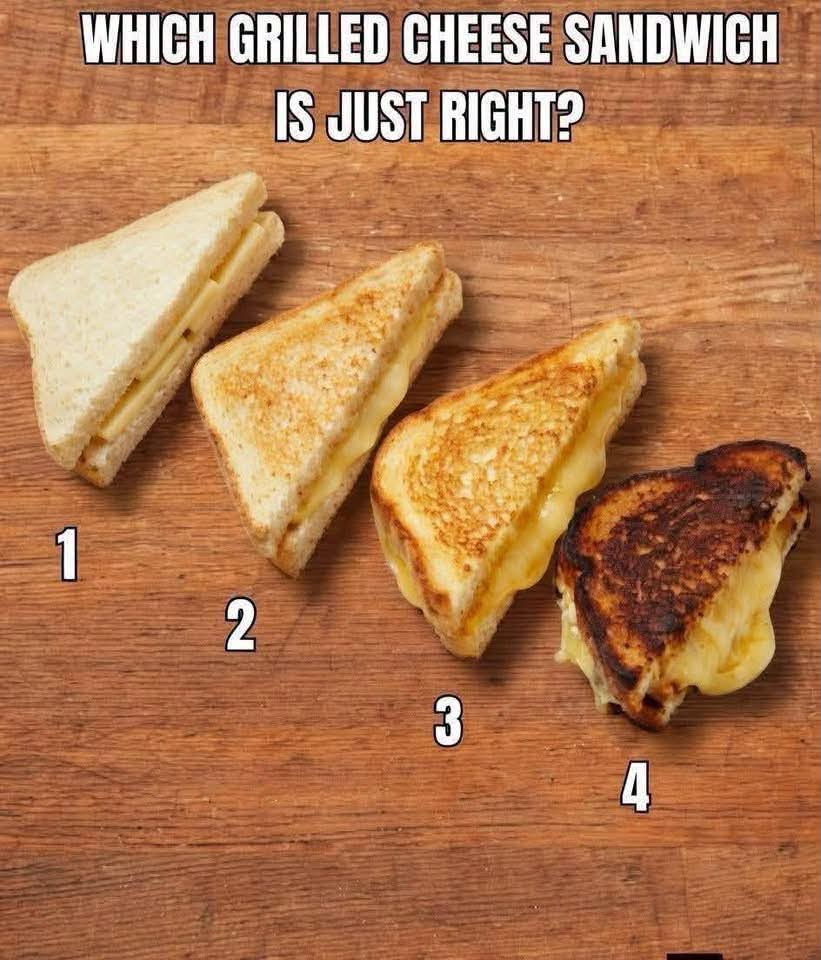
Few culinary creations evoke the universal nostalgia and widespread comfort of a classic grilled cheese sandwich. Simple at first glance—requiring only bread, butter, and cheese—the classic grilled cheese is actually a masterclass in heat management, fat distribution, and flavor development. A viral visual chart posing the question “Which grilled cheese sandwich is just right?” displays four distinct toast levels, ranging from barely warmed white bread with cold cheese (1) to a dark, charred crust (4). Finding your ideal sandwich comes down to a delicate balance between crispness and meltability. Toasting bread too lightly leaves it soft and soggy, while excessive heat leads to bitter, charred crusts before the cheese inside can fully melt. Beyond personal preference, understanding the culinary science behind grilled cheese allows home cooks to elevate simple ingredients into restaurant-quality comfort meals while stretching weekly grocery budgets.In this ultimate grilled cheese guide, we break down the four levels of sandwich doneness, explore the Maillard reaction, evaluate the best cheeses for ultimate stretch and flavor, and reveal expert techniques for perfect golden-brown results every time.Analyzing the 4 Levels of Grilled Cheese ToastingTo understand where different sandwich lovers draw the line, let us examine each tier featured on the doneness scale: +——————————————————————-+
| THE GRILLED CHEESE DONENESS SCALE |
| |
| [ 1 ] Barely Warmed (Un-toasted bread, unmelted cheese slab) |
| [ 2 ] Lightly Toasted (Pale golden crust, soft melted core) |
| [ 3 ] Golden Perfection (Deep golden crunch, gooey melted center)|
| [ 4 ] Well-Done / Charred (Dark brown/black crust, extra smoky) |
+——————————————————————-+
Level 1: Barely Warmed (The Cold Sandwich)Level 1 features un-toasted or barely warmed white bread with an unmelted, thick slice of cold cheese inside. Lacking any browning or crunch, this stage represents an undercooked sandwich before heat transformation begins. Level 2: Lightly ToastedLevel 2 shows a pale, light-golden crust with slightly softened cheese. This style appeals to diners who prefer a softer, pillowy bite without a loud, crunchy crust, though the cheese may not achieve full, gooey elasticity. Level 3: Golden PerfectionFor the majority of professional chefs and home cooks, Level 3 represents absolute equilibrium. The exterior boasts a crisp, uniform golden-brown crust achieved through proper fat application, while the interior cheese is completely melted, smooth, and stretchy. Level 4: Well-Done and CharredLevel 4 steps into dark mahogany and heavily charred territory. While some enthusiasts enjoy the bitter, smoky notes of dark toast combined with extra-oozy melted cheese, over-charring can overpower the subtle, creamy flavors of the dairy. The Food Science of the Perfect Melt: Maillard Reaction and Fat SelectionAchieving the golden crust of Level 3 relies on fundamental principles of food chemistry: 1. The Maillard ReactionThe pleasing aroma and golden color of toasted bread result from the Maillard reaction—a chemical reaction between amino acids and reducing sugars that occurs when food is heated between 280°F and 330°F (140°C to 165°C). Managing skillet heat ensures this reaction occurs fully across the bread surface without crossing into carbonized burning.2. Butter vs. Mayonnaise for ToastingButter: Delivers rich, classic dairy flavor and aroma. However, butter contains water and milk solids that burn quickly at high heat.Mayonnaise: Spreading a thin layer of mayonnaise on the outer bread slices is a favorite chef technique. Mayo consists of oil and egg yolk, which withstands higher heat, spreads effortlessly, and guarantees an ultra-crispy, evenly browned crust.The Hybrid Method: Many cooks use a dab of butter in the pan for flavor combined with a thin layer of mayo on the bread for texture.The Best Cheeses for Meltability and FlavorNot all cheeses melt equally. The ideal grilled cheese combines a low-melting-point cheese for texture with an aged cheese for bold flavor:High-Meltability Cheeses: American cheese, young Cheddar, Gruyère, Monterey Jack, Fontina, and Mozzarella offer smooth, gooey elasticity without separating into oil slicks.Flavor-Booster Cheeses: Aged Sharp Cheddar, Gouda, Provolone, or Parmesan add sharp, complex, savory notes.The Ultimate Blend: Pairing Sharp Cheddar with Gruyère or American cheese yields the perfect combination of intense flavor and buttery, stretchy melt.Practical Financial & Household Benefits of Home Comfort FoodMastering everyday classics like grilled cheese provides clear financial and lifestyle advantages:1. Exceptional Budget EfficiencyBread, butter, and cheese are among the most affordable grocery items available. Crafting elevated grilled cheese sandwiches at home costs less than a dollar per serving, providing a warm, satisfying meal that keeps household food budgets on track.2. Utilizing Leftover Bread and CheesesGrilled cheese is the ultimate zero-waste kitchen strategy. Slightly stale bread works even better than fresh bread because it absorbs less moisture, while leftover cheese ends and deli slices combine effortlessly into delicious custom blends.3. Quick, Low-Stress Meal PlanningA wholesome grilled cheese paired with tomato soup takes less than 10 minutes to prepare, serving as a reliable go-to dinner during busy weeknights when time and energy are limited.Chef’s Workflow: Rules for Cooking the Ideal Grilled CheeseLow and Slow Heat: Cook over medium-low heat. High heat burns the bread exterior before the interior cheese has sufficient time to melt completely.Cover the Skillet: Place a lid or sheet of foil over your skillet for the first 2 minutes of cooking. Trapping steam accelerates cheese melting before flipping.Grate Your Cheese: Avoid thick pre-sliced blocks. Grating fresh cheese from a block allows it to melt evenly and rapidly across every corner of the bread.Fascinating Facts About Grilled CheeseDepression-Era Staple: Grilled cheese gained massive popularity during the Great Depression of the 1930s as an affordable, nutrient-dense meal known as the “cheese dream.”World Record: The most expensive grilled cheese sandwich ever sold cost $214 at Serendipity 3 in New York City, featuring edible gold leaf, white truffle butter, and rare Caciocavallo Podolico cheese.Open-Faced History: Early government supply recipes during World War II instructed Navy cooks to serve open-faced toasted cheese sandwiches to feed sailors efficiently.ConclusionWhile individual preferences vary from light toast (Level 2) to charred crusts (Level 4), achieving a golden, crisp exterior with a rich, melted interior (Level 3) remains the gold standard of grilled cheese craftsmanship. By managing skillet heat, selecting high-melt cheeses, and utilizing smart kitchen techniques like the mayo spread, you can enjoy restaurant-quality comfort food at home while stretching your weekly grocery budget. Frequently Asked Questions (FAQ)Is butter or mayonnaise better for grilled cheese?Mayonnaise produces a crispier, more evenly golden crust because of its high smoke point, while butter delivers richer, traditional dairy flavor. Using a combination of both yields the best of both worlds.Why won’t my cheese melt properly?Pre-shredded bagged cheese contains anti-caking agents (like cellulose) that prevent smooth melting. Always grate fresh cheese directly from a block, and use medium-low heat with a pan lid to trap steam. What is the best bread for a grilled cheese sandwich?Thick-sliced sourdough, artisan white, brioche, or pullman bread are ideal because they possess sturdy structure to hold melted cheese while achieving a satisfying crunch.What can I add to a grilled cheese to elevate it?Popular additions include crispy bacon, sliced ripe tomatoes, caramelized onions, fresh basil, avocado, or a thin spread of Dijon mustard or fig jam for sweet and savory balance.
The Anatomy of a Perfect Grilled Cheese: Maillard Reaction, Cheese Selection, and Ultimate Comfort Food Mastery