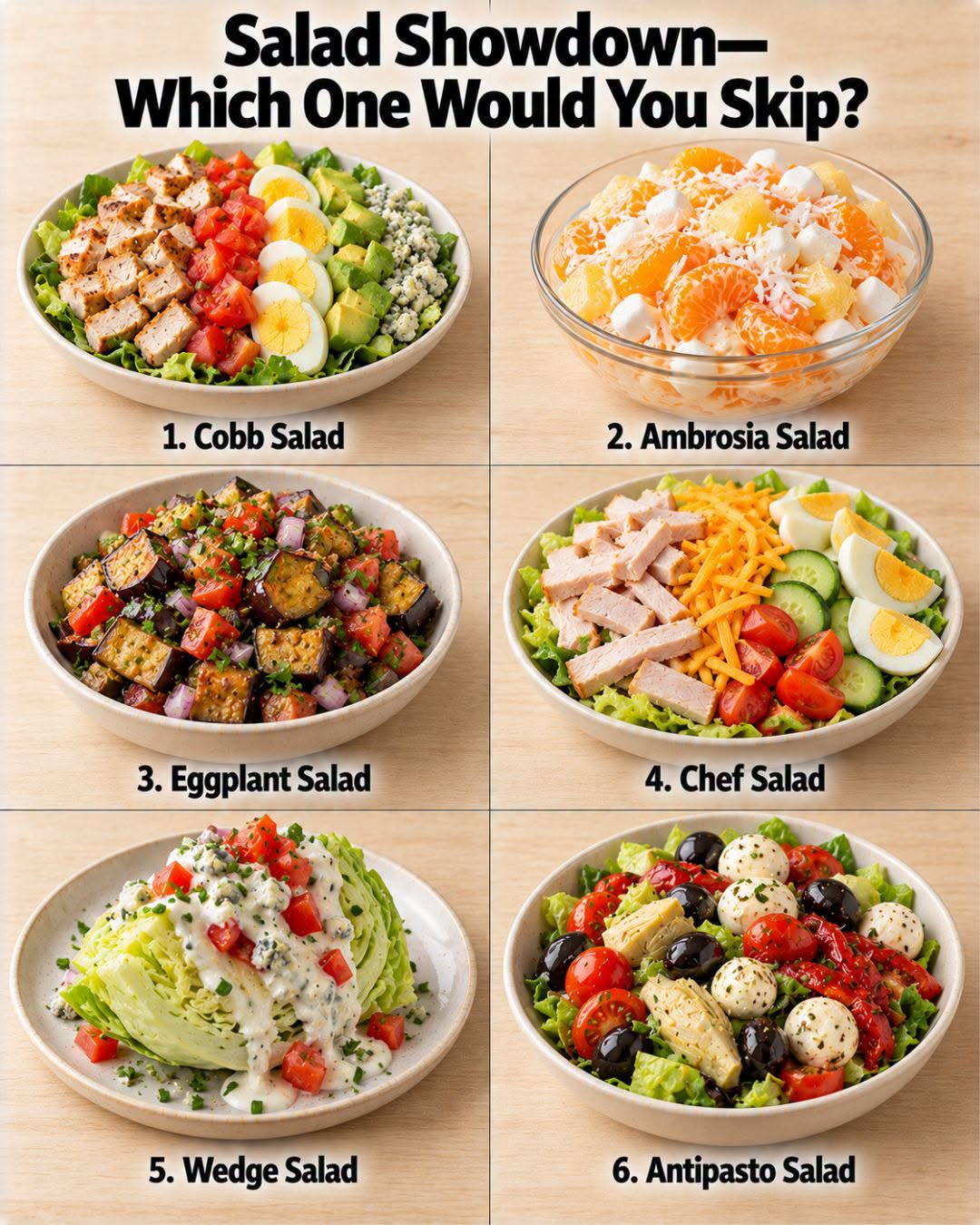
Salads have evolved far beyond simple bowls of plain lettuce and watery tomato wedges. Today, a well-crafted salad can serve as a nutrient-dense main course packed with healthy fats, lean proteins, vibrant vegetables, and rich flavors. Whether you prefer savory meats and cheeses, roasted seasonal vegetables, or sweet fruit-based medleys, the culinary world offers an incredible variety of salads to suit every palate. In this comprehensive guide, we examine six iconic salads featured in our ultimate salad showdown: Cobb Salad, Ambrosia Salad, Eggplant Salad, Chef Salad, Wedge Salad, and Antipasto Salad. We will explore their unique ingredients, historical backgrounds, nutritional profiles, and practical tips on how to incorporate balanced, wholesome meals into your daily routine. 1. Cobb Salad: The Protein-Packed ClassicOriginating in Hollywood, California, during the 1930s, the Cobb salad is a legendary American dish known for its neat, distinct rows of ingredients arranged over a bed of crisp greens. Key Ingredients: Typically features grilled or roasted chicken, crispy bacon, hard-boiled eggs, tomatoes, avocados, chives, and Roquefort or blue cheese. Nutritional Highlights: Rich in high-quality protein, healthy monounsaturated fats from avocado, and essential vitamins A and K.Health Consideration: Because of the bacon, cheese, and dressing, it can be high in sodium and saturated fats, so practicing portion control with dressings is recommended.2. Ambrosia Salad: The Sweet, Retro Fruit MedleySteeped in American holiday traditions and Southern potlucks, ambrosia salad is a unique twist on the traditional savory dish, leaning entirely into sweet, dessert-like flavors. Key Ingredients: Features mandarin oranges, pineapple chunks, miniature marshmallows, sweetened shredded coconut, and whipped cream or sour cream.Nutritional Highlights: Provides quick carbohydrates, Vitamin C from citrus fruits, and a comforting nostalgic sweetness.Health Consideration: High in added sugars and simple carbohydrates, making it more of an occasional holiday treat rather than an everyday green meal.3. Eggplant Salad: A Mediterranean DelightRoasted, chopped, and deeply flavorful, eggplant-based salads are staples across Mediterranean, Middle Eastern, and Eastern European cuisines. Key Ingredients: Roasted eggplant, fresh tomatoes, red onions, garlic, fresh herbs (like parsley or cilantro), and extra virgin olive oil. Nutritional Highlights: Exceptional source of dietary fiber, antioxidants (such as nasunin found in eggplant skin), and heart-healthy polyphenols.Health Consideration: Low in calories and naturally plant-based, though olive oil content contributes healthy fats that support nutrient absorption.4. Chef Salad: The Hearty Diner StapleThe Chef salad is a quintessential American diner classic designed to be a complete, filling meal in a single bowl. Key Ingredients: A bed of crisp lettuce topped with rolled strips of deli turkey or ham, cheddar cheese, hard-boiled eggs, cucumbers, and tomatoes. Nutritional Highlights: High protein content from meats, cheese, and eggs, alongside hydrating crunch from cucumbers.Health Consideration: Deli meats can contain high levels of sodium, so opting for low-sodium or fresh-roasted turkey and ham is a great heart-healthy adjustment.5. Wedge Salad: Crisp Textures and Bold FlavorsThe wedge salad is famous for its dramatic presentation, substituting loose greens for a thick, vertical chunk of iceberg lettuce drenched in rich dressing. Key Ingredients: A quarter head of crisp iceberg lettuce topped with blue cheese dressing, crumbled blue cheese, diced tomatoes, and chives. Nutritional Highlights: High water content and refreshing crunch from iceberg lettuce, providing hydration and low caloric density in the base.Health Consideration: Creamy blue cheese dressings are calorie-dense, so drizzling rather than drowning the wedge helps maintain a balanced meal.6. Antipasto Salad: Italian Charcuterie in a BowlDrawing inspiration from traditional Italian appetizer platters, the antipasto salad brings together savory cured meats, cheeses, and marinated vegetables. Key Ingredients: Mixed salad greens, fresh mozzarella balls (bocconcini), black olives, marinated artichoke hearts, sun-dried or cherry tomatoes, and Italian herbs. Nutritional Highlights: Packed with calcium from cheese, healthy fats from olives, and flavorful antioxidants from marinated vegetables.Health Consideration: Can be high in sodium due to cured elements and olives, but easily balanced with an oil-and-vinegar dressing.Practical Tips for Building and Enjoying Healthy SaladsCreating a nutritious and satisfying salad at home involves balancing flavors, textures, and food groups: Focus on Colorful Variety: Incorporate vegetables of different colors to ensure a wide spectrum of vitamins, minerals, and antioxidants.Include Lean Proteins: Add chicken, eggs, beans, or cheese to keep you feeling full and energized throughout the day. Choose Healthy Fats Wisely: Use avocados, nuts, seeds, or extra virgin olive oil to help your body absorb fat-soluble vitamins (such as Vitamins A, D, E, and K).Mind Your Dressings: Heavy creamy dressings can quickly add hidden calories; try lighter vinaigrettes made with olive oil, lemon juice, or balsamic vinegar.Healthcare, Nutrition, and Long-Term Wellness PlanningMaintaining a balanced diet rich in vegetables, lean proteins, and healthy fats is a cornerstone of preventative health and longevity. Proper nutrition supports metabolic function, immune health, and sustained energy levels. Consulting Nutritional ExpertsIf you are managing specific health conditions—such as cardiovascular health, diabetes, or digestive sensitivities—consulting a registered dietitian or clinical Medical specialist can help tailor a nutrition plan to your unique body chemistry. Financial and Insurance Support for WellnessInvesting in wholesome foods, organic produce, and preventative healthcare consultations is an investment in your personal Finance and future well-being. Many comprehensive Health Insurance policies offer wellness incentives or cover consultations with certified nutritionists. Reviewing your Insurance benefits ensures you make the most of preventative care resources designed to keep you healthy and thriving for years to come. Fascinating Facts About SaladsThe Word Origin: The word “salad” comes from the Latin word sal (salt), referencing ancient Roman practices of salting leafy greens and vegetables.Iceberg Lettuce History: Iceberg lettuce earned its name in the 1920s when it was shipped across the United States packed in tons of crushed ice to keep it crisp.Avocado Absorption: Adding avocado to a salad can increase your body’s absorption of carotenoids from other vegetables by up to five times.Global Diversity: Almost every culture features a variation of a salad, utilizing local grains, herbs, proteins, and dressings unique to their region.ConclusionWhether you crave the protein-heavy structure of a Cobb or Chef salad, the sweet nostalgia of an Ambrosia, or the fresh Mediterranean notes of an eggplant or antipasto salad, there is a dish for every taste. By understanding ingredients, balancing nutrition, and enjoying your favorite meals mindfully, you can celebrate the art of the salad while supporting a healthy, vibrant lifestyle. Frequently Asked Questions (FAQ)1. Which salad is lowest in calories?Salads with a base of leafy greens and roasted vegetables—such as the Eggplant Salad or a simple green salad with light vinaigrette—generally contain the fewest calories while offering high fiber. 2. Can salads be eaten as a complete meal?Yes! A salad can easily serve as a complete meal as long as it includes a balance of macronutrients: lean protein (chicken, eggs, cheese), healthy fats (avocado, olives, nuts), complex carbohydrates, and fiber-rich greens. 3. How can I keep pre-made salads fresh for meal prep?To prevent soggy greens during meal prep, store dressings separately and layer wet ingredients (like tomatoes and cucumbers) away from leafy greens, or place them at the bottom of a sealed container with greens packed tightly on top.4. Does health insurance cover nutritional counseling?Many modern Health Insurance plans cover visits with registered dietitians or nutritionists, particularly when prescribed by a primary care physician for specific health management goals. Always verify coverage details with your insurance provider.
Salad Showdown: Exploring 6 Iconic Salads, Their Health Benefits, and How to Choose the Best One