
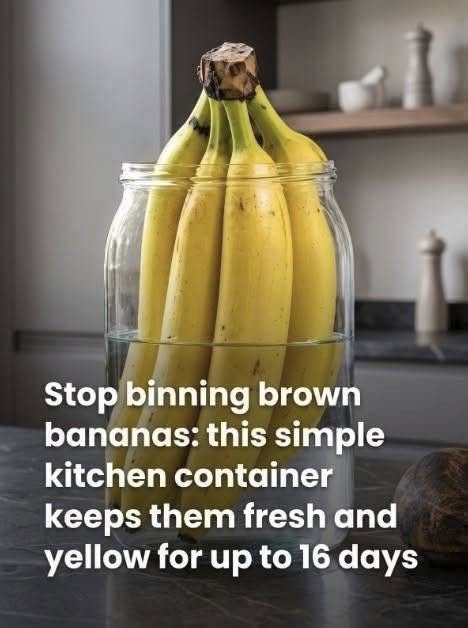
Bananas are one of the most popular, nutrient-dense fruits in the world, yet they are notoriously prone to premature browning and spoilage. A viral kitchen hack claiming that placing the tips or stems of bananas in a glass jar filled with water keeps them fresh and bright yellow for up to 16 days has taken social media by storm.
While this method attempts to manage the natural ripening process, understanding the food science behind ethylene gas emission and moisture control reveals why certain storage tricks work—and how you can safely extend the shelf life of your fruit without causing mold or decay.
This comprehensive guide breaks down the biological ripening mechanism of bananas, evaluates popular storage hacks, provides step-by-step preservation methods, and offers practical advice on household budgeting and personal health protection.
The Science of Banana Ripening: Ethylene Gas & Moisture
+———————————————————————–+
| BANANA RIPENING MECHANISM |
+———————————————————————–+
| 1. ETHYLENE PRODUCTION –> Stems release natural ripening hormone gas |
+———————————————————————–+
|
v
+———————————————————————–+
| 2. ENZYMATIC BREAKDOWN –> Starches convert into sugars; skin darkens |
+———————————————————————–+
|
v
+———————————————————————–+
| 3. AIR & MOISTURE EXPOSURE –> Moisture accelerates mold; air causes rot|
+———————————————————————–+
1. The Role of Ethylene Gas
Bananas are climacteric fruits, meaning they continue to ripen after being harvested. The primary catalyst for this process is ethylene gas, a natural plant hormone released predominantly through the stem (crown) of the banana bunch. As ethylene accumulates around the fruit, it triggers enzymes that break down chlorophyll (causing the green-to-yellow color change) and convert complex starches into simple sugars.
2. Moisture Control vs. Submersion
The viral hack of submerging the bottom or tips of bananas in a glass jar of water aims to create a barrier or hydrate the fruit. However, excess ambient moisture around fruit skins can foster fungal growth (such as crown rot or surface mold) if left stagnant in an enclosed glass container.
3. Stem Wrapping Mechanics
A scientifically proven alternative to water submersion involves tightly wrapping the crown or stem of the banana bunch with plastic wrap or aluminum foil. Trapping or slowing the release of ethylene gas directly at the stem significantly delays the overall ripening timeline across the entire cluster.
Banana Storage Methods Comparison Table
+——————–+———————–+———————–+
| Storage Method | Average Shelf Life | Pros & Cons |
+——————–+———————–+———————–+
| Stem Wrapping | 7 to 12 Days | Easy, Clean & Effective|
| Glass Jar in Water | 10 to 14 Days | Slows Gas; Mold Risk |
| Open Fruit Bowl | 3 to 5 Days | Fast Browning Rate |
| Refrigeration | 12 to 16 Days (Peel) | Skin Darkens; Pulp Firm|
+——————–+———————–+———————–+
Step-by-Step Instructions: The Best Ways to Preserve Bananas
Follow these simple steps to keep your bananas fresh, firm, and yellow for as long as possible:
+———————————————————————–+
| BANANA PRESERVATION CHECKLIST |
+———————————————————————–+
| Step 1: Separate individual bananas from the cluster upon returning home|
| Step 2: Wrap each individual stem tightly with plastic wrap or foil. |
| Step 3: Hang bananas on a banana hook to prevent pressure bruising. |
| Step 4: Keep away from other ethylene producers (apples, avocados). |
| Step 5: Transfer ripe bananas to refrigerator to lock in pulp firmness|
+———————————————————————–+
Separate the Bunch: Keeping bananas joined in a cluster concentrates ethylene emissions. Separating them immediately reduces localized gas build-up.
Wrap individual Stems: Take a small piece of plastic wrap or aluminum foil and wrap it tightly around the stem of each individual banana. This blocks ethylene gas from escaping and re-entering the fruit body.
Hang on a Banana Tree or Hook: Storing bananas on flat countertops creates pressure points that bruise the pulp and accelerate darkening. Hanging them allows uniform airflow around the peel.
Isolate from Other Fruits: Never store bananas in a closed bowl next to apples, tomatoes, or avocados, as these produce high levels of ethylene gas that cause cross-acceleration of decay.
Refrigerate Ripe Bananas: Once bananas reach your preferred level of yellow sweetness, move them to the refrigerator drawer. While the cold temperature will darken the outer peel due to pigment breakdown, the inner fruit pulp remains firm, sweet, and perfectly edible for up to two weeks.
Home Management, Food Budgeting, and Financial Health
Minimizing food waste in the kitchen directly supports smart household economics and overall financial wellness.
Smart Home Budgeting & Eliminating Grocery Waste
Food waste represents a direct loss of household income. Throwing away overripe produce week after week drains your monthly grocery budget. By mastering simple produce preservation techniques, families can stretch their grocery dollars, conserve capital to build emergency savings accounts, clear high-interest credit card debt, or allocate funds toward long-term financial investments.
Preventive Health, Fiber, and Health Insurance Security
Bananas are a cost-effective powerhouse of essential nutrients, providing potassium, dietary fiber, vitamin B6, and vitamin C that support cardiovascular health and blood pressure regulation. Combining a nutrient-rich, fiber-packed diet with routine preventative care through your health insurance provider safeguards both your family’s physical well-being and personal financial peace of mind.
Frequently Asked Questions (FAQ)
Can you freeze bananas for later use?
Yes! If bananas become overripe before you can eat them, peel them, slice them into rounds, and store them in an airtight freezer bag. Frozen bananas are perfect for smoothies, dairy-free ice creams, or baking banana bread.
Does placing bananas in water actually work?
Placing the stems in a shallow container of water can slow down moisture loss and insulate the base, but it carries a higher risk of mold growth if the water is not changed daily. Wrapping the stems in plastic wrap is generally safer and cleaner.
Conclusion
Extending the shelf life of bananas comes down to controlling ethylene gas and airflow. Whether you use plastic stem wraps, hang your bunch on a hook, or utilize refrigeration, stopping banana browning saves money and keeps fresh fruit ready to enjoy every day!
