
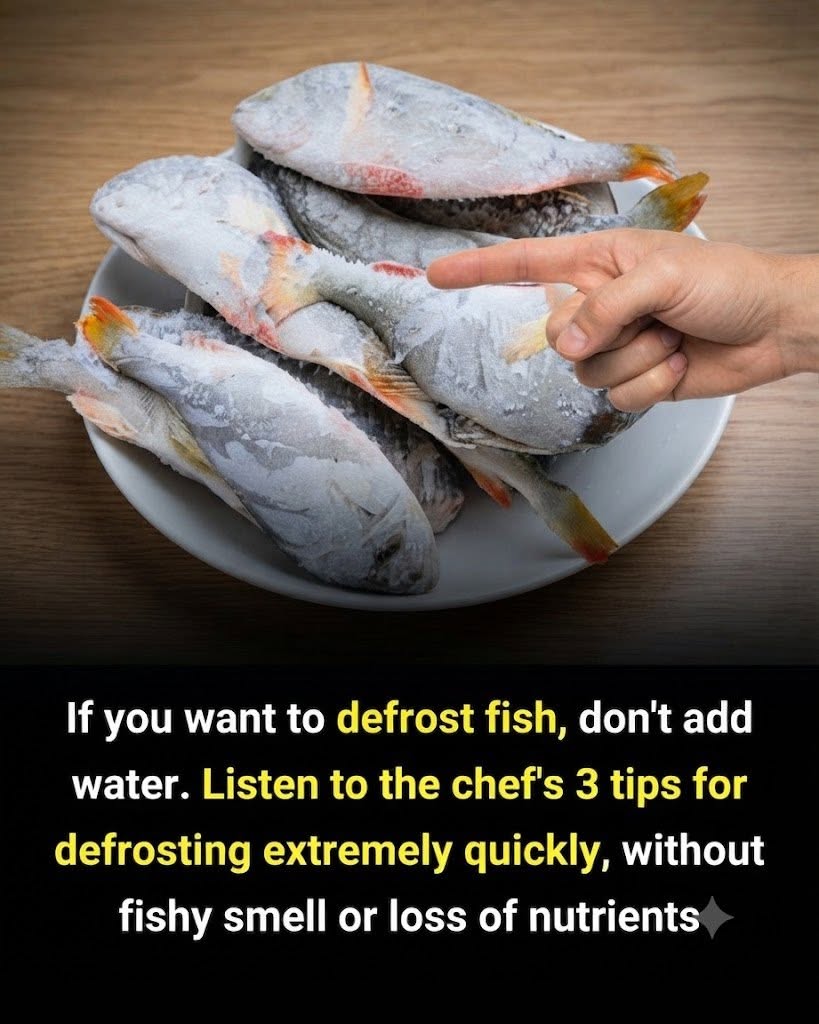
Frozen fish is a fantastic, convenient staple to keep on hand for quick, high-protein weeknight meals. However, properly thawing frozen fish can often feel like a challenge. Submerging fish directly in standing warm water or leaving it exposed on the kitchen counter can ruin its tender texture, unleash unpleasant odors, and leach out vital nutrients.
Professional chefs rely on smart thawing techniques to preserve the integrity, flavor, and delicate flesh of seafood while maintaining maximum food safety.
This comprehensive guide breaks down why traditional water soaking damages fish, details 3 chef-approved fast-defrosting methods, and provides key culinary secrets to maintain flavor and prevent fishy smells.
Why Direct Water Soaking Ruins Frozen Fish
Placing frozen fish fillets or whole fish directly into standing water causes several problems:
DIRECT WATER THAWING DANGERS
│
┌───────────────────────────┼───────────────────────────┐
▼ ▼ ▼
TEXTURE DAMAGE NUTRIENT LOSS BACTERIAL GROWTH
• Fish flesh absorbs • Water-soluble vitamins • Warm standing water
excess moisture & & protein juice (drip accelerates rapid
becomes mushy loss) wash away bacterial growth
Soggy, Waterlogged Texture: Fish tissue acts like a sponge. Direct contact with water breaks down delicate cellular structures, leading to mushy, waterlogged fish during cooking.
Loss of Juices and Nutrients: As ice crystals melt directly into surrounding water, key water-soluble vitamins, minerals, and flavor-packed natural juices bleed out (known as drip loss).
Safety and Odor Risks: Using warm or hot standing water raises the external temperature of the fish into the food safety “Danger Zone” ($40^\circ\text{F}$ to $140^\circ\text{F}$), encouraging rapid bacterial growth and unpleasant fishy odors.
The Chef’s 3 Tips for Fast, Safe Defrosting
Try these three reliable kitchen methods to safely thaw fish quickly while keeping its texture firm and nutrients intact.
1. The Sealed Cold-Water Bath (Leak-Proof Method)
If you need to thaw fish quickly using water, the key is keeping the fish strictly isolated from direct contact with the liquid.
How It Works: Place frozen fish inside a sealed, leak-proof Ziploc or vacuum bag. Submerge the sealed bag completely in a bowl filled with cold tap water.
Why It Works: Water transfers heat much faster than air, defrosting thin fillets in 15 to 20 minutes without allowing water to touch or dilute the fish flesh. Change the cold water every 10 minutes until thawed.
2. The Metal Baking Sheet Heat-Conduction Trick
Metal is an exceptionally efficient conductor of thermal energy, making it an ideal tool for thawing flat fish fillets without electricity or water.
How It Works: Invert an aluminum or stainless steel baking sheet onto your kitchen counter. Place your wrapped or bagged frozen fish fillets in a single layer on top of it. Place a second metal pan directly on top of the fish to sandwich it.
Why It Works: The metal rapidly pulls ambient room temperature into the frozen fish while pulling cold away from it, defrosting thin cuts in 15 to 30 minutes naturally.
3. The Salted Milk or Acidified Brine Quick-Soak
If you must soak fish directly to neutralize strong odors, use a lightly salted or milk-based brine solution instead of plain tap water.
How It Works: Mix cold water with 1 tablespoon of coarse sea salt and a squeeze of fresh lemon juice (or submerge fillets in cold whole milk). Let the fish sit submerged for 10 to 15 minutes.
Why It Works: Salt helps seal the outer protein fibers to prevent moisture loss, while milk’s casein proteins bind to trimethylamine compounds—the chemical responsible for sharp fishy odors—leaving the fish smelling clean and fresh.
Comparing Defrosting Methods
Review the comparison table below to determine the best defrosting strategy based on your prep time.
Defrosting Method Speed Texture Quality Nutrient Retention Safety Level
Sealed Cold-Water Bath Fast (15–30 mins) Excellent High High
Metal Sheet Sandwich Fast (20–30 mins) Excellent High High
Overnight Refrigerator Thaw Slow (8–12 hours) Best (Chef Gold Standard) Maximum Highest
Direct Warm Water Soak Fast (10–15 mins) Poor (Mushy) Low Low (Unsafe)
Microwave Defrost Setting Ultra-Fast (3–5 mins) Very Poor (Partially cooks edges) Medium Medium
Culinary Secrets for Cooking Previously Frozen Fish
Once your fish is completely thawed, follow these three essential chef steps before placing it into a hot pan:
Pat Thoroughly Dry: Always use clean paper towels to pat the surface of thawed fish completely dry. Excess surface moisture prevents proper searing and steams the fish instead of creating a crispy crust.
Season Right Before Cooking: Apply salt and seasonings immediately before the fish hits the skillet or oven. Salt applied too far in advance draws out internal moisture.
Cook Low and Gentle: Keep cooking temperatures medium to medium-high to ensure delicate oils and proteins remain tender and intact.
Conclusion: Better Thawing for Flavorful Seafood
Defrosting fish doesn’t require soaking fillets directly in water or sacrificing quality for speed. By utilizing sealed cold-water baths, metal thermal conduction, or overnight refrigerator planning, you protect the delicate texture, lock in health-boosting nutrients, and eliminate fishy odors.
Frequently Asked Questions (FAQ)
1. Is it safe to cook fish directly from frozen without thawing?
Yes! Thin fish fillets (like cod, tilapia, or salmon) can be cooked directly from a frozen state by baking, poaching, or air-frying. Simply add 4 to 5 minutes to the total cooking time and ensure the internal temperature reaches $145^\circ\text{F}$ ($63^\circ\text{C}$).
2. Can I use the microwave defrost setting for frozen fish?
While possible, it is not recommended. Microwaves cook unevenly and often begin cooking the thin edges of the fish fillet while the center remains frozen, resulting in a rubbery texture.
3. Why does thawed fish sometimes smell very fishy?
As fish thaws, fats and proteins break down into trimethylamine (TMA) when exposed to air and warm temperatures. Soaking thawed fish in cold milk or salted lemon water for 10 minutes effectively neutralizes TMA and restores a fresh ocean smell.
4. How long can thawed fish stay in the refrigerator before cooking?
Once fully thawed in the refrigerator, fresh fish should be cooked within 1 to 2 days for optimal taste, texture, and food safety.
