
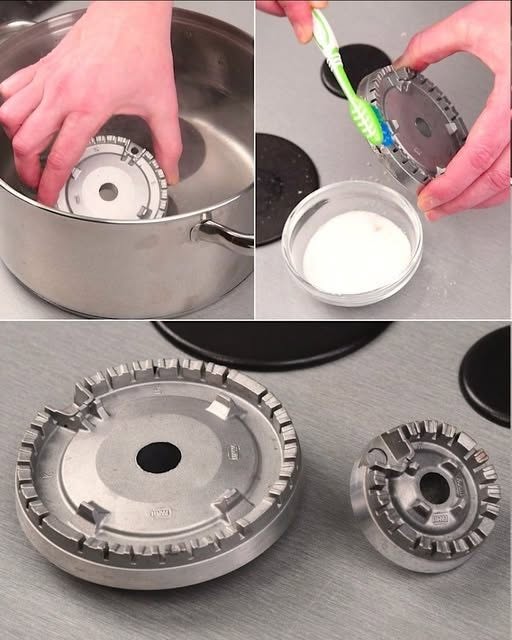
Over time, cooking splatters, boiled-over liquids, and grease accumulation can clog the tiny gas ports of stove burner heads. When burner holes become obstructed, gas flow is restricted, resulting in uneven yellow or orange flames, weak heating power, or difficulty igniting.
Deep cleaning your gas burner heads with natural household staples like white distilled vinegar and baking soda restores full gas circulation and brings back bright blue, efficient flames.
This comprehensive guide details the step-by-step cleaning process, natural degreasing chemical reactions, safety precautions, and practical advice on household budgeting and health protection.
The Science: Natural Degreasing with Vinegar and Baking Soda
+———————————————————————–+
| NATURAL DEGREASING MECHANISM |
+———————————————————————–+
| 1. VINEGAR SOAK –> Mild acetic acid dissolves mineral scale & rust |
+———————————————————————–+
|
v
+———————————————————————–+
| 2. BAKING SODA –> Mild alkaline abrasive breaks down baked-on fat |
+———————————————————————–+
|
v
+———————————————————————–+
| 3. EFFERVESCENCE –> Chemical reaction lifts carbon deposits from ports|
+———————————————————————–+
1. Acetic Acid Dissolution
Soaking metal burner heads in warm white vinegar breaks down stubborn mineral deposits, rust spots, and grease residues that soap and water alone cannot penetrate.
2. Gentle Abrasive Scrubbing
Baking soda (sodium bicarbonate) forms a gentle, non-scratching abrasive paste when combined with a small amount of water. Scrubbing with a soft-bristled toothbrush removes carbonized food debris lodged inside narrow gas ports without scratching metal surfaces.
Cleaning Method Comparison Table
+——————–+———————–+———————–+
| Cleaning Method | Degreasing Power | Safety & Metal Care |
+——————–+———————–+———————–+
| Vinegar & Soda | High (Natural) | Safe for Metal / Caps |
| Harsh Oven Sprays | Very High | Risks Discoloring Metal|
| Dish Soap & Water | Moderate | Safe for Light Cleaning|
| Wire Scrapers | High (Mechanical) | Can Widen Gas Holes |
+——————–+———————–+———————–+
Step-by-Step Gas Burner Cleaning Instructions
Follow these simple steps to safely restore your gas stove burners to like-new condition:
+———————————————————————–+
| STEP-BY-STEP CLEANING GUIDE |
+———————————————————————–+
| Step 1: Ensure stove is off & burners are completely cool to touch. |
| Step 2: Remove burner caps & heads; submerge in warm vinegar bath. |
| Step 3: Soak for 20–30 minutes to loosen carbonized grease deposits. |
| Step 4: Apply baking soda paste & scrub gas ports with a toothbrush. |
| Step 5: Unclog small ports using a needle or metal paperclip gently. |
| Step 6: Rinse thoroughly & dry completely before reinstalling on range.|
+———————————————————————–+
Safety First: Turn off all stove controls and ensure the gas supply is safe. Allow burner caps and heads to cool completely before touching them.
Vinegar Soak: Remove the cast-iron grates, burner caps, and removable aluminum burner heads. Place the burner parts into a pot or tub filled with warm white distilled vinegar for 20 to 30 minutes.
Scrub with Baking Soda Paste: Mix 3 parts baking soda with 1 part water to form a thick paste. Coat the burner heads and use an old toothbrush to scrub away loosened grease and carbonized crust.
Clear Gas Ports: Use a needle, safety pin, or straightened paperclip to gently poke through each individual gas notch along the outer rim. Avoid using wooden toothpicks that could snap off inside the small openings.
Rinse and Dry Thoroughly: Rinse the burner heads under warm running water to remove all residual vinegar and baking soda. Crucial Step: Allow the metal components to dry completely (or dry with a hair dryer) before placing them back onto the stove. Wet burner heads will hinder ignition and produce weak flames.
Home Management, Maintenance Budgeting, and Financial Health
Maintaining household kitchen appliances prolongs their operating lifespan and supports efficient home budgeting.
Smart Home Budgeting & Appliance Longevity
Regularly deep cleaning gas burner components prevents permanent corrosion, reduces gas waste, and eliminates the need for expensive technician service calls. Managing your home repair budget intentionally allows families to conserve funds to build emergency savings accounts, pay off high-interest credit card debt, or allocate capital toward long-term financial investments.
Preventive Home Safety and Health Insurance Protection
Keeping gas burners clean ensures proper gas combustion, reducing harmful carbon monoxide output and preventing gas accumulation or flame failure in the home. Combining appliance safety maintenance with comprehensive medical coverage through your health insurance provider safeguards both your family’s physical health and personal financial stability.
Frequently Asked Questions (FAQ)
Why is my gas stove flame yellow or orange instead of blue?
An orange or yellow flame indicates incomplete combustion, usually caused by clogged burner ports, dust buildup, or improper air-to-gas mixture. Deep cleaning the burner holes typically restores a clean, efficient blue flame.
Can I put gas burner heads in the dishwasher?
It is not recommended. Dishwasher detergents contain harsh chemicals that can oxidize aluminum burner heads, causing surface discoloration, pitting, or dull black stains. Hand soaking with vinegar and baking soda is far safer.
Conclusion
Deep cleaning gas stove burner heads with vinegar, baking soda, and a soft brush restores full gas flow and restores bright blue heating flames! Regular maintenance keeps your stove running efficiently while extending its lifespan.
