
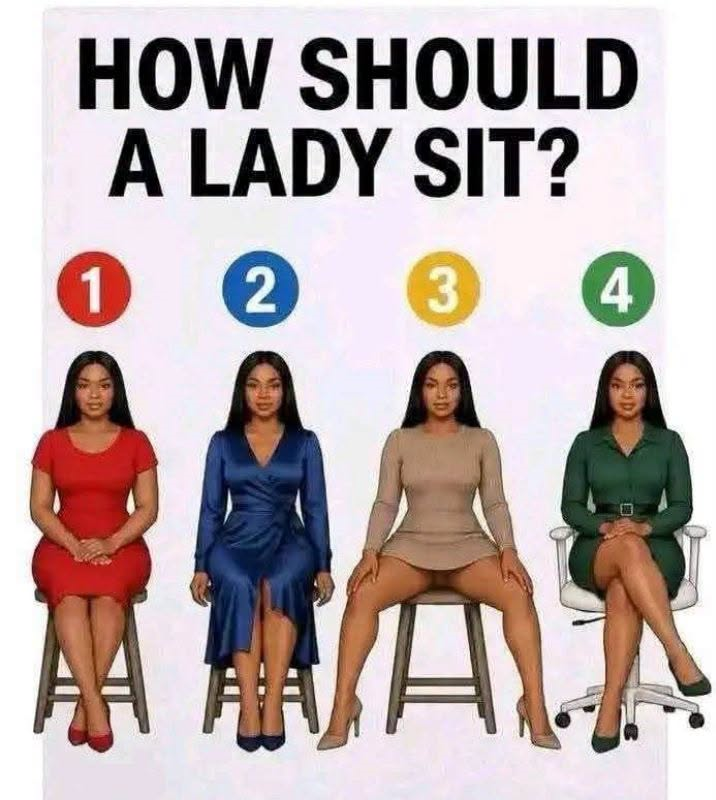
Sitting posture has been a subject of social etiquette, cultural norms, and medical evaluation for centuries. From royal courts and formal finishing schools to modern corporate boardrooms and ergonomic office setups, the way a person sits communicates non-verbal cues regarding confidence, professionalism, respect, and personal comfort.
The viral debate surrounding sitting postures—often depicted through numbered illustrations showing various sitting styles—sparks lively discussions online. Beyond traditional etiquette rules, physical therapists, orthopedic specialists, and ergonomic experts evaluate sitting positions based on spinal health, joint stress, circulation, and long-term musculoskeletal wellness.
Traditional Etiquette and Social Conventions of Sitting
Historically, formal etiquette placed strict expectations on sitting posture, particularly in formal, professional, or high-society settings. Classical finishing schools taught specific techniques to ensure modesty, composure, and poise:
1. The Classical Ankle Cross (Option 1)
Considered one of the most traditional and formal sitting postures, the ankle cross involves keeping the knees together while crossing the legs at the ankles with feet resting flat or slightly tilted on the floor. Royalty, diplomats, and public figures often adopt this posture during public appearances because it maintains modesty while projecting quiet elegance.
2. The Parallel Slant or Duchess Slant (Option 2)
Popularized by modern royal figures and etiquette experts, this position involves keeping the knees and ankles tightly together while slanting the legs parallel to one side. It creates a sophisticated silhouette and reduces strain on the lower back compared to heavy knee-crossing.
3. The Relaxed Open Posture (Option 3)
Widely considered informal or casual, sitting with legs wide open is rarely used in formal or professional environments. While it may feel comfortable in casual settings, etiquette standards consider it unsuitable for formal occasions or shorter attire.
4. The Classic Knee Cross (Option 4)
Crossing one leg over the other at the knee is extremely common in modern corporate, business, and everyday settings. It conveys approachable confidence and comfort. However, medical and ergonomic professionals frequently discuss its long-term effects on joint health and blood circulation.
What Ergonomics and Orthopedics Say About Sitting Posture
While etiquette focuses on visual presentation, physical health professionals evaluate sitting postures through the lens of spinal alignment, pressure distribution, and circulatory health:
The Hidden Risks of Habitual Knee Crossing
Spinal Misalignment: Crossing one knee over the other rotates the pelvis, which can lead to unnatural twisting in the lumbar spine and lower back discomfort over time.
Increased Blood Pressure: Temporarily crossing legs at the knee can cause a transient spike in blood pressure because blood returning from the legs is momentarily compressed.
Nerve Compression: Frequent, prolonged knee crossing can exert pressure on the peroneal nerve behind the knee, leading to temporary numbness or a “pins and needles” sensation in the feet.
The Ankle Lock and Pelvic Balance
Crossing at the ankles (Option 1) or keeping feet flat on the floor provides superior pelvic stability compared to knee crossing. It keeps the hips square, reduces uneven torque on the sacroiliac (SI) joints, and encourages natural lumbar curve support.
Modern Corporate Etiquette: Balancing Professionalism and Comfort
In contemporary workplaces, office environments, and remote video conferences, sitting posture plays an important role in professional image and executive presence:
Video Conference Poise: During virtual meetings, sitting upright with relaxed shoulders and an open upper body projects attentiveness and active listening.
Job Interviews: Maintaining a balanced, upright posture with feet grounded or ankles neatly crossed signals confidence, preparedness, and respect for the interviewers.
Body Language and Openness: Keeping arms uncrossed and maintaining upright spinal alignment fosters a welcoming, collaborative atmosphere in business negotiations.
Practical Tips for Maintaining Healthy Daily Sitting Posture
To protect your spine, improve circulation, and maintain poise throughout the workday, incorporate these simple ergonomic habits:
Follow the 90-Degree Rule: Adjust your office chair height so your knees are bent at a 90-degree angle with your feet resting flat on the floor or on a supportive footrest.
Support Your Lumbar Spine: Place a small lumbar cushion or rolled towel behind your lower back to maintain the natural inward curve of your spine.
Change Positions Frequently: Avoid staying locked in a single posture for longer than 30 to 45 minutes. Alternate between flat-feet placement, gentle ankle crossing, and standing breaks.
Position Screens at Eye Level: Ensure your computer monitor is directly in front of you at eye level to prevent forward head posture and neck strain.
Fascinating Facts About Posture and Human Physiology
Power Posing Influence: Studies in social psychology suggest that holding open, expansive body postures for just two minutes can boost feelings of personal confidence and lower cortisol stress levels.
The Weight of the Human Head: When sitting with poor posture and a forward-leaning head tilt, the effective weight load placed on the cervical spine increases from about 10–12 pounds to over 40–60 pounds.
Global Posture Traditions: In many traditional Eastern cultures, sitting cross-legged on floor mats (such as the Lotus position in yoga) is practiced daily to promote hip flexibility, core stability, and mindfulness.
Business, Education, and Healthcare Investment Insights
Prioritizing ergonomic health, proper workplace design, and personal wellness connects directly to overall financial well-being and productivity:
Reducing Corporate Healthcare Costs: Businesses that invest in ergonomic office furniture, adjustable standing desks, and employee wellness programs experience lower workers’ compensation claims and reduced absenteeism related to back pain.
Health Insurance and Physical Therapy: Comprehensive health insurance plans often provide coverage for ergonomic evaluations, occupational therapy, and chiropractic care to address chronic postural strain.
Investing in Career Development: Enrolling in executive communication, public speaking, or professional body language coaching helps individuals project executive presence, leading to career advancement and increased earning potential.
Conclusion
How a person chooses to sit is a blend of cultural etiquette, personal comfort, and physical health. While traditional rules emphasize modesty, poise, and social respect through structured positions like ankle crossing or parallel slanting, modern medical science reminds us that dynamic movement, ergonomic support, and proper spinal alignment are what truly keep us healthy and confident.
Frequently Asked Questions (FAQ)
What is the healthiest way to sit for long hours at a desk?
The healthiest sitting posture keeps your feet flat on the floor, knees at a 90-degree angle, lower back supported by a lumbar cushion, and shoulders relaxed with your eyes level with the top of your screen.
Is crossing your legs at the knee bad for your veins?
While knee crossing does not directly cause varicose veins (which are primarily genetic), it temporarily increases pressure in the leg veins and can exacerbate existing circulatory issues or cause numbness.
Why do etiquette experts prefer ankle crossing over knee crossing?
Ankle crossing is considered more formal, modest, and composed in traditional etiquette because it keeps the knees together while preventing high dress slits or hemlines from shifting unpredictably.
How often should you stand up during prolonged sitting?
Health and ergonomic experts recommend standing up, stretching, or walking around for at least 2 to 3 minutes every 30 to 60 minutes to promote blood circulation and relieve spinal pressure.
