
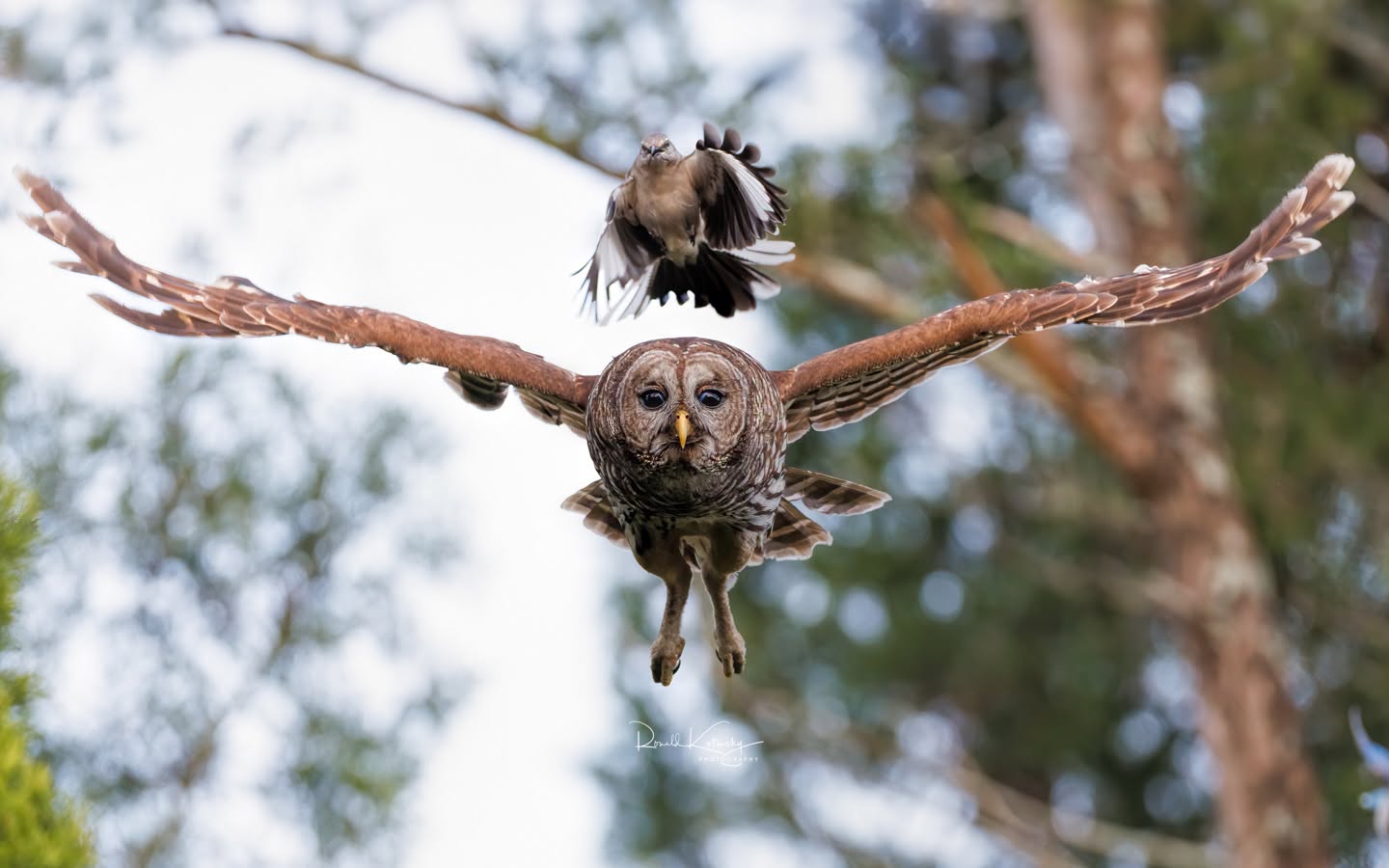
Nature photography frequently captures astonishing split-second interactions that leave viewers amazed by wildlife behavior. A spectacular viral photograph showing a small mockingbird diving fearlessly toward a large barred owl gliding mid-flight perfectly illustrates a defensive phenomenon known in ornithology as “mobbing.”
While an owl boasting a massive wingspan might seem like an intimidating apex predator, smaller songbirds frequently band together or launch solitary aerial attacks to drive raptors away from their nesting territories.
In this wildlife and birding guide, we explore the science behind mobbing behavior, how small birds protect their nests, and tips for wildlife photographers capturing action in flight.
Bird Behavior & Defensive Dynamics Matrix
+-------------------------------------------------------------------+
|                  WILDLIFE DEFENSE BEHAVIOR MATRIX                 |
|                                                                   |
|  [ THE SPECIES ]    • Barred Owl (Predator) vs. Mockingbird (Defender)|
|  [ BEHAVIOR ]       • Mobbing & territorial harassment in flight  |
|  [ MAIN PURPOSE ]   • Protecting nests, chicks & warning the flock |
+-------------------------------------------------------------------+
Key Highlights of Mobbing Behavior:
-
Territorial Defense: Smaller birds aggressively harass owls, hawks, and crows to force predators out of their breeding and foraging grounds.
-
Warning the Neighborhood: Loud alarm calls made during mobbing alert nearby songbirds and potential prey to the predator’s exact location.
-
Agile Aerial Maneuvers: Songbirds leverage superior speed and maneuverability to swoop down from behind, minimizing the risk of counterattack.
-
Teaching Offspring: Young birds observe mobbing events to learn which predator species pose threats to their survival.
How Small Songbirds Outmaneuver Predators Step-by-Step
Step 1: Detecting the Threat
Songbirds spot a perched or flying raptor using keen vision and immediately sound loud, sharp alarm calls to mobilize nearby birds.
Step 2: Swooping from Above
Taking advantage of height, smaller birds swoop down repeatedly at the predator’s back or head, keeping out of reach of sharp talons and beaks.
Step 3: Escorting Out of Territory
The harassing birds continue their relentless pursuit until the larger raptor retreats safely beyond their nesting zone.
Pro Tips for Action Wildlife Photography
-
Use High Shutter Speeds: Shoot at 1/2000s or faster to freeze rapid wing movements during high-speed aerial chases.
-
Track Flight Paths: Use continuous autofocus (AI Servo/AF-C) with subject tracking to keep fast-moving birds in sharp focus.
-
Observe Animal Body Language: Pay attention to sudden alarm calls from songbirds, which often signal that an owl or hawk is nearby.
Conclusion
The dynamic relationship between predatory raptors and fearless songbirds highlights the extraordinary instinct and bravery found in nature. Capturing these split-second moments reminds us of the endless wonders hidden in the wild!
Frequently Asked Questions (FAQ)
Why do small birds attack owls and hawks?
Small birds harass larger raptors through “mobbing” to protect their nests, guard their young, and drive dangerous predators out of their immediate area.
Can a small bird injure a barred owl during mobbing?
While small birds rarely cause physical harm to larger raptors, their relentless swooping and loud calls stress the predator, forcing it to find quieter hunting grounds.
Which bird species are most known for mobbing behavior?
Northern mockingbirds, blue jays, red-winged blackbirds, and crows are renowned for aggressively defending their territories against raptors.
