
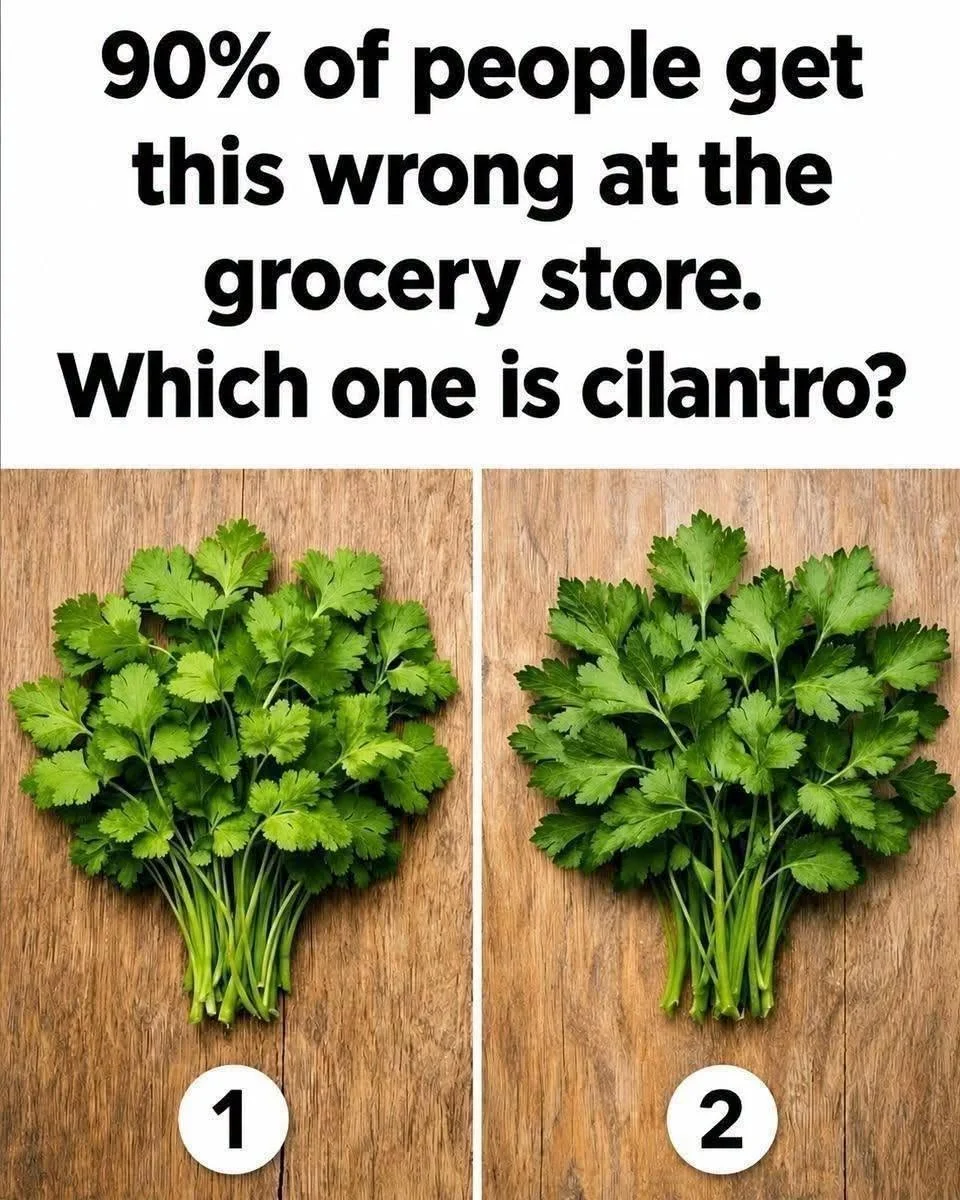
Cilantro and parsley are two of the most commonly confused fresh herbs in the grocery store. At first glance, they can look surprisingly similar, especially when they’re bundled together in the produce section.
But once you know what to look for, telling cilantro vs. parsley apart becomes much easier.
Their leaf shapes, colors, aromas, and flavors are all different—and knowing the difference can save you from accidentally using the wrong herb in your favorite recipe.
The Cilantro Mystery: Why Does It Taste Like Soap?
We can’t talk about cilantro without mentioning one of the most fascinating quirks of human taste and smell.
Have you ever prepared a beautiful meal with fresh cilantro, only for someone to take a bite and say, “This tastes like dish soap”?
They’re not necessarily being picky.
Research has found that genetic differences in olfactory receptors, including OR6A2, can influence how strongly some people perceive certain aldehydes found in cilantro. These compounds can contribute to the distinctive aroma that some people associate with soap or cleaning products.
In other words, if cilantro tastes unpleasantly soapy to you, your genetics may play a role in how you perceive its aroma.
Not everyone experiences cilantro this way, which is one reason this herb can be so polarizing.
Cilantro vs. Flat-Leaf Parsley: What’s the Difference?
The easiest way to distinguish the two herbs is to examine their leaves.
Cilantro
Cilantro generally has:
- Softer, more rounded leaf shapes
- Delicate, thin stems
- Lighter green leaves
- A strong, distinctive citrusy and herbal aroma
- A fresh flavor commonly associated with Mexican, Latin American, and Asian cuisines
Cilantro is commonly used in salsa, guacamole, curries, soups, rice dishes, marinades, and fresh sauces.
Flat-Leaf Parsley
Flat-leaf parsley, also called Italian parsley, typically has:
- More pointed and angular leaves
- Clearly defined leaf edges
- Slightly darker green coloring
- A firmer, more robust appearance
- A fresh, grassy, slightly peppery flavor
Italian parsley is especially popular in Mediterranean and European cooking and works beautifully in pasta dishes, sauces, salads, soups, stews, and as a garnish.
