
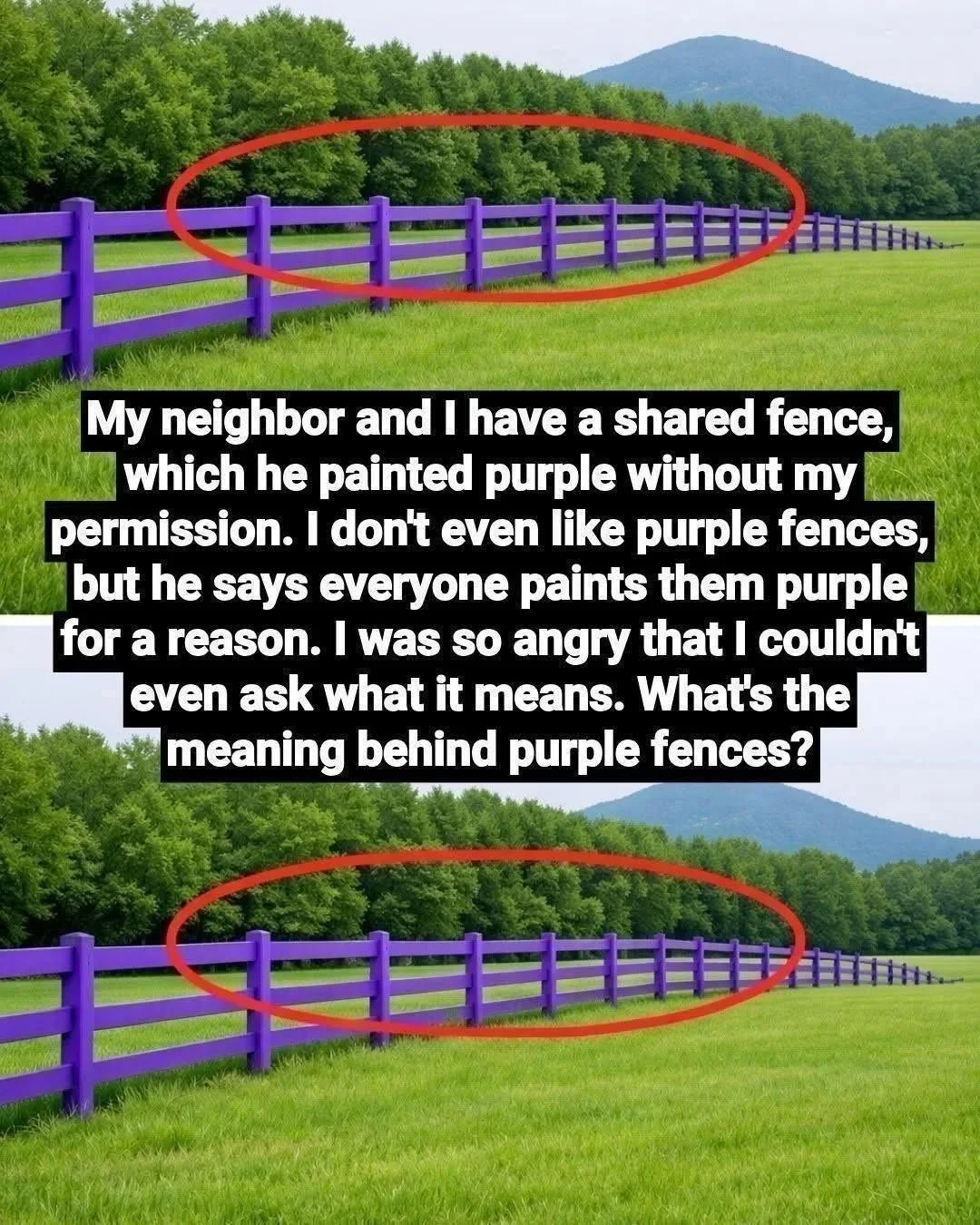
If you’re walking through a rural area and notice vertical purple paint marks on trees, fence posts, or other property boundaries, don’t assume they’re decorative.
In a number of U.S. states, purple paint can be used as a legally recognized way of marking private property and communicating that entry is prohibited.
These rules are commonly referred to as “purple paint laws.” They were developed as a practical alternative to traditional No Trespassing signs, particularly on large rural properties where installing and maintaining signs along an extensive boundary can be inconvenient.
However, there is an important detail: purple paint does not have the same legal meaning everywhere. The requirements depend on the state, and the exact size, placement, spacing, and type of property covered can vary.
What Does Purple Paint on a Tree Mean?
Where a state’s law recognizes purple paint as a form of property posting, a properly placed purple mark can serve as notice that the land is private and that entry may be prohibited.
For example, Texas law specifically recognizes identifying purple paint marks on trees or posts as one way to provide notice that entry is forbidden. The Texas Parks and Wildlife Department explains that qualifying marks must meet specific requirements for size, visibility, height, and spacing.
North Carolina also allows qualifying purple paint marks to be used when posting certain property. Its statute specifies vertical marks at least eight inches long, positioned between three and five feet above the base of the tree or post and placed no more than 100 yards apart.
So if you encounter purple paint in a state with such a law, it is worth treating the markings as a potential property boundary warning, rather than assuming they are simply colorful trail markings.
Why Use Purple Paint Instead of a No Trespassing Sign?
Large farms, ranches, forests, and other rural properties can have extensive boundaries.
Installing conventional signs at frequent intervals can require considerable maintenance. Paint marks can provide another way for property owners to communicate their intentions along a boundary.
The system is particularly useful because a properly applied mark can remain visible for a significant period without requiring a physical sign at every location.
But the legal effect comes from state law, not from the color purple itself.
How Do Purple Paint Laws Work?
There is no single nationwide purple-paint standard.
Each state establishes its own requirements, and those rules can address:
- The required color
- The shape or orientation of the mark
- Minimum dimensions
- Height above the ground
- Maximum distance between marks
- Where the marks must be placed
- What types of property can be marked
- Whether the paint serves as notice for hunting, fishing, general trespass, or another specific purpose
This means you shouldn’t assume that a purple mark has identical legal consequences in every state.
