
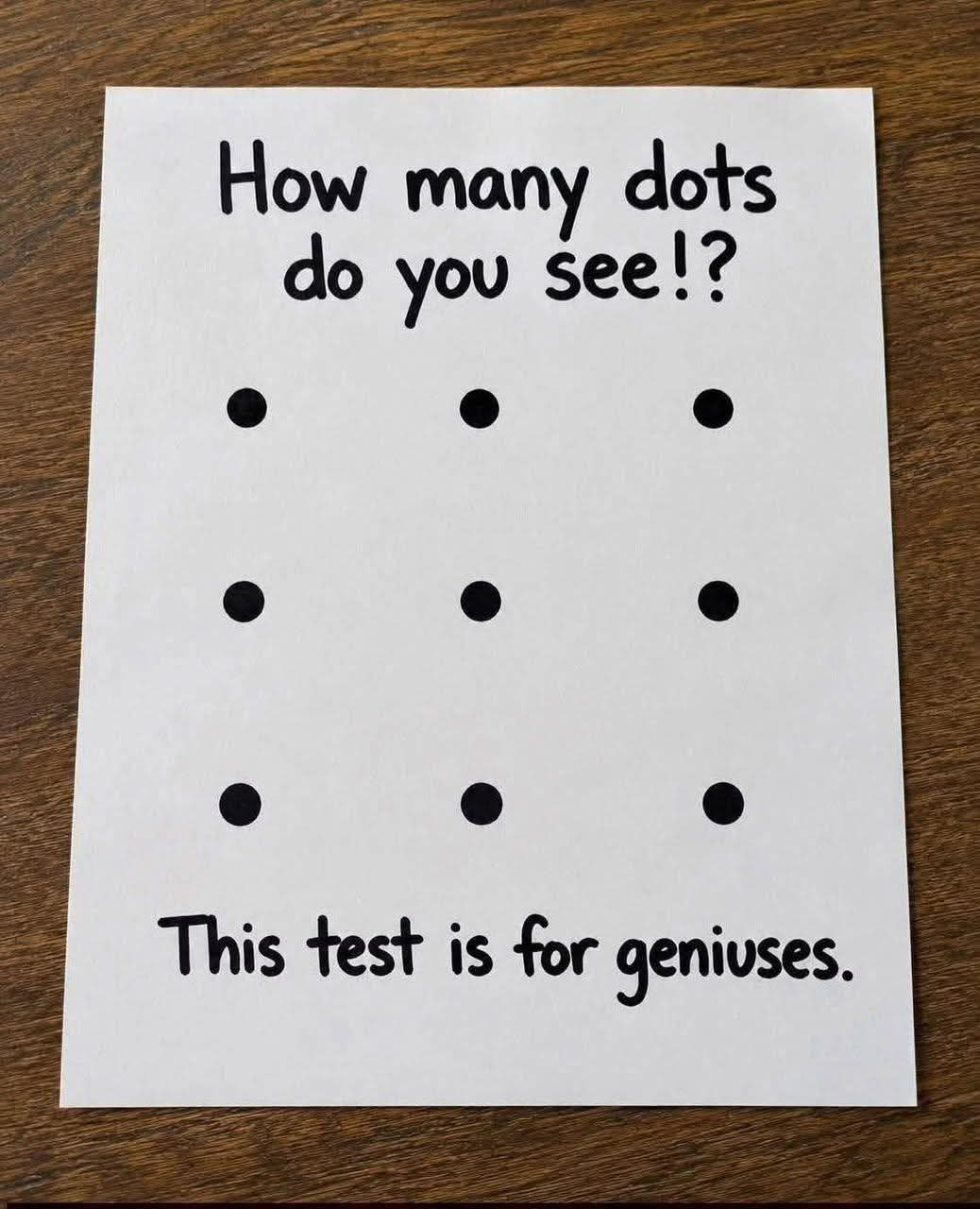
Visual brain teasers, observational riddles, and counting challenges are among the most engaging viral trends across social media and digital platforms. A simple image asking “How many dots do you see!?” appears straightforward at first glance, yet it frequently sparks intense debate in comment sections. While these optical puzzles offer fun, interactive entertainment, they also serve as fascinating demonstrations of human visual perception, subitizing, and cognitive processing.
In this comprehensive guide, we explore the science behind how the brain counts visual objects, the distinction between fast perceptual estimation and deliberate counting, the role of cognitive workouts in maintaining mental acuity, and how overall lifestyle wellness supports lifelong brain health.
The Cognitive Science of Subitizing vs. Counting
When you look at a grid of black dots on a white background, your brain employs two distinct visual mechanisms to quantify what you are seeing: subitizing and counting.
Subitizing: This refers to the rapid, accurate, and confident judgment of numbers performed instantly for small groups of items (usually up to 4 or 5 items). Your visual cortex recognizes the pattern immediately without consciously tallying each individual mark.
Counting: For larger groups—such as a 3×3 array containing 9 black dots—the brain shifts from subitizing to active counting. Your eyes perform rapid micro-movements, known as saccades, shifting focus from dot to dot while working memory keeps track of the running total.
In optical trick puzzles, people often debate whether to count only the physical black dots drawn on the grid (9 dots), the visual dots present in punctuation marks like question marks or letters (such as the dot on the letter ‘i’), or conceptual patterns within the image.
Visual Attention, Perception, and Trick Questions
Why do simple counting challenges generate millions of views and lively discussions? The key lies in how the brain filters visual information and interprets instructions.
Selective Attention: When asked to count “dots,” most viewers instinctively focus on the prominent, large black circles arranged in a grid formation.
Detail-Oriented Perception: Analytical viewers look beyond the primary grid, examining typography, text punctuation, or hidden background elements to spot additional dots.
Cognitive Flexibility: The ability to pivot between literal interpretation and lateral thinking is a hallmark of strong problem-solving skills.
Engaging with brain teasers that test lateral thinking encourages mental adaptability, helping individuals look beyond immediate assumptions to analyze complex scenarios thoroughly.
Cognitive Fitness and Long-Term Brain Health
Just as physical exercise builds physical strength and flexibility, challenging your brain with visual riddles, observational logic puzzles, and memory games strengthens cognitive reserve. Cognitive reserve is the brain’s resilience against age-related decline, enabling it to adapt and solve problems efficiently.
Key Lifestyle Pillars for Supporting Mental Acuity
Nutritious Habits: Consuming a diet rich in essential fatty acids, antioxidants, and dark leafy greens provides vital nutrients that support neuronal cellular health.
Preventive Healthcare: Schedule regular medical checkups to monitor cardiovascular health and blood flow, both of which directly influence brain performance.
Continuous Learning: Engaging in new learning experiences—such as mastering a musical instrument, studying foreign languages, or managing complex personal finances—keeps neural networks active and adaptable.
Stress Management: High stress levels produce cortisol, which can impair short-term memory and visual processing speed. Maintaining balanced lifestyle habits helps keep cognitive functions sharp.
The Role of Financial and Legal Stability in Overall Well-Being
Achieving peace of mind requires a balanced, holistic approach to daily life. Mental sharpness and cognitive health thrive in an environment where personal stability and long-term planning are prioritized.
Smart Financial Management: Securing your future through deliberate budgeting, sensible investments, retirement planning, and prudent management of loans or mortgages reduces daily stress and frees up cognitive energy.
Comprehensive Protection: Securing adequate health and life insurance shields families against unexpected events.
Legal Services and Advice: Working with qualified legal professionals or attorneys ensures that personal contracts, estate plans, and business endeavors are structured safely and effectively.
When key practical matters are well organized, individuals experience lower anxiety, allowing for higher focus, better cognitive performance, and greater everyday enjoyment.
Practical Tips for Solving Visual Observation Challenges
To improve your speed, visual accuracy, and thoroughness when solving online brain teasers and visual puzzles, use these effective strategies:
Systematic Scanning: Avoid jumping around the image randomly. Scan methodically from top to bottom and left to right, as if reading a page of text.
Define the Terms: Determine whether the puzzle asks for explicit visual shapes (e.g., printed black dots in the grid) or every occurrence of the symbol (including punctuation marks like ‘i’ and exclamation points).
Categorize Elements: Count distinct groups separately—first count the primary visual grid, then examine surrounding text, borders, and secondary details.
Take Your Time: Double-check your count before rendering a final answer, ensuring no hidden or secondary elements were overlooked.
Interesting Facts About Human Vision and Numbers
The Origin of the Word “Subitizing”: Derived from the Latin word subito (meaning “suddenly”), subitizing describes the instant visual recognition of small numerical quantities without manual counting.
Visual Processing Speed: The human brain can recognize visual patterns and identify familiar objects in as little as 13 milliseconds.
Punctuation Dots: The dot over the lowercase letters “i” and “j” is technically called a “tittle,” which adds several extra literal dots to typed text challenges!
Conclusion
Whether you count the obvious 9 black dots on the grid or delve deeper to include punctuation marks across the text, visual counting puzzles are an enjoyable way to challenge your brain. These riddles remind us that perception is an active process combining visual input, memory, and interpretation. By pairing daily cognitive challenges with balanced nutrition, preventive healthcare, and smart financial and legal planning, you can maintain optimal mental sharpness and personal well-being for years to come.
Frequently Asked Questions (FAQ)
1. How many dots are on the grid in the picture?
There are 9 large black dots arranged in a 3×3 square grid on the paper.
2. How many total dots are in the entire image if you include text?
If you include punctuation and letters, there are additional dots: the dot over the letter ‘i’ in “dot”, the dot in the exclamation mark ‘!’, the dot over ‘i’ in “This”, the dot over ‘i’ in “is”, the dot over ‘i’ in “geniuses”, and the period ‘.’ at the end of the sentence.
3. What is subitizing in visual cognition?
Subitizing is the rapid, automatic visual ability to instantly recognize the number of objects in a small group (typically 1 to 4 items) without consciously counting them one by one.
4. Can solving visual riddles help improve cognitive skills?
Yes, regular engagement with visual puzzles, memory exercises, and observation challenges helps stimulate visual focus, sharpen attention to detail, and support long-term cognitive agility.
