
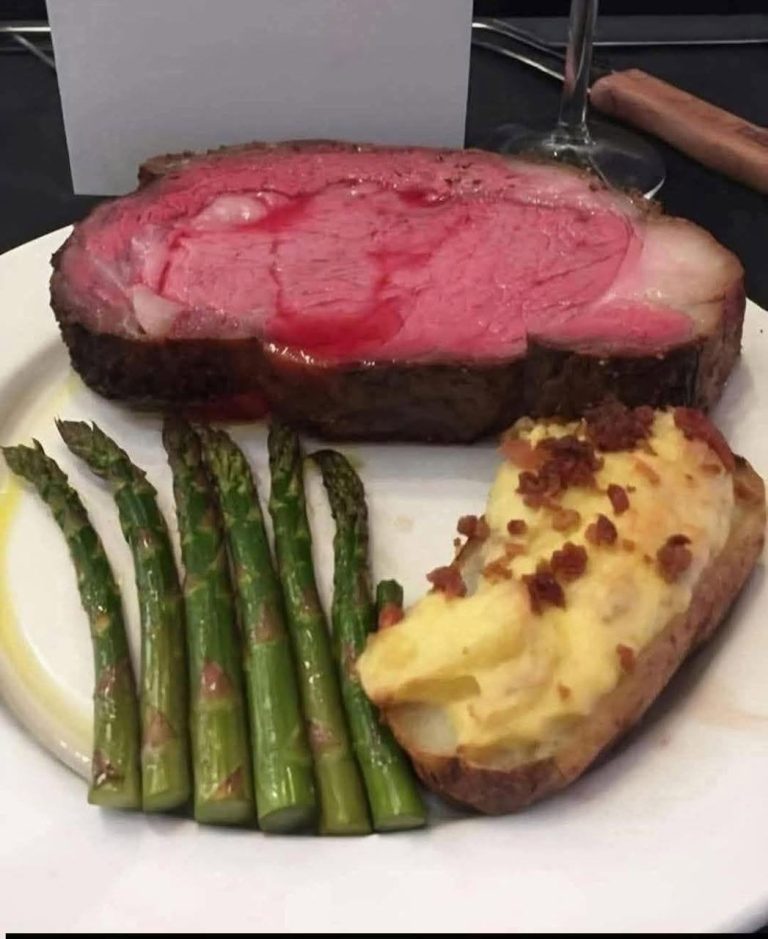
A perfectly cooked prime rib roast is the centerpiece of fine dining and classic steakhouse menus. Known for its rich marbling, tender texture, and deep flavor, prime rib—also known as standing rib roast—is a timeless culinary favorite for holiday feasts, special occasions, and weekend family dinners.
Serving prime rib alongside traditional steakhouses sides like tender roasted asparagus and loaded twice-baked potatoes creates a complete, luxurious dining experience.
In this comprehensive culinary guide, we break down the secrets to selecting, seasoning, and slow-roasting prime rib to rare or medium-rare perfection, along with complete recipes for classic side dishes.
How to Select and Prepare Prime Rib
Mastering prime rib starts at the butcher counter:
-
Understand the Cuts: A standing rib roast comes from the primal rib section (ribs 6 through 12). You can purchase it bone-in for maximum flavor and presentation or boneless for easier slicing.
-
Look for Marbling: Choose beef with generous intramuscular fat (marbling) throughout the meat. USDA Prime or Choice grades yield the most tender and flavorful results.
-
Dry Brining Is Key: Season the roast heavily with kosher salt and black pepper at least 12 to 24 hours before cooking. Store it uncovered in the refrigerator to allow the salt to penetrate deep into the meat while drying out the exterior for a golden crust.
Step-by-Step Cooking Technique: The Reverse Sear Method
The reverse sear method guarantees an even, edge-to-edge pink center without a thick gray band of overcooked meat.
Step 1: Slow Low-Temperature Roast
-
Preheat your oven to 225°F (107°C) to 250°F (121°C).
-
Place the seasoned roast on a wire rack inside a roasting pan.
-
Roast until the internal temperature reaches 120°F (49°C) for rare or 125°F (52°C) for medium-rare, using a reliable digital meat thermometer.
Step 2: Resting
-
Remove the meat from the oven, tent it loosely with aluminum foil, and let it rest for 20 to 30 minutes. Resting allows muscle fibers to relax and redistribute juices throughout the roast.
Step 3: High-Heat Sear
-
Increase oven temperature to 500°F (260°C) or prepare a high-heat broiler.
-
Return the rested roast to the hot oven for 8 to 10 minutes until the exterior develops a deep, crispy brown crust. Slice thinly against the grain and serve immediately with au jus.
Classic Steakhouse Side Dishes
A prime rib meal is incomplete without traditional complementary sides that balance the richness of the beef.
Roasted Garlic Asparagus
-
Ingredients: Fresh asparagus spears, olive oil, minced garlic, sea salt, black pepper, and fresh lemon juice.
-
Preparation: Snap off tough woody ends, toss spears in olive oil and garlic, and roast at 400°F (204°C) for 12 to 15 minutes until tender-crisp. Finish with a squeeze of fresh lemon juice.
Loaded Twice-Baked Potato
-
Ingredients: Russet potatoes, butter, sour cream, shredded cheddar cheese, crispy bacon bits, and chopped chives.
-
Preparation: Bake whole russet potatoes at 400°F (204°C) until soft. Scoop out the centers, mash with butter, sour cream, and cheese, then refill the potato skins. Top with extra cheese and bacon, then bake until golden and bubbly.
Home Cooking Safety and Internal Temperature Guide
Using an instant-read meat thermometer is essential for food safety and achieving your preferred level of doneness:
-
Rare: Pull at 120°F (49°C) | Final temp after resting: 130°F (54°C)
-
Medium-Rare: Pull at 125°F (52°C) | Final temp after resting: 135°F (57°C)
-
Medium: Pull at 135°F (57°C) | Final temp after resting: 145°F (63°C)
Conclusion
Cooking restaurant-quality prime rib at home requires just a few essential techniques: quality meat selection, proper seasoning, low-and-slow roasting, and patience during resting. Paired with fresh asparagus and a loaded potato, this classic meal delivers an unforgettable dining experience!
Frequently Asked Questions (FAQ)
How many pounds of prime rib do I need per person?
A good rule of thumb is 1/2 pound per person for a boneless roast or one bone for every two adults for a bone-in standing rib roast.
Should I cover prime rib with foil while roasting?
No. Roast prime rib uncovered so the dry air can brown the outer surface and build a delicious crust.
What is the difference between prime rib and ribeye steak?
Prime rib is a large roast cut from the rib primal section and cooked whole before slicing. A ribeye steak is cut from the same primal section prior to cooking and seared individually over high heat.
