
unnamed 6
For generations of music fans, the name Osmond was more than just a family name. It was part of the soundtrack of an era, a group of brothers who filled television screens, concert stages, and record charts with their distinctive harmonies and energetic performances.
Now, fans are remembering Alan Osmond, the eldest performing member and one of the guiding forces behind the famous family group, following his death at age 76.
Alan died on April 20, 2026, at his home in Lehi, Utah, surrounded by his wife, Suzanne, and their eight sons. His family confirmed the death after Alan had spent time in intensive care and later received hospice care at home.
The news has brought another emotional moment for the Osmond family and for longtime fans who watched the group become one of America’s best-known musical families.
A family that began singing together
Alan Ralph Osmond was born June 22, 1949, in Ogden, Utah. Music became part of his life at a very young age.
His father, George Osmond, encouraged Alan and his brothers Wayne, Merrill and Jay to sing together. What began as a family barbershop quartet eventually developed into a professional performing group.
The brothers initially performed partly to help support their two older siblings, Virl and Tom, who were born with severe hearing loss and needed specialized education and hearing aids.
That family beginning became the foundation for something much bigger.
The brothers gained national attention through television appearances, including The Andy Williams Show, and by the early 1970s, The Osmonds had become major stars.
Alan was at the center of that rise.
Alan was much more than a performer
For many casual fans, the Osmonds are remembered for their matching outfits, youthful energy and big television performances.
But Alan’s contribution went much deeper.
He was a songwriter, musician, producer and one of the people who helped shape the group’s musical direction. He co-wrote several of the Osmonds’ best-known songs, including “One Bad Apple” and “Crazy Horses.”
He also helped push the group beyond the polished pop sound that initially made them famous.
The 1973 album The Plan was particularly meaningful to him. The ambitious project reflected the family’s religious beliefs while showing a willingness to experiment musically.
That creative side of Alan became an important part of the Osmonds’ story.
The Osmonds became a television phenomenon
The family’s popularity reached far beyond their records.
As the brothers became household names, the Osmond family became a fixture of American television and entertainment. Donny Osmond eventually joined his brothers as a young performer, adding another highly recognizable face to the family act.
Alan’s role continued to expand behind the scenes.
He later produced The Donny & Marie Show, helping his younger siblings transition into another major chapter of their television careers.
For a family that had started by simply singing together, the journey had become extraordinary.
They had gone from local performances to international fame, television success and millions of records sold.
A devastating diagnosis changed his career
Alan’s life took a very different turn when he was diagnosed with multiple sclerosis in 1987.
The disease eventually forced him to step away from regular performing, although it did not end his involvement with music or his family.
According to reports about his life and career, Alan continued to remain an important guiding figure for the Osmonds even after his performing years were largely behind him.
His long experience in the entertainment business, combined with his role as an older brother, meant that his influence continued even when he was no longer regularly standing onstage.
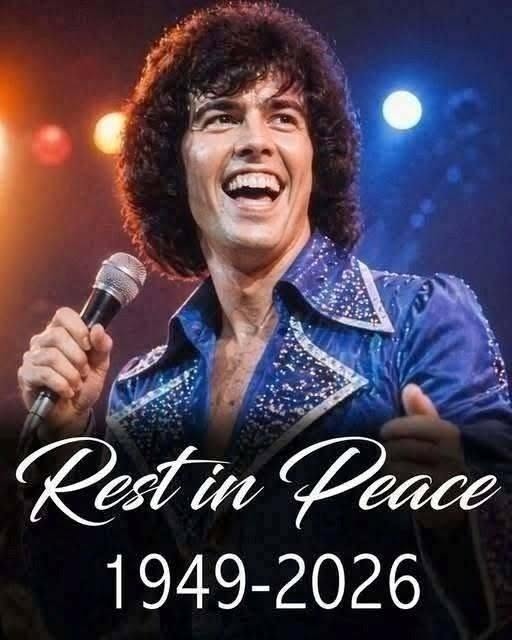
That makes the photographs of Alan during his younger performing years particularly poignant now.
The energetic musician seen smiling into a microphone belonged to an era when the Osmonds were among the most recognizable families in American popular music.
His final years were centered on family
Although millions knew Alan because of his career, his family described another side of him.
His obituary notes that Alan would most want to be remembered for his faith, his love for his wife Suzanne and his devotion to his eight sons and their families.
That personal side has also appeared in tributes following his death.
The family’s statement and reports from the time of his passing emphasized that his loved ones were with him during his final hours.
For someone who had spent much of his life in the public eye, it was a deeply private family moment.
Alan’s death also came after decades of living with multiple sclerosis, a condition that had gradually changed what he was physically able to do.
Yet his story was not defined only by illness.
It was also defined by what he accomplished before and after his diagnosis.
Fans are remembering the man behind the music
News of Alan’s passing has naturally brought memories of The Osmonds’ most famous years back to the surface.
For longtime fans, those memories may be tied to particular songs, television appearances or the distinctive stage style of the brothers.
For others, Alan’s legacy may be less about one particular performance and more about the role he played in keeping the family connected to music for decades.
He helped build the foundation on which the Osmond family’s remarkable entertainment career stood.
His brothers continued to perform and carry the family name forward, but Alan remained an important part of the story.
His death therefore represents more than the loss of another musician from an earlier generation. It marks the passing of one of the central figures in one of America’s most recognizable musical families.
A legacy that will continue
Alan Osmond was born into a musical family, but his accomplishments cannot simply be attributed to his family name.
He helped write songs, perform on major stages, develop the group’s sound and guide his younger siblings through some of their biggest professional moments.
He also faced a life-changing illness without allowing it to erase his connection to his family or the musical legacy they had built together.
Alan was 76 when he died.
He leaves behind his wife Suzanne, eight sons, grandchildren, great-grandchildren, siblings and generations of fans who grew up with the music of The Osmonds.
The image of the young Alan Osmond smiling onstage may now carry a different meaning. It captures a performer at the height of his career, but it also represents the beginning of a legacy that would remain with his family long after the spotlight moved elsewhere.
For those who remember The Osmonds, his music and the family story he helped build will remain.
Alan Osmond, 1949–2026.
Rest in peace.
