
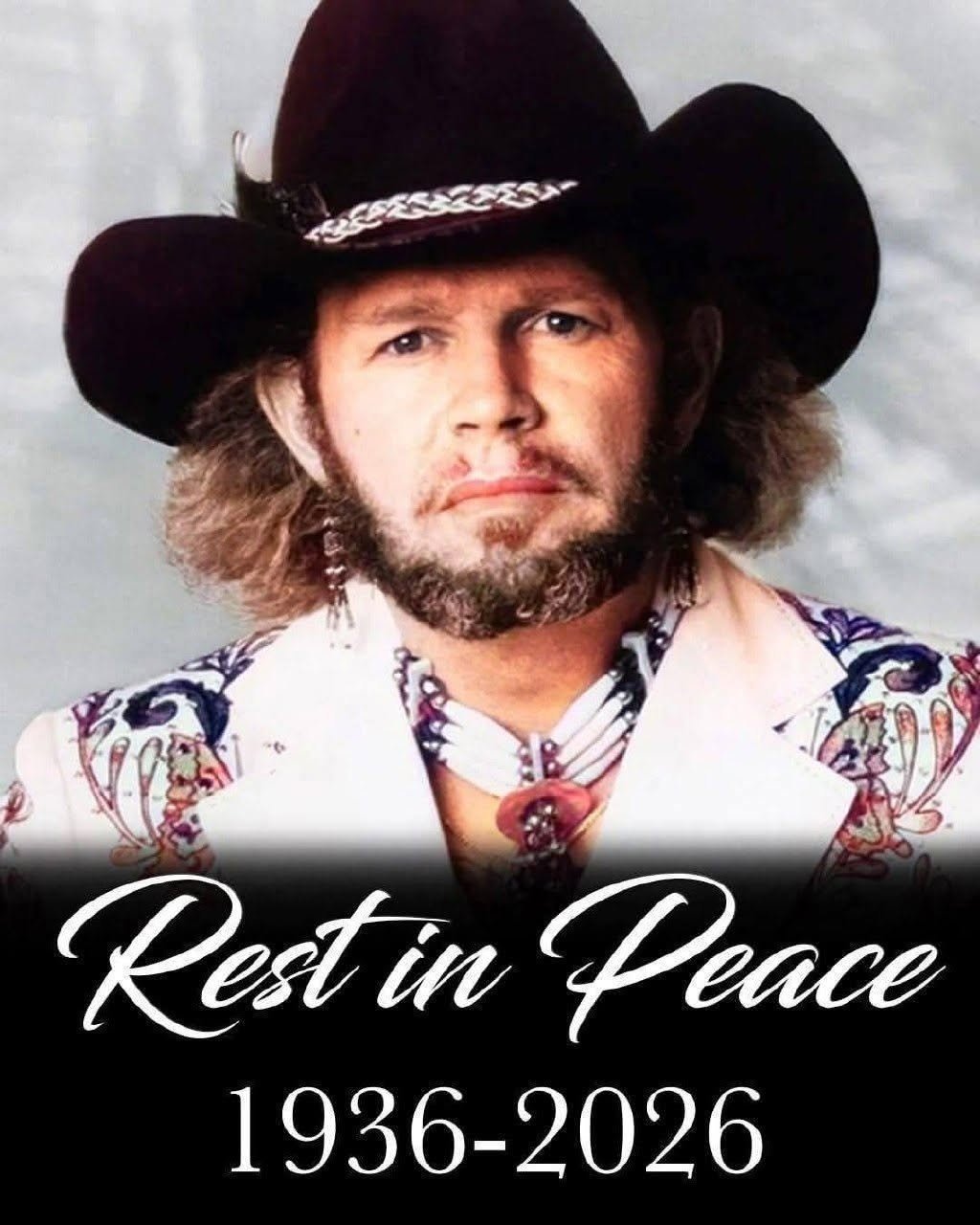
Country music has lost one of the most unconventional and controversial figures in its history.
David Allan Coe, the singer-songwriter whose rebellious personality and unmistakable approach to country music helped define the outlaw country era, died on April 29, 2026, at the age of 86. His death was confirmed by his wife, Kimberly Hastings Coe, and by a representative for the musician. According to his manager, Coe died at a hospital at approximately 5 p.m. The cause of death was not immediately disclosed.
For generations of country music fans, Coe was much more than a performer. He was a songwriter, storyteller, outsider, and larger-than-life personality whose career often seemed as unconventional as the music he created.
His catalog included memorable recordings such as “You Never Even Called Me by My Name,” “The Ride,” “Mona Lisa Lost Her Smile,” and “Longhaired Redneck.” He also wrote songs that became major hits for other artists, including Johnny Paycheck’s “Take This Job and Shove It” and Tanya Tucker’s “Would You Lay With Me (In a Field of Stone).”
His legacy, however, was never simple. Alongside his songwriting achievements and influence on outlaw country, Coe’s career included controversial recordings, disputed stories about his past, and a public image that frequently challenged conventional ideas about what a country artist should be.
David Allan Coe’s Death at 86
News of Coe’s death prompted tributes from musicians, country fans, and people who had followed his unusual career for decades.
His wife remembered him as a husband, friend, and confidant, while also describing him as one of the great singers and songwriters of his generation.
His representative confirmed that Coe died while receiving hospital care. Although he had experienced health problems during his later years, no specific cause of death was publicly disclosed in the initial reports.
For fans, the news marked the end of a career that had lasted for decades and left an unmistakable imprint on American country music.
Who Was David Allan Coe?
David Allan Coe was born on September 6, 1939, in Akron, Ohio.
His childhood and early adulthood were far removed from the polished world of Nashville entertainment. Coe spent significant portions of his youth and early adult life in reform schools and correctional institutions.
Those experiences later became an important part of the mythology surrounding his career. Coe frequently presented himself as an outsider who had lived a difficult life before finding a path through music.
Some of the more dramatic stories associated with his biography were disputed or difficult to independently verify. Nevertheless, the central fact of his story remained clear: Coe eventually transformed a troubled early life into a lengthy career as a professional musician and songwriter.
From Correctional Institutions to Nashville
By the late 1960s, Coe was pursuing music professionally.
He eventually made his way to Nashville, where he attempted to establish himself within the country’s competitive songwriting and recording community.
His appearance and behavior immediately made him stand out.
One of the most famous images associated with Coe was his use of a hearse while trying to attract attention around Nashville. His long hair, distinctive clothing, tattoos, and unconventional personality helped create an image that was almost impossible to confuse with that of a traditional Nashville performer.
But the image alone was not enough to build a lasting career.
Behind the theatrics was a songwriter capable of creating songs that other established performers wanted to record.
His First Recordings
Coe released his debut album, Penitentiary Blues, in 1970, following earlier recordings and performances that drew heavily from blues and the experiences of his early life.
His sound eventually became increasingly associated with country music, particularly as he established a relationship with Columbia Records.
The 1974 album The Mysterious Rhinestone Cowboy became an important milestone in his career and helped strengthen the unusual persona that followed him for decades.
Coe was never a conventional Nashville artist, and that difference became one of his greatest advantages.
“You Never Even Called Me by My Name”
One of David Allan Coe’s best-known recordings was “You Never Even Called Me by My Name.”
Written by Steve Goodman, the song playfully explored the familiar themes and stereotypes associated with traditional country music. Coe’s recording became closely identified with his career and helped establish him as one of the genre’s most recognizable personalities.
The song’s humor and self-awareness also reflected something important about Coe’s approach to music: he understood country music’s traditions while simultaneously enjoying the opportunity to challenge them.
“The Ride” and the Ghost of Hank Williams
“The Ride” and the Ghost of Hank Williams
Another defining moment came in 1983 with “The Ride.”
The song tells a supernatural story involving a musician traveling toward Nashville and encountering the ghost of country legend Hank Williams.
Its combination of mystery, storytelling, and country mythology made it particularly suited to Coe’s artistic identity.
“The Ride” became one of his signature songs and remains one of the recordings most closely associated with his name.
“Mona Lisa Lost Her Smile”
Coe also found success with “Mona Lisa Lost Her Smile,” a song that revealed a somewhat more vulnerable side of the performer.
This contrast was central to his career.
Although Coe was often presented as an aggressive outlaw figure, his catalog included emotional songs, reflective material, traditional country themes, and songs centered on heartbreak and relationships.
That range helped prevent him from being easily categorized.
The Songwriter Behind “Take This Job and Shove It”
Perhaps one of Coe’s most important contributions to country music came not from a song he made famous himself, but from one he wrote for another performer.
Coe wrote “Take This Job and Shove It,” which became a major hit for Johnny Paycheck in the late 1970s. The song captured frustration with work and authority in a way that resonated strongly with American listeners.
Its title eventually became a familiar expression in popular culture, demonstrating how a country song could move beyond the genre and become part of everyday language.
The achievement also showed that Coe’s abilities as a songwriter extended beyond his own recordings.
His Work With Tanya Tucker
Coe also wrote “Would You Lay With Me (In a Field of Stone),” which became a major country hit for Tanya Tucker.
The success of the song demonstrated another side of his talent.
While his own public image could be provocative and unpredictable, Coe was capable of writing emotionally direct material that other performers could transform into major commercial recordings.
His songwriting therefore deserves consideration separately from the more controversial aspects of his public persona.
David Allan Coe and “Tennessee Whiskey”
Coe also has an interesting place in the history of “Tennessee Whiskey.”
The song was written by Dean Dillon and Linda Hargrove, and Coe was the first country singer to record it.
George Jones later recorded a celebrated version, while Chris Stapleton’s much later recording helped turn the song into a modern country standard and a major crossover success.
Although Coe did not write “Tennessee Whiskey,” his early recording is an important part of the song’s long musical history.
A Defining Figure in Outlaw Country
During the 1970s, country music was changing.
Artists such as Willie Nelson and Waylon Jennings became closely associated with the outlaw country movement, which emphasized artistic independence and pushed back against some of Nashville’s established conventions.
Coe occupied his own distinctive place within that world.
His appearance, lifestyle, songwriting style, and refusal to conform made him one of the movement’s most recognizable outsiders.
He did not necessarily fit neatly into the same mold as every other outlaw country performer, but his work became an important part of the broader movement.
A Complicated and Controversial Legacy
Any serious discussion of David Allan Coe must acknowledge the controversies surrounding his career.
Some recordings released under his name contained racist, homophobic, sexually explicit, and otherwise offensive material. Those works have remained a significant source of criticism and debate surrounding his legacy.
Coe disputed accusations of racism and offered explanations for some of the controversial material, but the debate continued throughout his career.
His personal history also included stories that were difficult to verify, adding another layer of mythology to his public image.
As a result, Coe cannot easily be placed into a simple category of hero or villain. His musical accomplishments were significant, while parts of his catalog and public persona remain deeply controversial.
Rebel Meets Rebel and Musical Experimentation
Coe’s willingness to cross musical boundaries continued later in his career.
He collaborated with members of the heavy metal band Pantera on the project Rebel Meets Rebel, which combined outlaw country with heavy metal.
The collaboration reflected something that had been true throughout Coe’s career: he rarely seemed interested in fitting comfortably inside one musical category.
Whether working within traditional country, blues-influenced music, or more experimental projects, Coe consistently pursued his own direction.
Health Challenges in His Later Years
Coe experienced health difficulties during his later life.
In 2021, his wife reported that he had been hospitalized after contracting COVID-19 and experiencing low oxygen levels. His public appearances subsequently became less frequent.
By the time of his death in April 2026, Coe was 86.
His death was confirmed by his wife and representative, while his manager said he died in a hospital. The cause of death was not disclosed in the initial reports.
Tributes From the Music Community
Following news of his death, tributes highlighted different aspects of Coe’s career.
Some focused on his songwriting ability and influence on outlaw country. Others remembered his distinctive performances and unusual personality.
Musicians who had worked with him also emphasized the difference between the public character associated with his music and the more personal individual they knew away from the stage.
That distinction is particularly important when remembering a performer whose entire career was partly built around creating an unforgettable public persona.
A Career That Changed Country Music
David Allan Coe’s career cannot be reduced to a single song or album.
He released dozens of records, wrote songs that became major hits for other performers, collaborated across genres, and maintained a devoted audience for decades.
He also became one of the most recognizable figures associated with outlaw country.
His influence was not always conventional, and his legacy was never entirely comfortable. Yet his ability to tell stories, create memorable characters, and challenge expectations helped make him an enduring part of country music history.
Why His Music Still Matters
At the heart of Coe’s strongest work was storytelling.
His songs frequently focused on people living outside the polished image of mainstream society: workers, outsiders, rebels, lonely characters, troubled individuals, and people dealing with heartbreak or frustration.
That connection to ordinary struggles helped some of his songs remain relevant long after their original release.
Meanwhile, songs he wrote for other artists became part of the larger country music canon.
This dual legacy—as performer and songwriter—is one of the most important parts of understanding his career.
Remembering David Allan Coe
David Allan Coe died at 86 after a life that was as unconventional as the music he created.
His journey took him from a difficult childhood and years in correctional institutions to Nashville, major recordings, songwriting success, international recognition, and a place in the history of outlaw country.
His legacy will remain complicated.
There are songs that continue to be celebrated, stories that remain part of country music folklore, and controversial recordings that cannot simply be separated from the larger history of his career.
But there is also no denying the impact of his songwriting and his ability to create a distinctive musical identity.
For longtime listeners, songs such as “The Ride,” “Mona Lisa Lost Her Smile,” “Longhaired Redneck,” and “You Never Even Called Me by My Name” will continue to represent different sides of the artist.
And for country music historians, his compositions—including “Take This Job and Shove It” and “Would You Lay With Me (In a Field of Stone)”—will remain part of the genre’s story.
David Allan Coe was never an easy artist to define.
Perhaps that is exactly why his name remained memorable for so many decades.
The outlaw country icon is gone, but his music, his songwriting, and the complicated history surrounding his career will continue to provoke discussion among country fans for years to come.
