
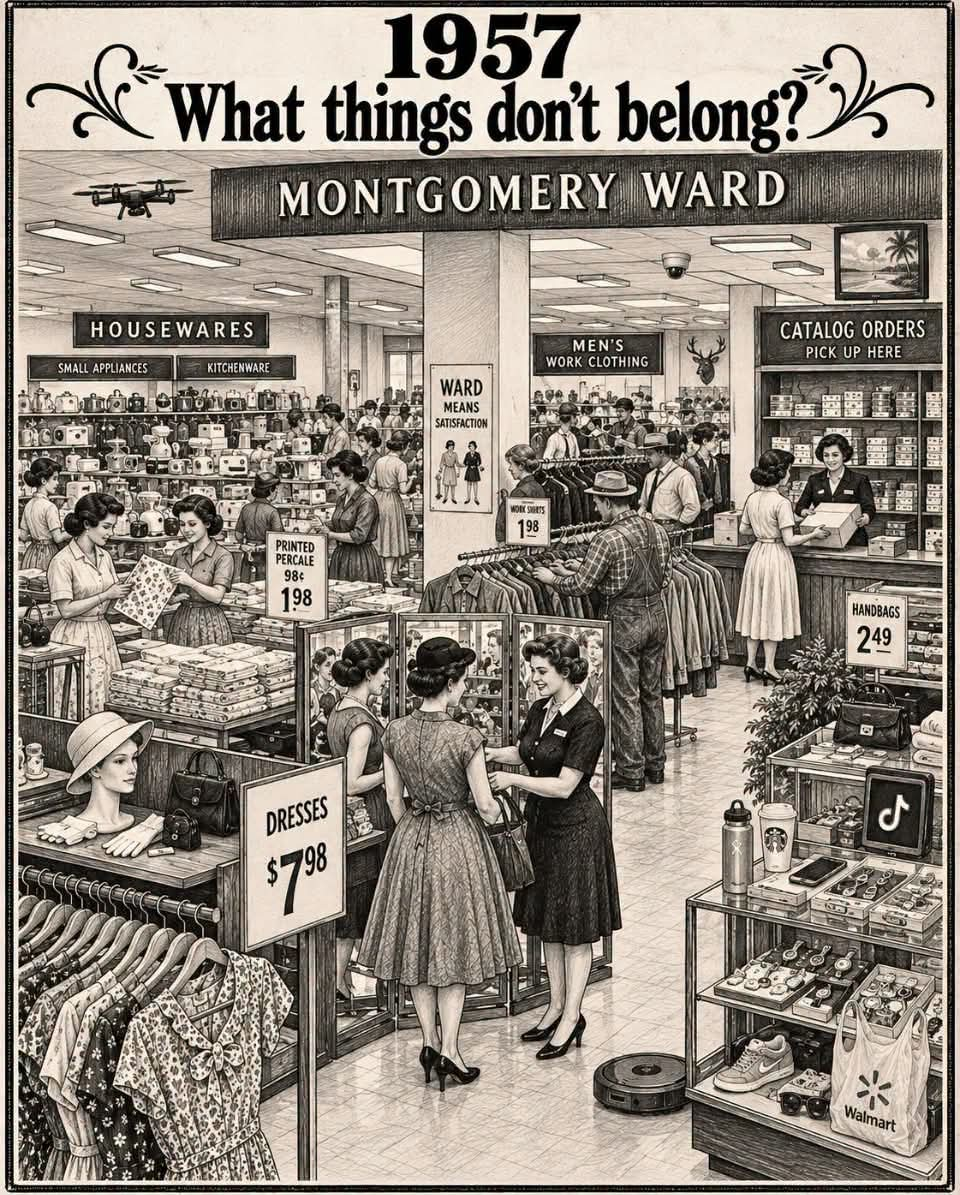
Nostalgia has a powerful way of drawing us into the past. Historical photographs and vintage illustrations of mid-century department stores—like the iconic Montgomery Ward storefronts of the 1950s—evoke a simpler era of hand-lettered price signs, classic fashion, and bustling catalog order counters. However, when an illustration introduces modern, anachronistic elements into a classic 1957 setting, it transforms a simple historical snapshot into a captivating visual puzzle.
In this comprehensive guide, we’ll examine the fascinating retail history of 1957, break down the modern hidden anomalies in the illustration, explore the psychological benefits of visual training, and provide practical tips for improving your observational skills. We’ll also examine how these hidden puzzles reflect larger cultural trends in Technology, Education, and digital media.
Decoding the Scene: A 1957 Montgomery Ward Retail Snapshot
The central puzzle image transports viewers to a quintessential moment in mid-century American shopping history: a crowded Montgomery Ward department store in 1957. The artist has meticulously recreated the period atmosphere, from the clothing racks and housewares displays to the classic typography of the price tags.
The Core Vintage Elements
The base layer of the image captures authentic 1957 retail culture:
Department Signage: Traditional departments like “Housewares,” “Small Appliances,” “Kitchenware,” “Men’s Work Clothing,” and “Catalog Orders” clearly layout the store’s layout.
Period Attire: Shoppers and employees wear classic 1950s fashion, including tailored dresses, hats, aprons, and work shirts.
Vintage Pricing: Hand-drawn signs feature period-appropriate prices, such as printed percale for 98 cents and dresses for $7.98.
Catalog Order Desk: A key feature of mid-century retail where customers could browse thick catalogs and place special orders for delivery.
Spotting the Modern Anomalies: What Doesn’t Belong in 1957?
While the overarching scene looks like a genuine vintage advertisement, the artist has cleverly hidden several modern anachronisms throughout the store. Finding these items requires sharp contrast detection, spatial reasoning, and proactive observation.
Can you spot these modern surprises hidden in the 1957 department store?
A Drone in the Sky: Near the ceiling on the upper left, a modern multi-rotor drone is flying indoors.
Security Camera: A modern dome-style security camera is mounted on the ceiling columns near the center.
TikTok Logo: The iconic TikTok logo is printed on a sign or display near the center-left.
Flat-Screen Television: Mounted near the catalog orders desk on the right is a modern thin flat-screen TV displaying a tropical scene.
Smartphone and Coffee Cup: On the front display counter, a modern smartphone sits alongside a contemporary coffee cup and a travel tumbler.
Robot Vacuum: A robotic vacuum cleaner is parked on the floor near the front right corner.
Modern Footwear: A modern Nike athletic sneaker sits on display near the bottom right.
Walmart Shopping Bag: A contemporary Walmart shopping bag rests on the floor in the foreground, complete with a modern logo.
The Psychology of Visual Puzzles and Observational Training
Visual hidden-object challenges require structured searching and utilize a cognitive process called “feature integration,” where the brain combines visual signals like shape, color, and location to identify target anomalies. Solving these puzzles offers several mental health advantages:
Enhanced Working Puzzles: Puzzles require holding multiple visual rules in your mind simultaneously, strengthening short-term memory capacity.
Improved Concentration: In a digital era filled with distractions, analyzing a complex image trains your brain to sustain deep, focused concentration.
Stress Reduction: Concentrating on a fun visual challenge acts as an active form of meditation, shifting your focus away from daily worries.
Healthcare, Insurance, and Long-Term Wellness Planning: Protecting Your Vision
While visual training with puzzles is a proactive mental workout, maintaining overall health, including eye health, requires long-term planning. Proactive observation depends on optimal physical vision.
Proactive Vision Care
If you find yourself struggling with hidden object challenges or noticing consistent blurred vision, it may be time to consult a Medical professional, such as an optometrist or ophthalmologist. Annual comprehensive eye exams are crucial not just for correcting vision, but for detecting early signs of conditions like glaucoma or cataracts.
Health Insurance and Wellness Protection
Investing in your long-term health is an essential component of personal Finance and wealth planning. Utilizing comprehensive Health Insurance coverage allows you to access routine physical therapy, nutritional counseling, and preventative Medical screenings without burdensome out-of-pocket costs. Reviewing your Insurance benefits ensures you have the necessary preventative Medical care resources to preserve your observational skills throughout every life stage.
Fascinating Facts About 1950s Retail Culture
The Rise of Department Stores: The 1950s marked a golden age for department stores like Montgomery Ward and Sears, which acted as community hubs for suburban families.
Catalog Shopping Pioneers: Before online shopping, mail-order catalogs were massive publications that allowed rural and urban families alike to order everything from clothing to pre-cut homes.
Mid-Century Price Points: While prices like $7.98 for a dress sound remarkably low today, they reflected the purchasing power and wage standards of the mid-1950s economy.
Customer Service Standards: Mid-century retail placed a heavy emphasis on personal service, with dedicated floor attendants ready to assist shoppers directly.
Conclusion
“1957: What Things Don’t Belong?” is more than a momentary distraction; it’s an exercise in focused perception, a trip through retail history, and a reminder to look closer at our surroundings. By examining hidden details, practicing analytical thinking, and prioritizing holistic wellness, you can keep your mind sharp, curious, and adaptable.
Whether you found the robotic vacuum, the modern drone, or the Walmart shopping bag first, the joy of visual hidden-object challenges is the journey of exploration itself. Practice mental agility and keep observing proactively!
Frequently Asked Questions (FAQ)
1. Where can I find the modern drone in the image?
The modern drone is located near the upper-left corner of the ceiling, flying above the “Housewares” department sign.
2. Are there any modern electronics hidden in the store?
Yes, several! They include a flat-screen television playing a tropical scene near the catalog desk, a security dome camera on the ceiling, a smartphone on the front counter, and a robotic vacuum on the floor.
3. How often should I get an eye exam to preserve observational skills?
Medical professionals typically recommend that healthy adults have a comprehensive eye exam every one to two years. However, if you wear glasses/contacts or manage chronic health conditions, your Medical professional may recommend annual visits covered by your Health Insurance.
4. What is the benefit of including modern anachronisms in vintage art puzzles?
Retroactive, humorous anomalies create visual “surprises” that break automatic pattern recognition, forcing the viewer’s brain to re-evaluate the entire historical composition and engage more deeply with the artwork.
