
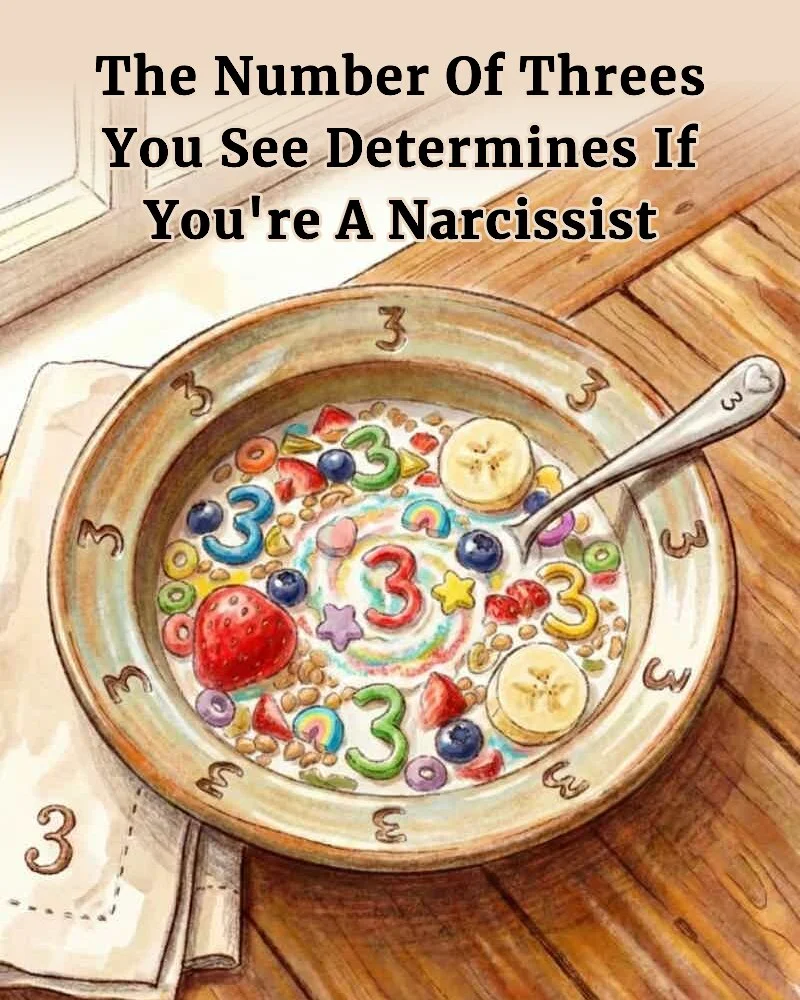
Stop scrolling for a second and look at the picture above. Don’t count too quickly.
How many number 3s can you find?
Most people notice the obvious ones first. Then, once they slow down, they begin spotting numbers hidden around the bowl, inside the cereal, near the spoon, and in places they didn’t notice at first.
But here’s the interesting part: the number of threes you see cannot actually prove that you’re a narcissist. This kind of picture is better understood as a visual-attention puzzle than a psychological test.
So before you read the explanations below, take another look and make your own guess.
Why Your First Answer Can Be So Different From Someone Else’s
When you look at a busy image, your brain doesn’t examine every tiny detail one by one.
Instead, it quickly searches for patterns, familiar shapes, colors, and objects that seem important.
That’s why one person might immediately notice the large 3 in the cereal bowl while another person may focus on the numbers around the plate.
Neither person is necessarily “better” at seeing.
They’re simply directing their attention differently.
And that’s what makes these puzzles surprisingly addictive.
Did You Count Only the Obvious Threes?
Look carefully at the entire image.
Don’t just count the large numbers inside the bowl.
Check:
- Around the edge of the plate
- Near the spoon
- Inside the cereal
- Around the fruit
- On the paper beneath the bowl
- Between other objects
- Along the outer areas of the picture
Some numbers are deliberately placed where your eyes are less likely to search.
That means your first count may not be your final count.
What If You Saw Only a Few?
If you noticed just a handful of threes immediately, it doesn’t mean you’re self-centered or narcissistic.
It may simply mean that your attention was drawn toward the most prominent elements of the picture.
Your brain naturally filters information.
If an object doesn’t seem important, your attention may ignore it—even when it’s sitting right in front of you.
