
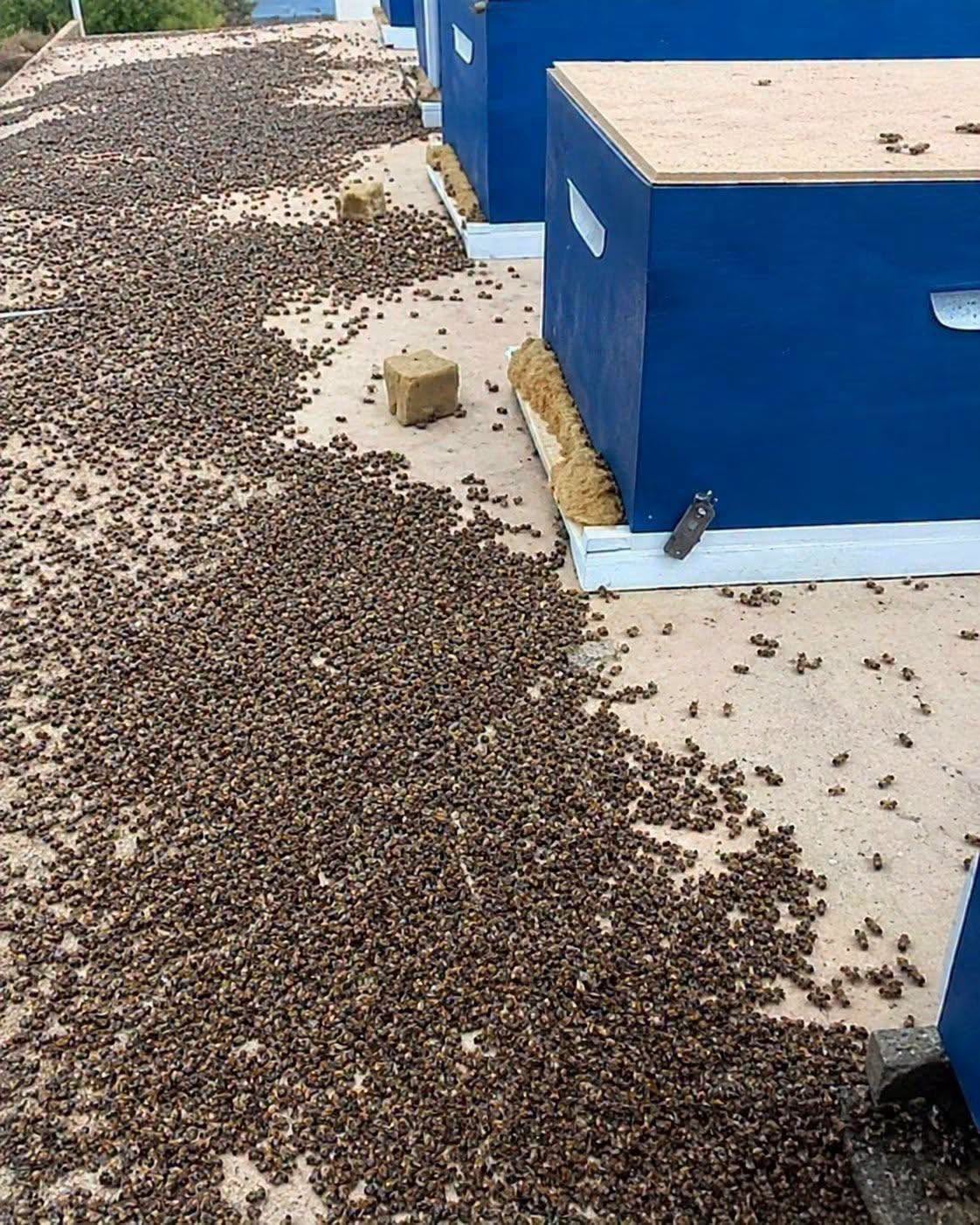
Bees are dying, and the risk goes far beyond the hive. As pesticides, habitat loss, and climate stress intensify, the world’s pollinators are coming under pressure in ways that directly affect ecosystems and food production.
Bees play a key role in pollinating flowering plants, which means they support both biodiversity and a large portion of the crops humans rely on. From fruits and vegetables to nuts and seeds, many foods depend on healthy pollinator populations.
But their survival is becoming more difficult. Widespread pesticide use, shrinking wild spaces, and the removal of flower-rich habitats reduce both food sources and safe nesting areas. When these conditions combine, entire colonies can weaken or collapse, and wild bee populations decline as well.
The impact doesn’t stop with bees. Reduced pollination affects plant reproduction, which then influences entire ecosystems. Fewer plants mean less food and shelter for other species, creating a ripple effect through wildlife and agriculture.
