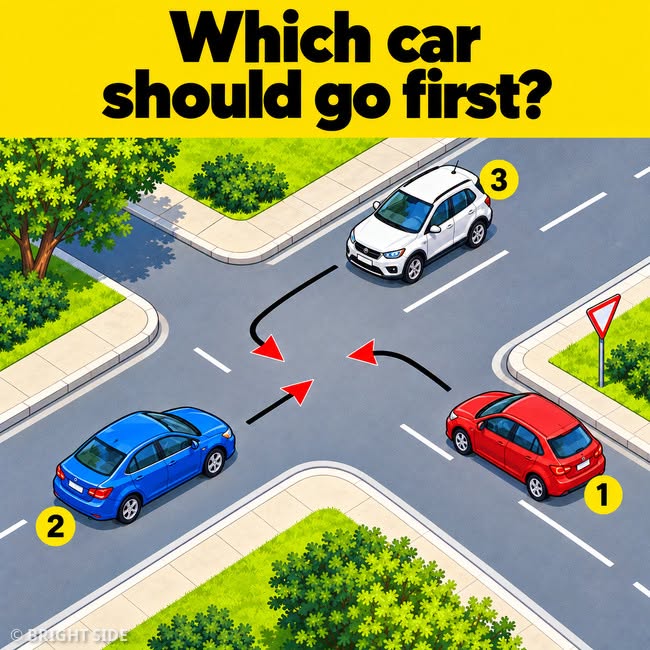
Traffic riddles, driving logic puzzles, and right-of-way scenarios have become exceptionally popular across social media. These brain teasers challenge our understanding of road rules, traffic signs, and intersection priorities. The puzzle illustrated here presents an intersection with three vehicles: a red car labeled 1, a blue car labeled 2, and a white SUV labeled 3. Each car’s intended path is marked with arrows, and a specific traffic sign is visible on the right. While many drivers assume they know the rules of the road by heart, complex intersections with turning paths often spark lively debates. In this comprehensive guide, we will analyze the positions and intentions of each vehicle, examine the relevant right-of-way rules, explore the role of road signs, and discuss the practical importance of driving safety, auto insurance, and motor vehicle regulations.Analyzing the Intersection ScenarioTo determine which car should go first, let’s examine the specific positioning, movement arrows, and traffic controls visible in the illustration: 1. Vehicle 1 (The Red Car)Position and Path: Approaching from the right lane, indicating a left turn across the intersection. Traffic Control: Notice the triangular Yield sign positioned on the right shoulder of Car 1’s approach. 2. Vehicle 2 (The Blue Car)Position and Path: Approaching from the left, traveling straight through the intersection. 3. Vehicle 3 (The White SUV)Position and Path: Approaching from the top, indicating a left turn into the intersecting lane. +——————————————————————-+
| VEHICLE POSITIONS & INTENTIONS |
+——————————————————————-+
| Vehicle | Direction / Path | Traffic Sign / Control |
+———+————————–+——————————+
| Car 1 | Red car, turning left | Yield sign present|
| Car 2 | Blue car, going straight | None visible |
| Car 3 | White SUV, turning left | None visible |
+——————————————————————-+
Step-by-Step Right-of-Way ResolutionResolving the correct sequence of movement requires applying standard rules of the road and interpreting the traffic control signs present at the scene. Step 1: Evaluating the Yield SignCar 1 (the red car) faces an explicit triangular Yield sign. According to universal traffic regulations, a driver facing a yield sign must slow down and yield the right-of-way to all traffic on the intersecting roadway that is close enough to constitute an immediate hazard. Therefore, Car 1 must wait before proceeding. Step 2: Analyzing Cars 2 and 3With Car 1 legally required to yield, the interaction between Car 2 (going straight) and Car 3 (turning left) determines the next move. When two opposing vehicles approach an intersection—one going straight and the other turning left across oncoming traffic—the vehicle traveling straight (Car 2) holds the right-of-way over the turning vehicle (Car 3).Consequently, Car 2 goes first, followed by Car 3, and finally Car 1 after yielding.The Cognitive Benefits of Traffic Logic PuzzlesEngaging with visual driving puzzles offers notable mental benefits:Sharpening Situational Awareness: Puzzles train drivers to scan for critical details, such as hidden road signs, lane markings, and turn arrows. Reinforcing Safe Driving Habits: Regularly reviewing right-of-way rules keeps defensive driving principles sharp and reduces real-world reaction errors.Stimulating Problem-Solving: Working through logical rules exercises cognitive flexibility and attention to detail.Financial, Insurance, and Legal Implications of Intersection SafetyUnderstanding traffic laws is not only essential for passing driving tests but also plays a vital role in financial risk management and vehicle safety.Auto Insurance and Accident PreventionIntersection collisions are among the most common types of motor vehicle accidents. Insurance underwriters closely evaluate adherence to right-of-way rules, yield signs, and traffic signals when determining liability claims. Maintaining a clean driving record by knowing and following these rules helps keep auto insurance premiums low.Legal Responsibility and Safe DrivingDrivers carry a legal duty of care to operate their vehicles safely, obey traffic control devices, and respect the right-of-way of other motorists and pedestrians. Proper driver education minimizes road accidents and protects financial assets from costly liability claims.ConclusionThis intersection traffic puzzle provides a practical test of road rules and observational awareness. By carefully noting the yield sign for Car 1 and the straight-through path of Car 2, drivers can easily determine that Car 2 goes first. Share this puzzle with your friends and family to see who gets the correct answer on their first try!Frequently Asked Questions (FAQ)Which car goes first in this intersection puzzle?Car 2 goes first because it is traveling straight through the intersection without any conflicting yield signs. Car 1 must wait because it faces a yield sign, and Car 3 must yield to oncoming traffic when making a left turn. What does the triangular red-and-white sign mean for Car 1?The triangular sign is a Yield sign, meaning the driver must slow down and give the right-of-way to any vehicles moving through the intersection before proceeding. Why do traffic puzzles help improve driving skills?Traffic puzzles reinforce core safety rules, improve quick decision-making under simulated conditions, and train the eyes to spot critical road signs and vehicle paths[cite: 11].
Traffic Puzzle Challenge: Which Car Should Go First at This Intersection?