
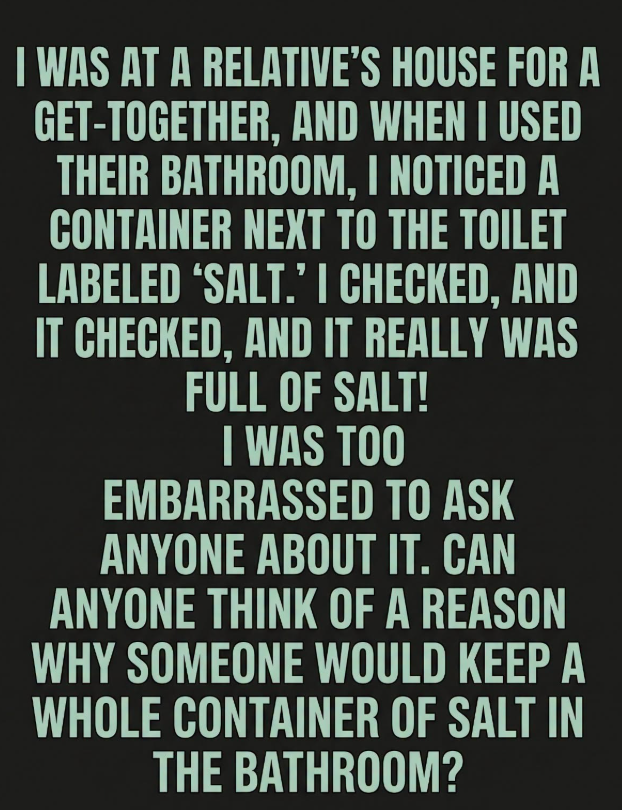
Walking into a relative’s or friend’s home bathroom and spotting something unexpected can instantly trigger curiosity. A container clearly labeled “Salt” sitting right beside the toilet bowl is a prime example. At first glance, it seems completely out of place. After all, kitchen seasonings usually belong in the pantry, dining area, or near the stove, not next to bathroom fixtures.
However, keeping salt in the bathroom is actually an age-old cleaning secret, a humidity control solution, and a clever eco-friendly remedy used by generations of savvy homeowners. Whether dealing with stubborn hard water stains, lingering odors, damp air, or minor drainage slowdowns, plain table salt or coarse sea salt offers an surprisingly effective, low-cost solution.
In this comprehensive guide, we will unpack the science and practical benefits behind keeping salt in the bathroom. We will explore how it works, how to use it safely, and how this simple habit can help you preserve your plumbing fixtures, save money on expensive chemical cleansers, and maintain a fresher, cleaner home environment.
The Science of Salt in Domestic Cleaning
Salt, scientifically known as sodium chloride ($\text{NaCl}$), is far more than a simple food preservative and flavor enhancer. Its molecular composition and mineral structure give it unique physical properties that make it a formidable agent in household sanitation and maintenance.
Natural Abrasive Action
One of the primary physical attributes of crystalline salt is its gentle yet effective abrasiveness. When scrubbed against hard surfaces like porcelain, ceramic, or glass, salt crystals act as microscopic scrubbers. They exert sufficient friction to remove grime, rust ring stains, soap scum, and mineral deposits without scratching delicate glazes or protective coatings.
Unlike harsh synthetic abrasive powders that can wear down the enamel or protective finish of toilets and sinks over time, salt dissolves naturally in water. This means it offers high mechanical scrubbing power when solid, but rinses away cleanly without leaving abrasive residues or clogging internal pipe components.
Osmotic Pressure and Antimicrobial Effects
Salt has been used for millennia as an antimicrobial agent due to the process of osmosis. Microorganisms, including odor-causing bacteria, mold spores, and fungi, thrive in humid environments like bathrooms. When exposed to a high-concentration saline environment, water is drawn out of the bacterial cells via osmotic pressure.
By dehydrating harmful microbes, salt inhibits their ability to reproduce and break down organic matter. This biological process effectively neutralizes unpleasant odors at their source, rather than simply masking them with synthetic fragrances.
Why People Keep Salt Next to the Toilet
If you notice a dedicated jar or container of salt sitting by the toilet, the homeowner is likely utilizing one of several smart, traditional home hacks. Here are the primary reasons why keeping salt nearby makes perfect practical sense.
+—————————+———————————————————–+
| Practical Application | Primary Benefit |
+—————————+———————————————————–+
| Odor Deodorization | Absorbs dampness and eliminates bacterial odor at source |
| Hard Water Stain Removal | Gently breaks down stubborn limescale and rust rings |
| Drain Maintenance | Prevents organic buildup and keeps wastewater flowing |
| Humidity Control | Acts as a natural desiccant to absorb excess moisture |
| Eco-Friendly Cleaning | Replaces harsh, toxic chemical bowl cleaners |
+—————————+———————————————————–+
1. Deodorizing the Toilet Bowl Naturally
Toilet bowls are constantly exposed to moisture, moisture-loving bacteria, and organic waste. Over time, bacteria colonize under the rim and within the water trap, producing foul, stubborn odors. Pouring a handful of coarse salt into the toilet bowl before going to bed gives the salt time to dissolve slowly in the standing water.
Overnight, the high-salinity solution neutralizes odor-causing microbes. Flushing in the morning leaves behind a fresh, sanitized bowl without releasing volatile organic compounds (VOCs) into your indoor air supply.
2. Dissolving Hard Water and Limescale Marks
If your household receives hard water rich in calcium and magnesium, you are likely familiar with the yellow, brown, or white mineral rings that develop at the water line of the toilet. Standard liquid toilet cleaners often slide right past these stubborn crusts without penetrating them.
Mixing salt with white vinegar or baking soda creates a powerful, non-toxic reaction paste. When applied directly to limescale rings, the combination breaks down calcium deposits effortlessly. The coarse salt particles grip the mineral crust, allowing for quick, minimal-effort scrubbing.
3. Natural Moisture and Humidity Absorption
Bathrooms are notoriously high-humidity zones. Steam from daily hot showers settles on walls, mirrors, and fixtures, creating an ideal breeding ground for mildew and black mold.
Salt acts as a natural desiccant, meaning it naturally attracts and absorbs excess airborne moisture. An open container of salt kept near the toilet or on a vanity counter absorbs ambient humidity from the air, helping reduce dampness in small or poorly ventilated bathrooms.
Step-by-Step Guides: How to Use Salt in Your Bathroom
Knowing the benefits of salt is only half the battle; applying it correctly guarantees maximum results without damaging your plumbing or bathroom fixtures.
Overnight Toilet Refresher Method
To keep your toilet smelling fresh and reduce weekly scrubbing effort, follow this simple night-time routine:
Measure the Salt: Measure approximately $1/2$ cup of coarse sea salt, rock salt, or standard table salt.
Pour into the Water Trap: Directly pour the salt into the toilet bowl water right before going to bed or leaving the house for several hours.
Allow to Sit: Let the salt rest undisturbed for 6 to 8 hours. This enables the saline solution to break down organic slime and neutralize bacterial odors.
Scrub and Flush: In the morning, give the bowl a quick brush with a standard toilet brush and flush.
Hard Water Stain Removal Paste
For tough, set-in mineral deposits around the waterline or under the bowl rim:
Combine $1/2$ cup of salt with $1/2$ cup of baking soda in a small bowl.
Slowly add white vinegar until a thick, paste-like consistency forms.
Apply the paste directly onto the hard water stains using an old toothbrush or cleaning sponge.
Allow the paste to sit for 20 to 30 minutes to dissolve the mineral bonds.
Scrub gently in circular motions and flush the toilet to reveal a restored finish.
Eco-Friendly Home Management and Financial Benefits
Incorporating simple, natural cleaning solutions like salt into your home maintenance routine carries broader economic and lifestyle advantages.
Lowering Household Maintenance Expenses
Commercial household cleansers, specialized toilet gels, and chemical rim blocks can accumulate substantial monthly costs over time. Switching to basic household staples like salt, baking soda, and vinegar significantly cuts down your routine grocery and supplies budget.
For homeowners managing long-term domestic costs, small adjustments in cleaning habits yield measurable savings over time. Protecting your fixtures with non-corrosive, non-abrasive natural cleansers also reduces the long-term risk of prematurely replacing porcelain fixtures or damaging plumbing lines.
Protecting Your Household Plumbing and Septic Systems
Harsh chemical drain cleaners containing sodium hydroxide or sulfuric acid can generate extreme heat through chemical reactions. Over time, these intense thermal reactions can weaken or warp PVC piping, degrade rubber seals, and cause costly plumbing emergencies requiring professional intervention.
Furthermore, homes equipped with septic tanks rely on a delicate balance of beneficial bacteria to digest solid organic waste. Dumping heavy chemical cleaners down drains can kill these essential bacteria, leading to system failures, backed-up lines, and expensive septic repairs. Salt is a non-toxic alternative that, when used in moderate amounts, poses no risk to your pipes or septic ecosystems.
+——————————————————-+
| SAFE & NATURAL CLEANING TRIO |
| |
| [ SALT ] + [ BAKING SODA ] + [ VINEGAR ] |
| (Abrasive & | (Deodorizer & | (Acidic |
| Desiccant) | Softener) | Cleaner) |
+——————————————————-+
|
v
+——————————————————-+
| BENEFITS TO YOUR HOME |
| |
| • Protects PVC Pipes & Seals |
| • Safe for Septic Tank Ecosystems |
| • Saves Money on Expensive Commercial Chemicals |
| • Improves Indoor Air Quality (Zero Harsh Fumes) |
+——————————————————-+
Historical Context and Cultural Home Hacks
Using salt in living spaces is far from a modern invention. Historically, before electric dehumidifiers, modern plumbing, and commercial chemical sprays existed, households depended almost entirely on natural minerals to manage home hygiene.
Traditional Dehumidification: In traditional architecture across Europe and Asia, open bowls of salt were routinely placed in damp corners, cellars, and washrooms to absorb excess humidity and prevent wood rot.
Folk Traditions and Protection: Beyond practical cleaning, various cultural traditions hold that placing salt in home entryways and corners wards off negative energy, promotes peace, and cleanses the household space. Whether viewed through a practical lens or a traditional cultural perspective, salt has held a prized spot in domestic care for centuries.
Practical Tips for Storing Salt in the Bathroom
If you decide to adopt this smart habit in your own home, keep these practical storage guidelines in mind:
Use a Decorative, Covered Container: Salt attracts moisture from the air. To prevent it from clumping into a solid mass before you can use it, store it in an airtight glass or ceramic container with a secure lid.
Keep a Dedicated Measuring Spoon: Keep a small wooden or plastic spoon inside or beside the jar for easy access when pouring salt into the toilet bowl or sink.
Choose the Right Type of Salt: While fine table salt works well for quick dissolving, coarse sea salt or rock salt offers superior abrasive scrubbing action for set-in stains.
Combine with Essential Oils: Add 5 to 10 drops of tea tree, eucalyptus, or lavender essential oil to your container of salt. This creates a natural room air freshener that releases a soothing fragrance whenever you open the jar.
Interesting Facts About Salt and Home Care
Salt Never Expires: Unlike commercial cleaners that lose potency over time, pure salt ($NaCl$) retains its cleaning and osmotic power indefinitely if kept dry.
Fly and Pest Deterrent: Fruit flies and drain flies are attracted to organic buildup in sink and toilet overflow drains. A routine flush of warm saline water helps destroy fly larvae and keeps drains pest-free.
Rust Prevention: When combined with an acid like lemon juice or vinegar, salt can effectively remove light rust spots from metal bathroom fixtures, towel bars, and shower curtain rings.
Grout Restorer: Scrubbing tile grout lines with a stiff brush and a concentrated salt-and-water paste lifts embedded dirt and brightens discolored lines naturally.
Conclusion
Seeing a container of salt sitting next to a toilet might seem mysterious at first glance, but it represents a smart, resource-thrifty, and effective approach to home care. From neutralizing bacterial odors overnight to dissolving stubborn hard water rings and absorbing ambient humidity, salt is one of the most versatile cleaning aids available.
By replacing harsh chemical cleansers with safe, affordable alternatives like salt, you protect your home’s plumbing systems, preserve your indoor air quality, and keep your bathroom fresh with minimal ongoing effort. The next time you spot a jar of salt in a relative’s bathroom, you will know the clever cleaning secret hidden right in plain sight!
Frequently Asked Questions (FAQ)
Will putting salt in my toilet damage the porcelain or plumbing?
No. Salt is non-corrosive to porcelain, ceramic, and standard PVC or copper pipes when used in reasonable household quantities. Because salt fully dissolves in water, it passes harmlessly through your home’s drainage system.
How often should I put salt in my toilet bowl?
For routine maintenance and odor control, applying salt 1 to 2 times a week before bed is ideal. If you are dealing with heavy hard water buildup or stubborn odors, you can repeat the process daily until the issue resolves.
Can I use Epsom salt instead of regular table salt?
While Epsom salt (magnesium sulfate) is fantastic for relaxing baths, plain table salt, coarse sea salt, or rock salt (sodium chloride) is significantly more effective for cleaning, deodorizing, and scrubbing hard water stains.
Is salt safe for homes with septic tanks?
Yes. Moderate household use of salt for cleaning and deodorizing is entirely safe for septic systems and will not disrupt the beneficial bacterial balance necessary for waste breakdown.
