
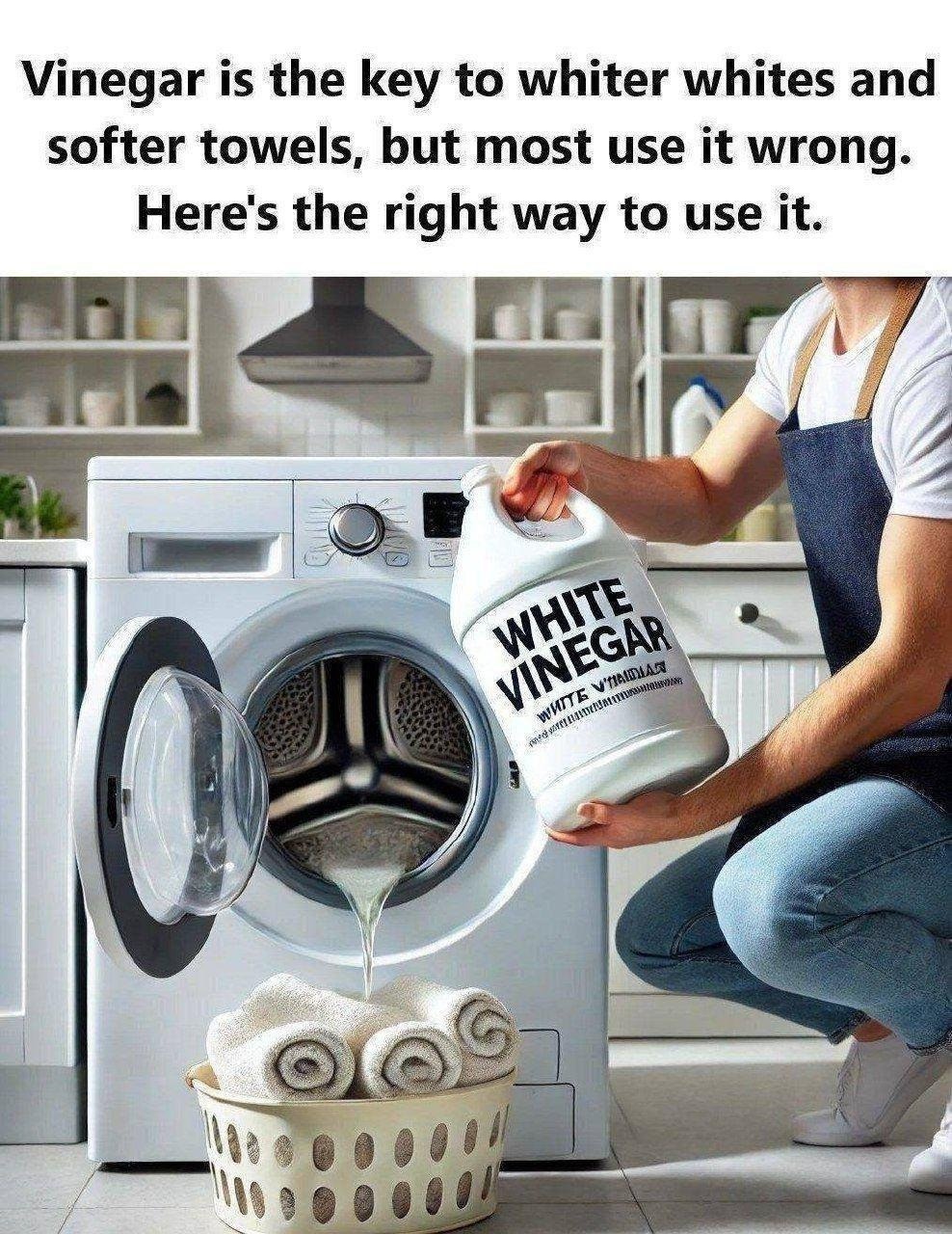
The Ultimate Guide to Laundry Vinegar: How to Get Brighter Whites and Ultra-Soft Towels Without Ruining Your Washing Machine
Transform your daily laundry routine with this simple kitchen staple!
Doing laundry is one of those household chores that we all have to face week after week. We spend a lot of money on premium commercial detergents, heavily scented fabric softeners, color-safe bleaches, and stain-removing sprays, all in the pursuit of perfectly clean, fluffy towels and bright, crispy white clothes. Yet, despite investing in these expensive products, many home cooks and homemakers often find themselves frustrated by the results.
Over time, beautiful white t-shirts can start looking a little dull or yellowish. Plush bath towels that once felt like a luxurious spa treat can end up feeling stiff, scratchy, and rough against your skin. Even worse, sometimes a damp, musty odor clings to the fabric no matter how much laundry detergent you pour into the machine dispenser.
How to Use Vinegar in Laundry: 6 Dos and Don’ts to Know
If you are dealing with these common laundry woes, you do not need to buy more expensive chemical treatments. The secret to restoring your fabrics is likely sitting right inside your kitchen pantry: plain white vinegar. This humble, budget-friendly liquid is a true superpower when it comes to breaking down fabric-stiffening deposits, neutralizing odors, and naturally brightening your clothes.
However, because white vinegar contains natural acetic acid, using it incorrectly can do more harm than good, potentially damaging the delicate rubber components inside your washing machine or reducing the effectiveness of your favorite detergent. Today, we are going to dive deep into the science of using white vinegar in your laundry room, look at the mistakes most people make, and show you exactly how to use it the right way to achieve ultimate fabric perfection.
