
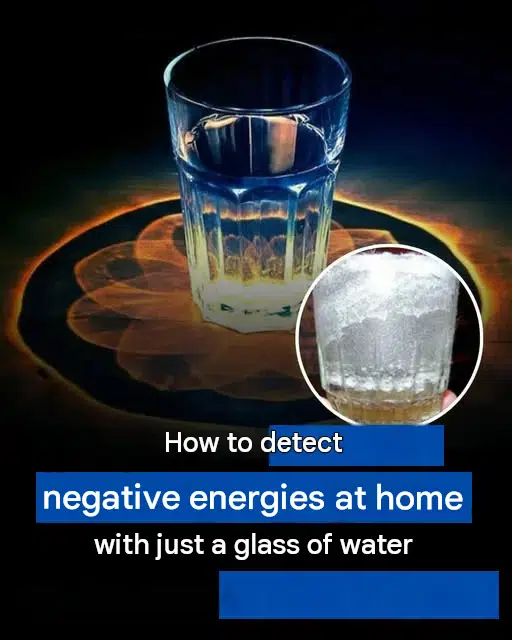
Throughout history, people have sought simple, intuitive ways to cleanse their living spaces, harmonize their environments, and invite peace into their homes. From burning sage and diffusing essential oils to rearranging furniture according to feng shui principles, household energy management is a timeless practice. Among the various folk traditions passed down through generations, one of the most intriguing methods involves using a simple glass of water, salt, and vinegar to detect and absorb negative energy in a room.
While this practice belongs more to traditional folklore and household rituals than hard empirical science, it remains a fascinating topic of curiosity and discussion. In this comprehensive guide, we will explore how the salt-water glass ritual is traditionally performed, examine the scientific explanations behind what is actually happening in the glass, review practical home wellness tips, and discuss how proper home maintenance, financial planning, and personal security protect your living environment.
The Tradition of the Salt-Water Energy Cleansing Ritual
In various cultural and holistic traditions, water and salt are viewed as powerful elements capable of absorbing impurities and energetic stagnation. Proponents of the glass-of-water ritual suggest that stagnant or negative emotions within a home can be cleared by setting up a specific mixture.
How the Ritual Is Traditionally Practiced
The Glass Setup: A clean glass tumbler is filled with roughly one-third sea salt or table salt, one-third white vinegar, and one-third water.
Placement: The glass is placed in a hidden or frequently used area of the house where stagnant energy is suspected.
Observation: According to folklore, if the salt crystallizes, crawls up the sides of the glass, or discolors over 24 hours, it is interpreted as having absorbed negative energy from the space.
The Scientific Reality: What Is Actually Happening?
While folklore attributes changes in the glass to invisible emotional energies, chemistry and physics provide a clear, rational explanation for why salt and vinegar mixtures behave this way.
1. Capillary Action and Salt Crystallization
When salt water evaporates from the surface of a glass container, capillary action draws liquid up through microscopic imperfections or along the rim. As the water molecules evaporate into the air, the dissolved salt is left behind, forming intricate crystal structures that climb up the sides of the glass. This natural chemical process occurs independently of any external energy.
2. Atmospheric Humidity and Air Quality
High humidity, ambient temperature changes, and chemical reactions between the vinegar (acetic acid) and salt can cause surface condensation, efflorescence, and mineral crusting. Therefore, physical changes in the glass reflect environmental humidity and evaporation rates rather than metaphysical energy fields.
Practical Home Maintenance and Environmental Wellness
Maintaining a clean, peaceful, and healthy living environment relies on practical home care rather than folk rituals.
1. Improving Indoor Air Quality
Ensuring proper ventilation, using high-efficiency air filters, and maintaining clean living spaces do far more for your health and mental well-being than esoteric cleansing methods.
2. Financial Planning and Home Security
Maintaining a secure, well-maintained home involves practical financial management, including budgeting for routine home repairs, securing property insurance, and managing household expenses responsibly.
Fascinating Facts About Water and Salt
Ancient Preservation: Salt has been used for millennia across diverse civilizations for food preservation, ritual purification, and disinfection due to its natural antimicrobial properties.
Universal Solvent: Water is known as the universal solvent because it dissolves more substances than any other liquid on Earth.
Evaporation Physics: The crystallization of saline solutions is heavily studied in industrial chemistry and crystal growth experiments.
Conclusion
The practice of using a glass of water, salt, and vinegar to detect home energy is a captivating piece of traditional folklore. While science attributes the bubbling and crystallization to simple evaporation and chemistry rather than invisible energies, participating in mindful home organization can still bring peace of mind.
By balancing traditional curiosity with practical home maintenance, clean air management, and financial responsibility, you can foster a healthy, comfortable, and secure living space.
Frequently Asked Questions (FAQ)
1. Why does salt crawl up the sides of a glass?
Salt crawls up the sides of a glass through capillary action as saltwater evaporates, leaving behind solid mineral crystals along the rim and outer surface.
2. Does vinegar affect how salt crystallizes?
Yes. Mixing acetic acid (vinegar) with salt alters evaporation rates and mineral deposition patterns, often producing unique crusting effects.
3. Can a glass of water really detect negative emotions?
From a scientific perspective, no. Changes in the water and salt mixture are entirely physical and chemical reactions driven by evaporation and humidity.
4. How can I actually improve the energy and atmosphere of my home?
Improving indoor air quality, maximizing natural sunlight, decluttering living spaces, and maintaining good household organization are proven ways to create a relaxing home environment.
5. Is it safe to leave a salt and vinegar glass out in the house?
Yes, it is entirely safe, though you should place it out of reach of pets and small children who might knock it over or ingest the concentrated solution.
